Review · MEXICO
Dolphin & Whale Watching with Marine Biologists
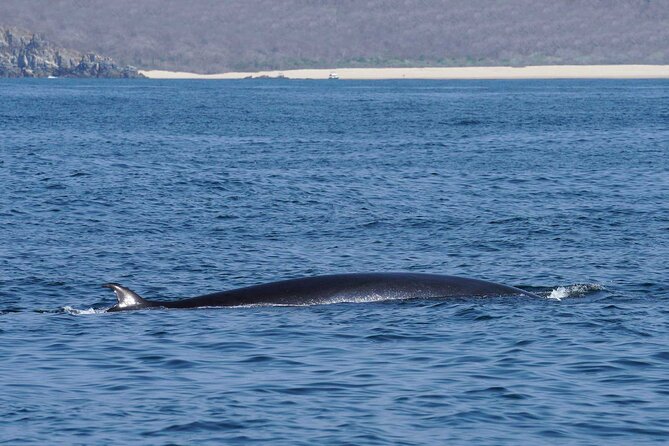
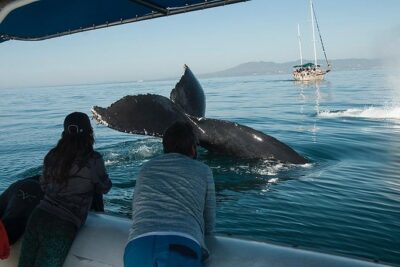
Huatulco’s best wildlife encounters can happen within minutes of leaving Chahué Marina. This small boat heads beyond the usual coastal waters with marine biologists and local spotters searching for humpback whales, dolphins, sea turtles, rays, and other ocean life. From December through March, humpback whales appear on about 90% of trips, though nature keeps the final say.
I like the small maximum of 14 people, which gives you room to move and a better chance of seeing the water from the front or sides. I also like the hydrophone, an underwater microphone that lets you hear whale songs and dolphin communication rather than simply watching animals from above.
The main drawback is the boat itself. It is small, with limited sun protection, and open ocean swells can make the ride hot, wet, or rough. Bring a hat, sunglasses, reef-friendly sunscreen, and water, and remember that even an excellent crew cannot promise a whale sighting.
Key points to know before you book
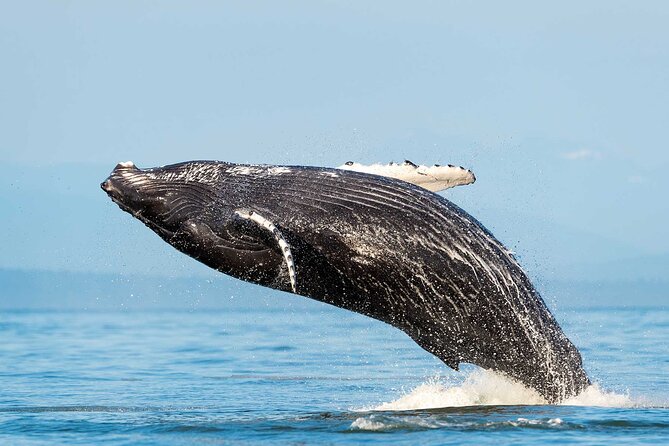
- Whales are most likely from December through March: Humpback sightings occur on about 90% of tours during this period, but they are never guaranteed.
- The hydrophone adds another sense: You may hear whale songs and dolphin calls while watching the animals at the surface.
- Small groups make a difference: The boat carries no more than 14 people, with more space than a crowded sightseeing cruise.
- Marine life can be varied: Past outings have included dolphins, Olive Ridley and green turtles, mobula rays, manta rays, sea snakes, sailfish, and whales.
- Expect extra cash fees: Bring 65 Mexican pesos for the Huatulco National Park fee and 10 pesos for the Chahué Marina fee.
- The boat has limits: Children must be at least 3 years old, and the listed maximum passenger weight is 130 kilograms.
Setting out from Chahué Marina at 8:00 am
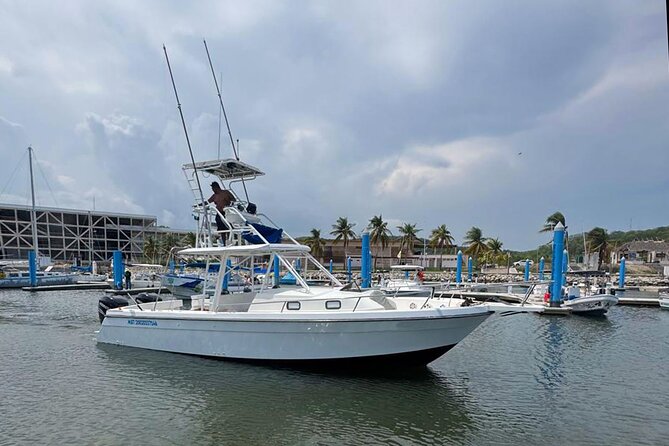
Your morning begins at Oceanico Huatulco, in Sector P at Marina Chahue on Boulevard Benito Juárez. The tour starts at 8:00 am and returns to this same point after roughly two and a half hours.
That early departure suits wildlife watching. It gives you the cooler part of the morning and leaves most of your day free for Huatulco beaches, lunch, or another outing. It also makes practical sense because the tour covers open water, where strong sun can become tiring quickly.
Before the boat goes far, the marine biologist crew gives you a short briefing on the whales, dolphins, and sea turtles found around Huatulco. This is more useful than a generic safety speech. You get a sense of what to look for, how animals behave, and why the crew keeps a careful distance inside and around Huatulco National Park.
The group limit of 14 is one of the strongest features here. A small boat does not guarantee good sightings, but it does mean fewer bodies blocking your view and less crowding when an animal surfaces. You can move around to watch from different angles, which matters when a whale appears for only a few seconds.
The boat is not designed like a large sightseeing vessel. One account describes little sun protection, while the operator notes that a canvas roof covers the boat. Either way, dress as if you will spend much of the trip in direct sun. Wear a hat that will not blow away, sunglasses, reef-friendly sunscreen, and light clothing that can handle spray.
Bottled water is included, but bringing extra water is sensible, especially if you feel the heat easily. The boat may be small and nimble, but open water can still produce large swells. One particularly rough outing was handled well by the pilot, yet seasickness remains a reasonable concern for anyone sensitive to motion.
More Whale and Dolphin Watching Tours in Mexico
- Whale and Dolphin Watching with a Biologist in Puerto Vallarta
★ 5.0 · 666 reviews - Dolphin & Whale Watching in Puerto Escondido
★ 5.0 · 278 reviews - Whale & Dolphin Watching Cruise in Puerto Vallarta All Inclusive
★ 4.0 · 212 reviews
Huatulco National Park and the search for wildlife
The named stop is Huatulco National Park, but this is not a shore excursion with a long land visit. The main activity is cruising through the park and nearby marine areas in search of wildlife.
The crew does not simply circle one familiar bay. They travel farther to locations known to their team and network of spotters. That wider search area is important because whales, dolphins, and turtles are constantly moving. The exact route changes according to conditions and current sightings.
You may first spot a blow, a dark back, a fin, or a splash in the distance. The crew then works out the animal’s direction and positions the boat for a respectful view. The goal is not to chase wildlife at close range. The briefing and the crew’s behavior focus on giving the animals room and following national park regulations.
That approach is especially important with humpback whales. A mother and calf, for example, may move at a slower pace than a lone adult. One outing followed a mother, calf, and escort for a while, while another saw three humpbacks. These are the kinds of encounters that can feel unhurried, but they depend on the animals choosing to remain nearby.
The crew shares information as the trip unfolds. You can ask questions about feeding, migration, communication, current research, and the species you see. This is a good fit if you prefer an outing with substance rather than a boat ride where the captain simply points at distant fins.
Humpback whales from December through March
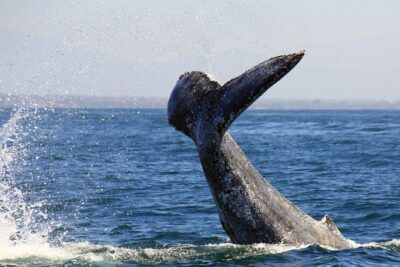
If whales are the main reason you are booking, plan around the season. Humpback whales can be seen on 90% of tours from December through March, making those months the clearest choice for whale watching in Huatulco.
That figure is encouraging, not a promise. Weather, sea conditions, animal movement, and plain luck still shape each trip. Even in the strongest season, you may spend time searching before a sighting appears. Outside December through March, whales may still occur, but you should book for the full range of marine life rather than for whales alone.
The reports from individual outings show how varied whale encounters can be. You might see a mother and calf traveling together, several adults, or a whale surfacing at a distance. One account described three gray whales, while another described humpbacks. These different identifications are a reminder to listen closely to the guide and enjoy the sighting without expecting a fixed script.
A special feature here is the hydrophone. When conditions allow, the underwater microphone lets you hear whale songs and dolphin communication. That changes the experience from a visual search into something more active. You are not only scanning the horizon. You are also listening for life below the boat.
Dolphins, turtles, rays, and the unexpected sightings
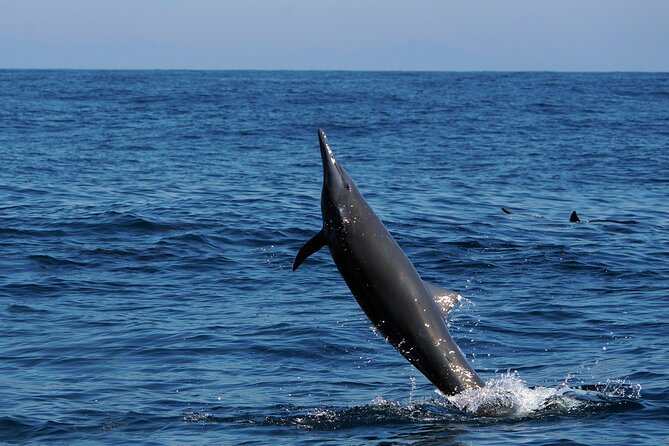
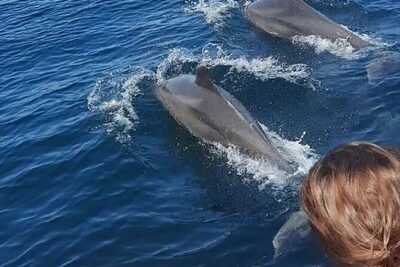
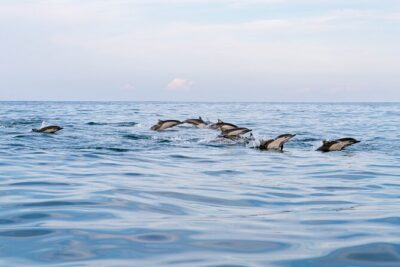
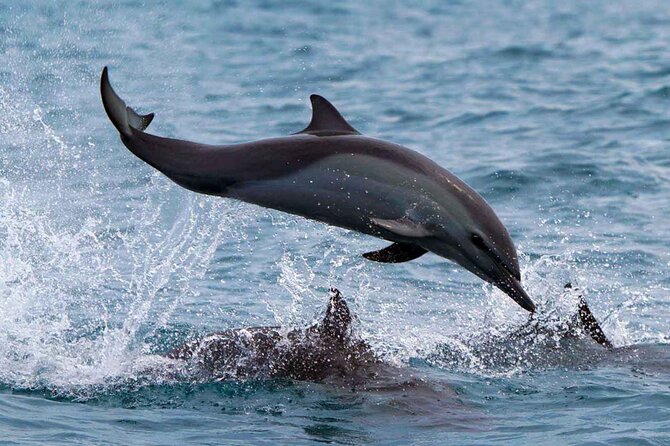
Whales may be the headline, but dolphins and turtles can provide some of the most memorable moments. Dolphins were spotted within about 15 minutes on one trip, and another outing encountered a pod estimated at around 300 animals. That sort of large group can turn a quiet boat ride into a fast-moving spectacle.
The dolphin encounters have included both spotted and bottlenose dolphins. You may see them traveling beside the boat, crossing in front, or moving in a wide pod. The hydrophone may also pick up their echolocation and calls, giving you a better sense of how active the water is beneath the surface.
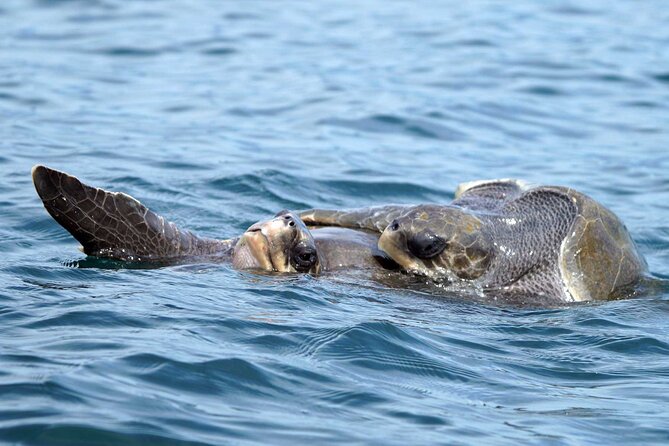
Sea turtles are another strong reason to choose this outing. Olive Ridley turtles are common in the wider region, and green turtles have also been seen. The crew connects local turtle sightings to Playa Escobilla, down the coast, which is one of three places in the world known for mass Olive Ridley nesting events.
You may see one turtle surfacing, several turtles scattered across the water, or many more. One outing recorded at least 15 turtles, while another saw 20 or more. These numbers vary, but the broader point is clear: keep your eyes on the water even when no whale is visible.
The species list does not end there. Sightings have included mobula rays leaping above the surface, manta rays, yellow-bellied sea snakes, a sailfish, and large groups of rays. A fever of about 12 mobula rays was one highlight on a wildlife-rich outing. You should not expect every species on every trip, but this variety gives the tour value even when whales stay away.
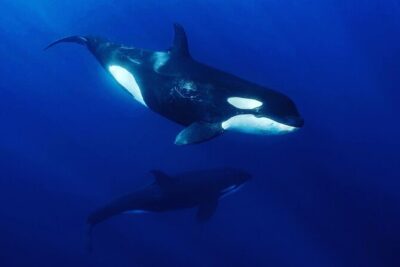
One account also described a group of orcas several kilometers offshore. Treat that as an exceptional possibility, not a normal part of the route. The reliable promise is a search for marine wildlife with an informed crew, not a set list of animals.
Same pod, another way to meet it:
- Watch and Swim with Dolphins in the Wild
★ 4.5 · 668 reviews - Puerto Escondido: Boat Tour to see Dolphins and Marine Life
★ 4.6 · 467 reviews - Wild Dolphin Encounter & Snorkeling Adventure
★ 5.0 · 147 reviews - Dolphin Watching Tour
★ 5.0 · 103 reviews
Respectful watching inside a protected marine area
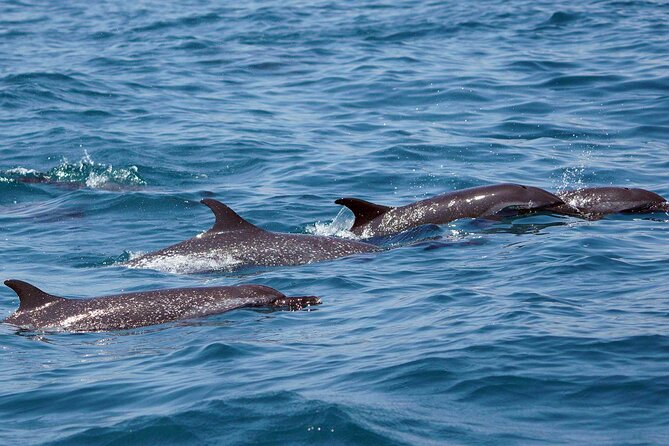
The Huatulco National Park setting gives the excursion more meaning than a simple wildlife chase. You are visiting a protected marine area, and the crew’s stated aim is to observe animals without disturbing them.
That means the boat may slow down, change direction, or leave an animal rather than press closer. If you are used to tours that promise dramatic close passes, this can feel less predictable. It is also the right trade-off for wildlife watching.
The crew shares current research and explains what you are seeing. Ask questions. You may learn more by asking why a whale surfaces in a certain pattern or how dolphins use sound than by simply counting animals.
At the end, the crew says Adios y Gracias to the whales and dolphins before returning to Chahué Marina. A short debrief follows. This gives you a chance to discuss the sightings and ask any final questions before leaving the boat.
Price, group size, and what the $59.74 covers
At $59.74 per person, this is reasonably priced for a two-and-a-half-hour wildlife trip led by marine biologists, especially with a maximum of 14 people. The value is strongest if you care about interpretation, responsible wildlife viewing, and a small boat rather than a basic harbor cruise.
Bottled water is included. You must pay two small cash charges separately: 65 pesos per person for the Huatulco National Park entrance fee and 10 pesos per person for the Chahué Marina fee. Bring Mexican pesos so these costs do not become an awkward last-minute problem.
The price does not buy certainty. You are paying for the crew’s time, local search knowledge, marine interpretation, boat operation, and access to an area where wildlife may appear. You are not paying for a guaranteed whale, dolphin, or turtle encounter.
The trip is booked, on average, 33 days ahead. That suggests planning early, especially if you are visiting during the December through March whale season or have limited mornings available in Huatulco.
Who will enjoy this Huatulco boat trip?
I would choose this tour if you like wildlife and want to understand what you are seeing. The marine biologists are the main reason to book. They can explain behavior, answer questions, and connect individual sightings to wider conservation work.
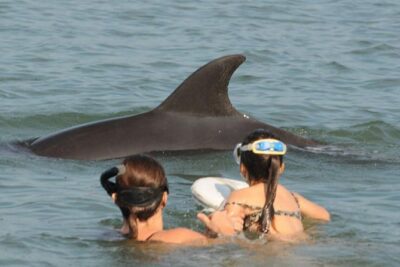
It also suits photographers, though the small boat, moving animals, sun, and possible swells will test your timing. Bring the camera you can handle safely, and do not count on getting close enough for every shot. One participant with a GoPro even received permission to enter the water, but the dolphins moved too quickly. That is not presented as a standard feature, so do not book expecting to swim with wildlife.
Families can consider the outing if children are at least 3 years old and can manage a boat ride. Lifejackets are available for children from age 3 through adults weighing up to 130 kilograms. Anyone over 130 kilograms is outside the stated participation limit.
You should think twice if you dislike small boats, strong sun, or uncertain conditions. The tour requires good weather, and rough seas can make the ride uncomfortable even when the captain handles them well.
Booking, cancellations, and useful planning details
Confirmation is provided at booking, and the activity is offered in English. The meeting point is near public transportation, and the tour ends back where it begins, which keeps the morning simple if you are staying near the marina.
The experience is non-refundable and cannot be changed for personal reasons. If poor weather forces cancellation, you are offered another date or a full refund. The same applies if the minimum number of participants is not reached.
Arrive prepared with cash for the two fees, sun protection, and enough water for your comfort. Since the boat holds no more than 14 people, booking early is sensible if you want a particular date.
Should you book Oceanico?
Yes, if your priority is a serious, small-group search for Huatulco’s marine life. The strongest reasons are the marine biologist guides, the hydrophone, the low passenger limit, and the range of possible sightings. Humpback whales are especially likely from December through March, but dolphins, turtles, and rays give the tour purpose in other months too.
I would skip it only if you need a guaranteed whale sighting, dislike open water, or want a large boat with generous shade and indoor space. For everyone else, the $59.74 price offers a good morning of wildlife watching, with the honest understanding that nature decides what appears.
FAQ
Where does the dolphin and whale watching tour begin?
It begins at Oceanico Huatulco in Sector P at Marina Chahue, Boulevard Benito Juárez, Bahias de Huatulco, Oaxaca.
What time does the tour start?
The tour starts at 8:00 am.
How long does the experience last?
The experience lasts approximately 2 hours and 30 minutes.
Where does the tour end?
It ends back at the Chahué Marina meeting point.
How many people can join the boat?
The tour has a maximum of 14 participants.
What animals might I see?
Possible sightings include humpback whales, dolphins, sea turtles, mobula rays, manta rays, sea snakes, sailfish, and other marine species.
When are humpback whales most likely to appear?
Humpback whales are seen on about 90% of tours from December through March.
Is water included?
Yes. Bottled water is included.
Are there extra fees?
Yes. You need 65 Mexican pesos in cash per person for the Huatulco National Park fee and 10 pesos in cash per person for the Chahué Marina fee.
Can children join the tour?
Children must be at least 3 years old. Lifejackets are available for children from age 3 through adults weighing up to 130 kilograms.
Is the tour offered in English?
Yes. English is offered.
What happens if the weather is poor?
The tour may be canceled for poor weather. You will then be offered a different date or a full refund.
Can I cancel for a personal reason?
No. The experience is non-refundable and cannot be changed for personal reasons.
Newly spotted around Mexico
- Royal Garragon with Dolphin Encounter in Isla Mujeres★ 3.0 · 2 reviews
- Meeting at the Dolphinarium★ 4.0 · 13 reviews
- Tulum & Dolphin Connection from Cancun★ 3.5 · 3 reviews
- The only Natural Space Dolphin Encounter in Cabo Optional Pickup!★ 5.0 · 46 reviews
- Private Wild Dolphin Encounter Day Trip★ 5.0 · 4 reviews
- Riviera Maya: Swim with dolphins Interax★ 4.4 · 8 reviews
- Riviera Maya: Swimming Experience with Dolphins★ 4.5 · 21 reviews
- Riviera Maya: Dolphin Encounter with Beach Club Access★ 4.1 · 34 reviews
Mexico Dolphin Watching Tours, side by side.
Whale and Dolphin Watching with a Biologist in Puerto Vallarta
Read our review →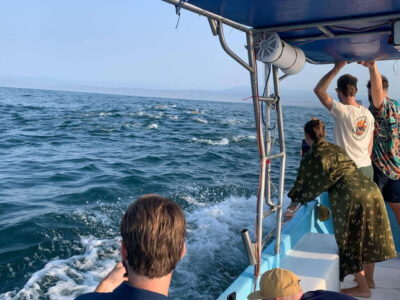
Puerto Escondido: Boat Tour to see Dolphins and Marine Life
Read our review →
Whale & Dolphin Watching Cruise in Puerto Vallarta All Inclusive
Read our review →