Review · ADELAIDE
Adelaide: Dolphin Sanctuary Eco Kayaking Tour
The real draw here is not simply the chance to see dolphins. It is the quiet paddle through 10,000-year-old mangrove creeks, where tidal flats, seagrass, saltmarsh, and shallow channels form a feeding ground for wildlife. If dolphins appear, you watch them on their terms.
I like the calm pace and the guides who make first-time kayaking feel manageable. I also like the care taken around wild dolphins, including stopping paddling and keeping quiet when a mother and calf come near. The catch is simple: dolphin sightings and shipwreck access depend on tides, wind, and wildlife, so you need to value the place even if the headline animals stay away.
Key points before you book
- 10,000-year-old mangroves: Paddle narrow creeks and low channels through an unusual coastal ecosystem.
- Dolphins in the wild: Sightings can be close, but there is no baiting, sound playback, or guarantee.
- Guides who teach as they lead: Alex, Paddy, Mark, Kendall, Liam, Fiona, and others are praised for safety help and local wildlife knowledge.
- Easy pace for beginners: Equipment and instruction are supplied, and the tour does not require previous kayaking experience.
- Shipwrecks are tide and weather dependent: You may paddle close to them, but rough conditions can shorten that part of the route.
- Three hours on the water: Bring sun protection, mosquito spray, food, and water-friendly camera gear, and plan ahead for the lack of a toilet stop.
Why Adelaide’s Dolphin Sanctuary is worth your time
Adelaide is often associated with wineries, beaches, food, and wildlife parks. This trip gives you something different: a close look at a shallow coastal system where mangrove roots, mudflats, creeks, and seagrass support fish, birds, and dolphins.
The sanctuary is near Port Adelaide, but the paddle quickly feels removed from city routines. You move at water level, under low branches and along quiet channels. The setting is not polished or theatrical. It is a working, tidal environment, and that is its appeal.
I would book this for the setting first and the dolphins second. The strongest outings combine both, with dolphins passing near the kayaks or a mother and calf moving through the group. But several of the best experiences came from the mangroves, birdlife, old boats, and explanations of how the creeks function.
The 4.5 rating from 560 reviews reflects the tour’s broad appeal, but it should not be read as a wildlife guarantee. One outing can produce dolphins within minutes. Another can bring no dolphins at all. The activity is still worthwhile if you enjoy nature observation rather than a fixed show.
More Kayak Dolphin Tours in Australia
- Dolphin Sanctuary Kayak Tour Adelaide
★ 4.5 · 355 reviews - Adelaide Dolphin Sanctuary and Ships Graveyard Kayak Tour
★ 5.0 · 275 reviews - Dolphin Sanctuary and Ships Graveyard Kayak Tour
★ 4.7 · 143 reviews
Meeting at Angas Inlet Boat Club
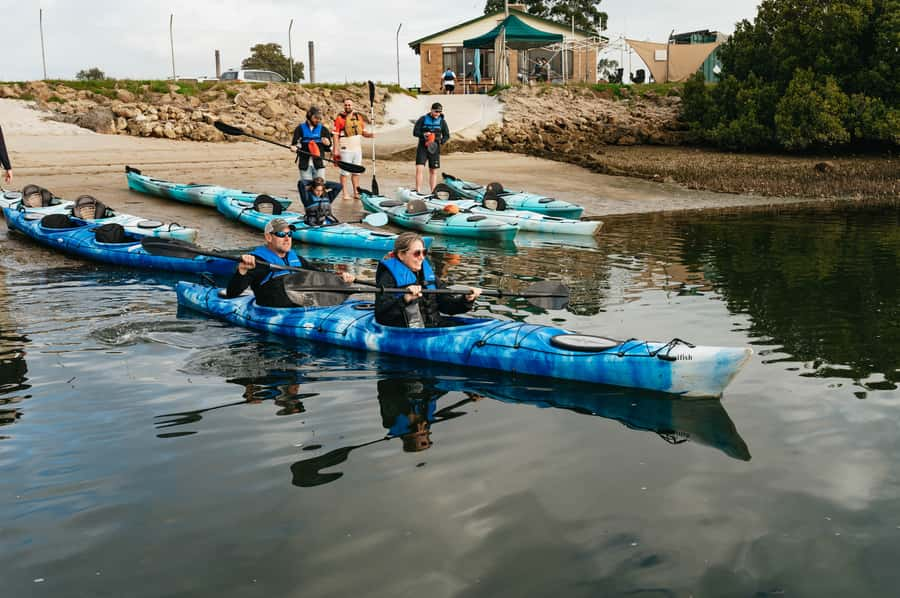
You meet at Angas Inlet Boat Club, Lot 204 Garden Island Road, Port Adelaide SA 5015. Hotel pickup is not included, so you need your own transport or a taxi. One participant found the location easiest to reach by car or taxi, which is useful to keep in mind when planning your morning or afternoon.
Arrive ready to paddle. The operator supplies the kayak, life jacket, waterproof bag, and refill water. You should bring a sun hat, food and drinks, a waterproof camera, and biodegradable sunscreen. Mosquito spray is especially useful around the mangroves. Some people found the insects noticeable on warm days, and the advice to apply repellent before launch is practical.
The meeting point is also your return point. There is no food service included, and you should not count on a bathroom break during the three-hour outing. One person specifically found three hours without a toilet stop difficult. Use the facilities before you launch if you need them.
The 15-minute safety briefing
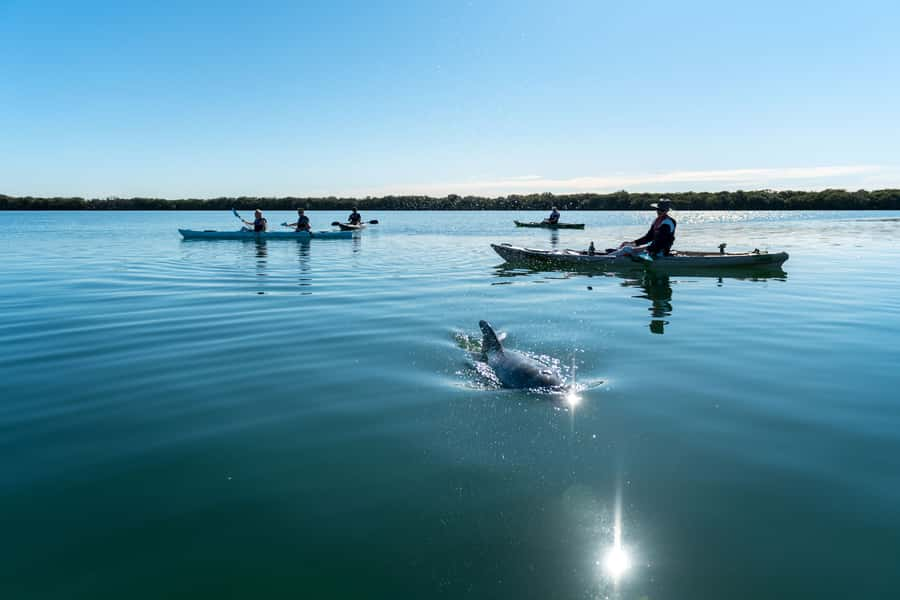
The tour begins with a safety briefing of about 15 minutes. This is more than a quick formality if you have never kayaked. You receive basic paddling instruction, learn how to handle the kayak, and get familiar with the safety equipment before entering the creeks.
The guides are used to mixed ability levels. Alex, Marc, Liam, Sam, and others are praised for patiently helping people who struggled with technique. One first-time kayaker said the instruction made the entire outing feel comfortable, while another participant appreciated the help after capsizing near the start.
That said, kayaking still requires effort. You do not need a high fitness level, and the pace is described as gentle, but you must be able to paddle. Children aged 10 to 15 must share a double kayak with a parent or another adult and must be able to paddle. Children under 10 cannot join.
A windy day can make the opening section harder. One couple capsized at the beginning, though the guide checked on them and helped them stay warm. That experience did not ruin their day, but it shows why weather matters. If conditions look poor, ask about rescheduling rather than assuming every departure will feel calm.
Paddling through the ancient mangroves
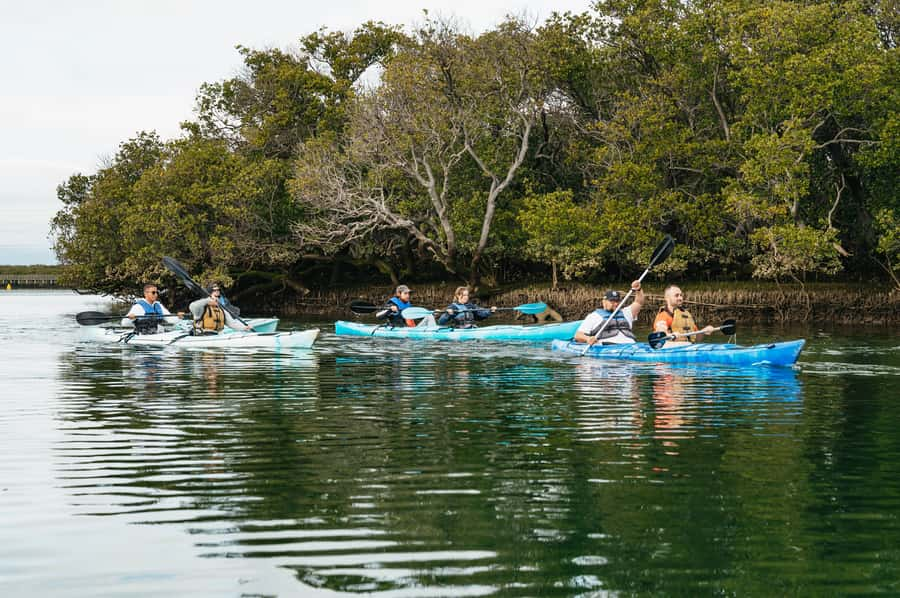
The main route runs through mangrove-lined creeks connected to tidal flats, saltmarsh, and seagrass areas. These shallow waters are important feeding and breeding grounds for local fish and dolphins. Your guide explains the links between the plants, water movement, fish, birds, and larger animals.
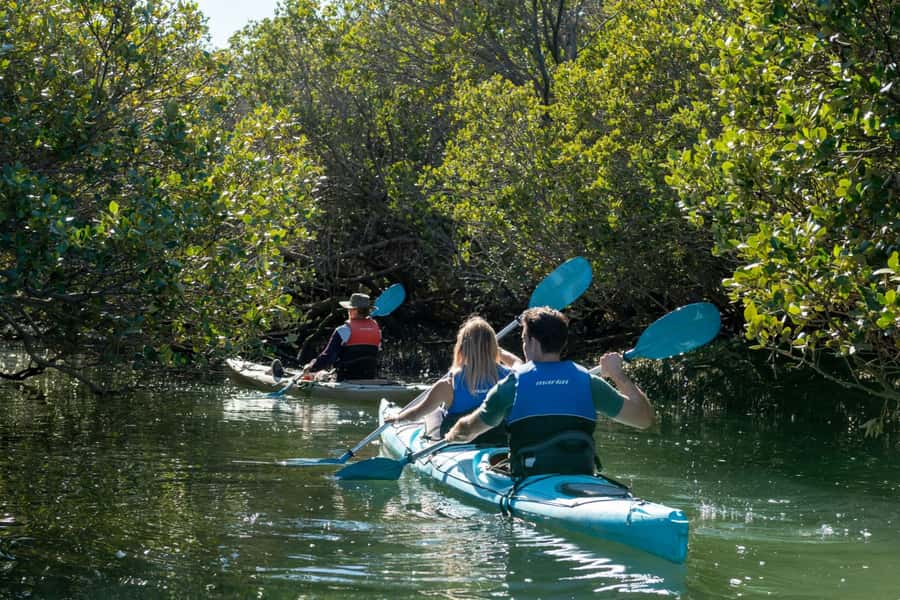
The mangroves are often the quietest and most memorable part of the outing. You paddle beneath low branches and through narrow channels where the view changes with every bend. The roots and mud may not sound glamorous on paper, but from a kayak they give the place a close, personal feel.
The boats let you see the water from a low position, rather than from a distant lookout. You may notice birds along the banks, fish in the shallows, or other marine life moving below the surface. The exact sightings vary, so the guide’s explanations matter. You are not simply paddling in a circle hoping for a fin.
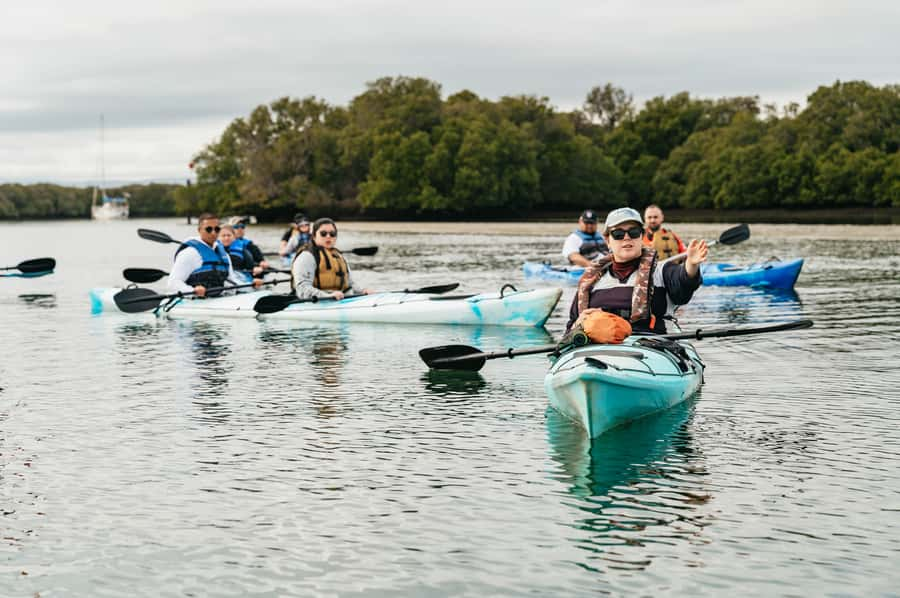
This is also where the tour’s pace works well. You are not pushed to race between highlights. Guides stop to explain the plants, animals, and waterways, then adjust the route and pace to the group. That can mean the outing feels relaxed for beginners, though experienced paddlers may occasionally wait for slower kayakers.
One participant with two prosthetic hips found the trip manageable because the guide chose a sensible pace and stopping points. That does not mean the outing suits every mobility level. The activity is not suitable for wheelchair users or people with mobility impairments, and getting in and out of a kayak requires care.
More Kayak Dolphin Tours in Adelaide:
- Adelaide Dolphin Sanctuary Mangroves Kayaking Tour
★ 4.5 · 59 reviews - Adelaide: Dolphin Sanctuary Mangroves Kayak Tour
★ 4.2 · 54 reviews - Adelaide: Dolphin Sanctuary Single or Double Kayak Rental
★ 4.1 · 51 reviews - Dolphin and Manatee Stand Up Paddleboard Tour in Daytona Beach
★ 5.0 · 2,328 reviews
The chance to see dolphins without a staged show
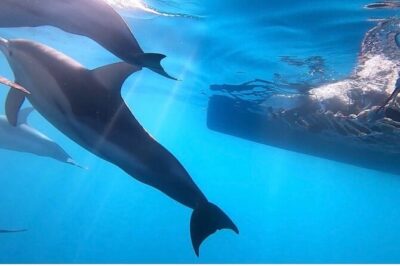
Dolphins are the most obvious reason many people book this experience. The sanctuary offers a real chance to see them feeding, passing through the creeks, or moving near the kayaks. Some outings have produced dolphins within five or 15 minutes. Others have included a mother and calf, several animals, or dolphins swimming beneath a kayak.
The most important point is that these are wild animals. The operator does not use bait or sounds to draw dolphins toward the group. If a dolphin approaches, the guides may ask you to stop paddling and remain quiet. That lets you watch without turning the encounter into a chase.
You may see dolphins at a distance, briefly, or not at all. Wind, tides, weather, and animal behavior all affect the route and sightings. One person saw no wildlife but still enjoyed the peaceful paddling. Another group saw no dolphins but considered the mangroves the best part of the trip.
This approach suits you if you prefer a respectful wildlife encounter over a guaranteed performance. If you need a definite animal sighting, a wildlife park or aquarium offers more certainty. Here, the reward is seeing an animal choose to pass through its own home.
Old shipwrecks and the changing tide
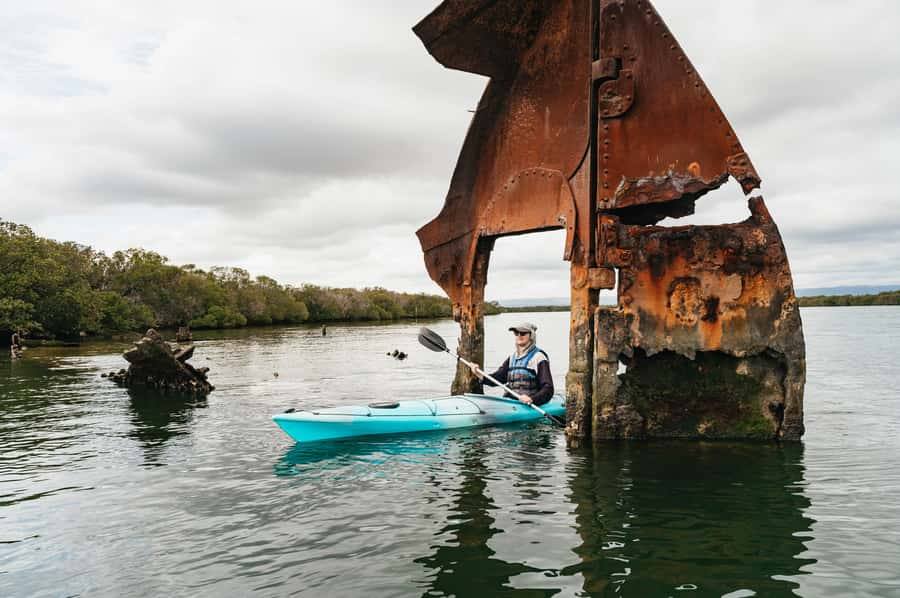
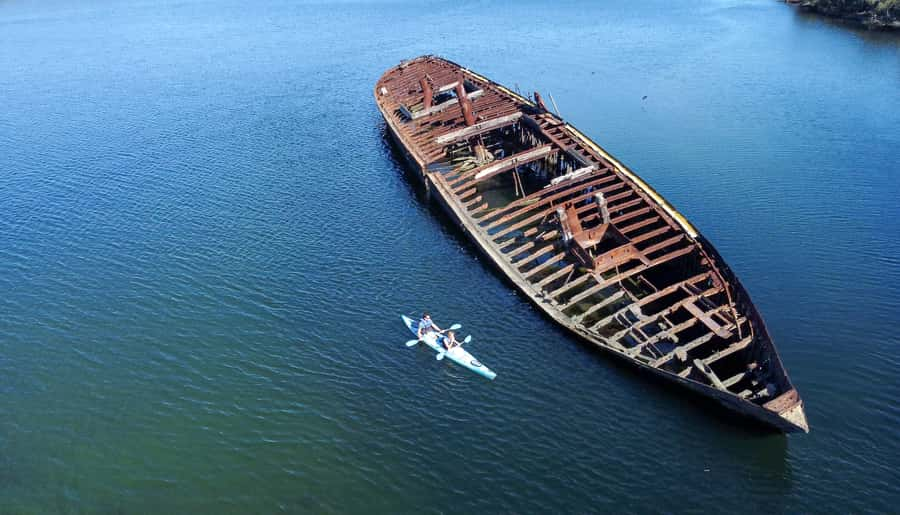
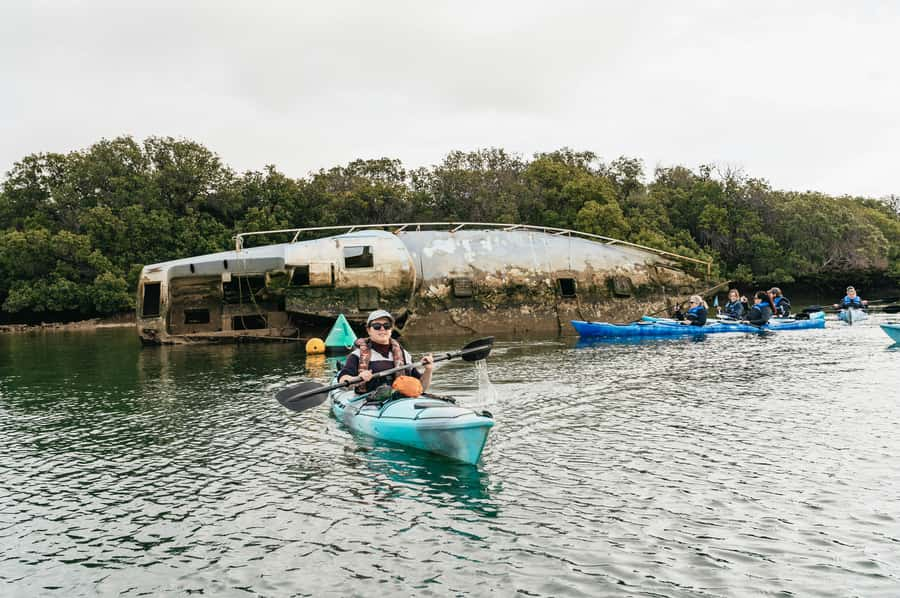
The tour may take you near shipwrecks left from an earlier era around Port Adelaide. These weathered remains add a human story to the mangroves and help explain how the area has changed over time.
The wrecks are not guaranteed. Strong wind may prevent the group from reaching them, and tide levels can change what is accessible. One outing reached several wrecks, while another could not complete that section because conditions were too windy. A participant who returned on a calmer day found the water flat and the wreck area accessible, but still had no dolphin sightings.
That contrast tells you how to think about this tour. The route is flexible because it follows real conditions, not a fixed stage schedule. At low tide, the kayak can occasionally ground in shallow water, and paddlers may need to get out briefly to lighten the boat and move it to deeper water. This is not necessarily a problem, but it is worth knowing if you want a completely effortless ride.
The guides add value here by explaining the boats and the area’s past. Paddy, Alex, Mark, and Phoenix have all been praised for combining local history with information about wildlife and the mangrove system. You get more from the wrecks when you understand what you are looking at.
Guide quality makes the difference
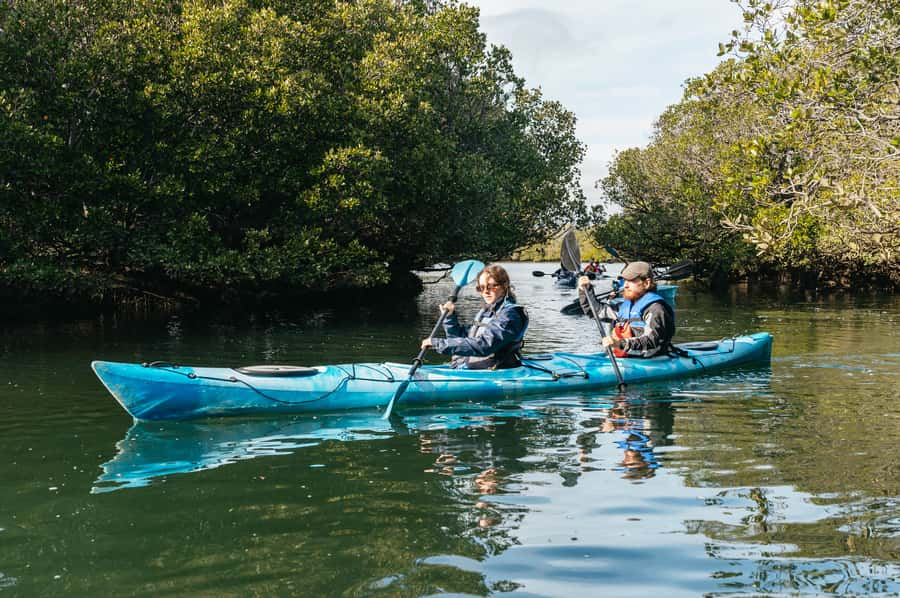
The guides are a major part of this experience. You may be led by Alex, Paddy, Mark, Kendall, Liam, Fiona, Brayden, Sam, Sarah, Hannah, Lewis, Marc, or another team member. Names vary by departure, but the consistent pattern is patient instruction, wildlife information, and close attention to safety.
Alex is frequently singled out for explaining dolphins, mangroves, local history, and even traditional Dreamtime stories. Paddy is praised for adapting the pace and choosing good places to stop. Kendall is noted for helping people steer through the mangrove channels. Liam and Alex have helped beginners relax and improve their technique.
The one fair criticism is that it can be hard for everyone to hear when the group is spread across the water. One participant suggested using speakers. If you care deeply about every spoken detail, stay close to the guide and ask questions when the group pauses.
Some experienced paddlers may find the beginner instruction and slower pace less thrilling. Still, that teaching focus is exactly what makes the tour suitable for couples, families, and first-time kayakers.
Is $55 good value for three hours?
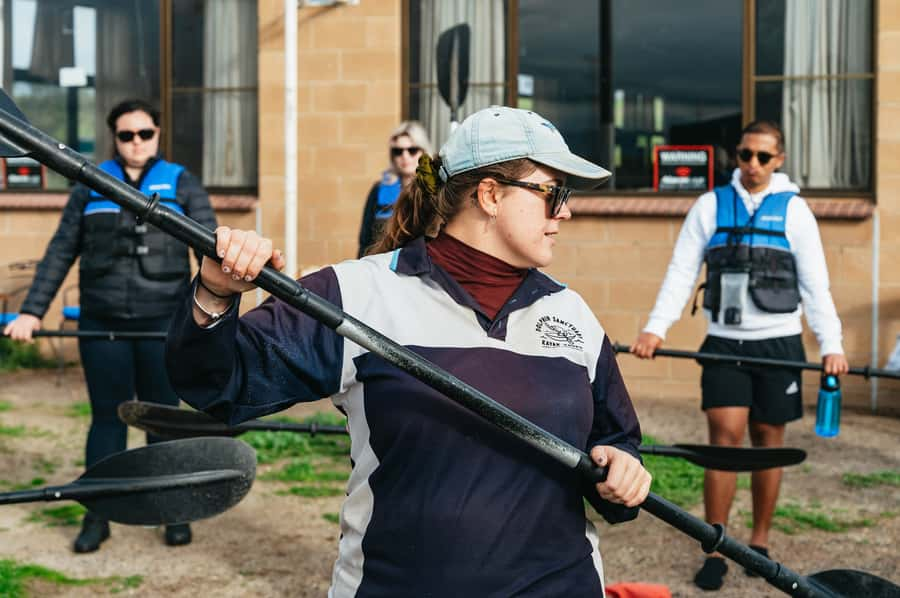
At $55 per person, this is a strong value if you compare it with a guided wildlife outing that includes equipment, instruction, a life jacket, a waterproof bag, refill water, and a marine biologist guide. You are paying for three hours on the water, not just a short dolphin lookout.
The value depends on your priorities. If you want a guaranteed close encounter with dolphins, the price may feel less satisfying on a day when the animals stay away. If you value access to the mangrove creeks, an informed guide, and a low-impact way to see the sanctuary, the cost is easier to justify.
You also avoid the cost and trouble of bringing your own kayak and safety gear. The waterproof bag is useful for keeping a phone or small camera protected, though you should still use a waterproof camera or suitable case if photographs matter.
Free cancellation up to 24 hours before departure and a reserve-now, pay-later option make it easier to work around changing plans. Weather cancellations can occur, so keep some flexibility in your schedule.
Who should book this kayak tour?
I would recommend it to you if you want:
- A gentle outdoor activity near Adelaide
- A first kayaking experience with instruction
- A chance to see dolphins in a natural setting
- A close look at mangroves, tidal creeks, and birdlife
- A family outing for children aged 10 and older
- A guide-led activity that mixes ecology, local history, and paddling
You should think twice if you dislike sitting in a kayak for three hours, have mobility limitations, or need a guaranteed wildlife sighting. Wind, tides, and shallow water can change the route, and beginners may slow the group.
Wear practical sun protection, apply mosquito spray before launch, and bring enough food and drink for the full outing. Keep your expectations centered on a coastal ecosystem, with dolphins as a possible bonus rather than the entire point.
Should you book the Dolphin Sanctuary Eco Kayaking Tour?
Yes, if you can enjoy the mangroves even without dolphins. At $55, the three-hour length, equipment, instruction, and marine biology focus make this one of Adelaide’s more affordable ways to spend time on the water.
Book it for the quiet channels, the old wrecks, the birdlife, and the chance to see dolphins behaving naturally. Pick a day with a flexible schedule, arrive prepared for sun and mosquitoes, and stay near the guide so you hear the explanations.
If your idea of a successful wildlife outing requires a guaranteed sighting, choose a more controlled attraction. If you want a calm, low-impact paddle where the best moment cannot be scheduled, this tour is a good choice.
FAQ
Where does the kayak tour start?
The tour starts and finishes at Angas Inlet Boat Club, Lot 204 Garden Island Road, Port Adelaide SA 5015.
How long does the tour last?
The full activity lasts three hours, including a safety briefing of about 15 minutes at the start.
Do I need kayaking experience?
No. The guides provide demonstrations and equipment, and the tour moves at a comfortable pace for beginners. You must still be able to paddle.
Are dolphins guaranteed?
No. Dolphins are wild animals, and sightings depend on animal behavior, weather, and tides. The tour does not use bait or sounds to attract them.
Can I see the shipwrecks on every departure?
No. Access to the shipwreck area depends on weather, wind, and tides. The route may not reach the wrecks in unsuitable conditions.
What should I bring?
Bring a sun hat, food and drinks, a waterproof camera, and biodegradable sunscreen. Mosquito spray is also a useful addition for the mangrove sections.
Can children join the tour?
Children must be at least 10 years old. Children aged 10 to 15 must share a double kayak with a parent or another adult and must be able to paddle.
Newly spotted around Adelaide
- Wild Dolphin Swim Cruise★ 5.0 · 55 reviews
- Adelaide Dolphin Sanctuary and Ships Graveyard Kayak Tour★ 5.0 · 275 reviews
- 2-Hour Dolphin and Maritime Cruise in Port Adelaide★ 4.0 · 6 reviews
- Wild Dolphin Watch in Glenelg★ 5.0 · 12 reviews
- 90 Minute Port River Dolphin & Ships Graveyard Cruise★ 4.5 · 321 reviews
- Adelaide Dolphin Sanctuary Mangroves Kayaking Tour★ 4.5 · 59 reviews
- Port Adelaide: Dolphin and Maritime Cruise★ 4.0 · 5 reviews
- Dolphin Sanctuary and Ships Graveyard Kayak Tour★ 4.7 · 143 reviews
Adelaide Dolphin Watching Tours, side by side.
Adelaide: 4-Hour Swimming with Dolphins Experience
Read our review →
Port Adelaide: Dolphin and Ships Graveyard Cruise
Read our review →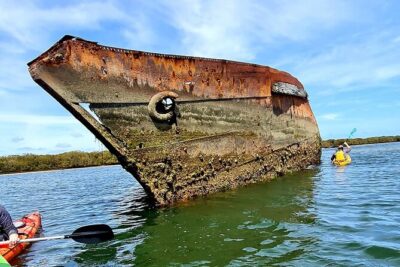
Adelaide: 4-Hour Guaranteed Wild Dolphin Watching Cruise
Read our review →
90 Minute Port River Dolphin & Ships Graveyard Cruise
Read our review →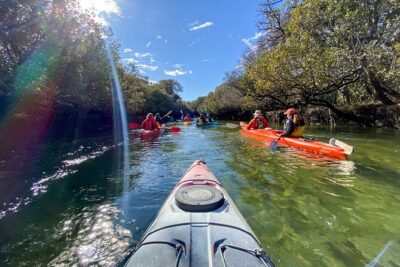
Adelaide Dolphin Sanctuary and Ships Graveyard Kayak Tour
Read our review →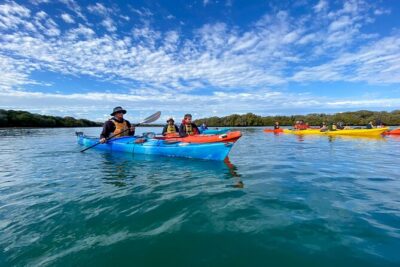
Adelaide Dolphin Sanctuary Mangroves Kayaking Tour
Read our review →