
Review · ALGARVE
From Lagos: Dolphin Watching Boat Trip w/Marine Biologists
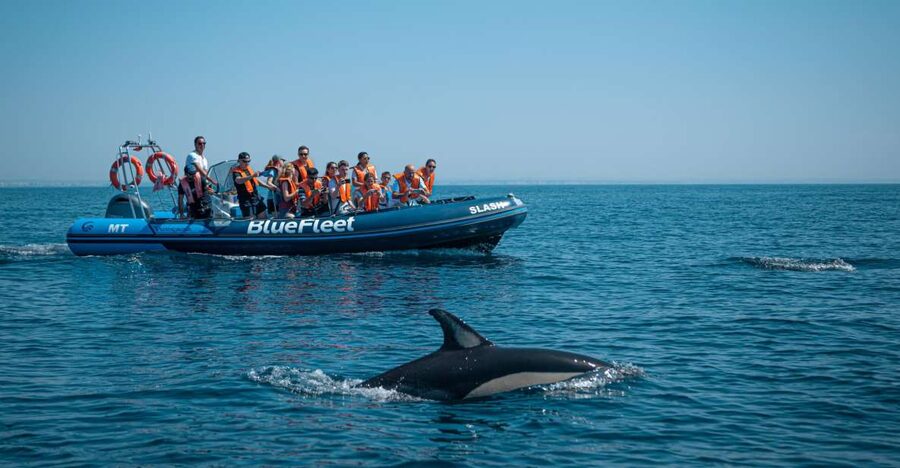
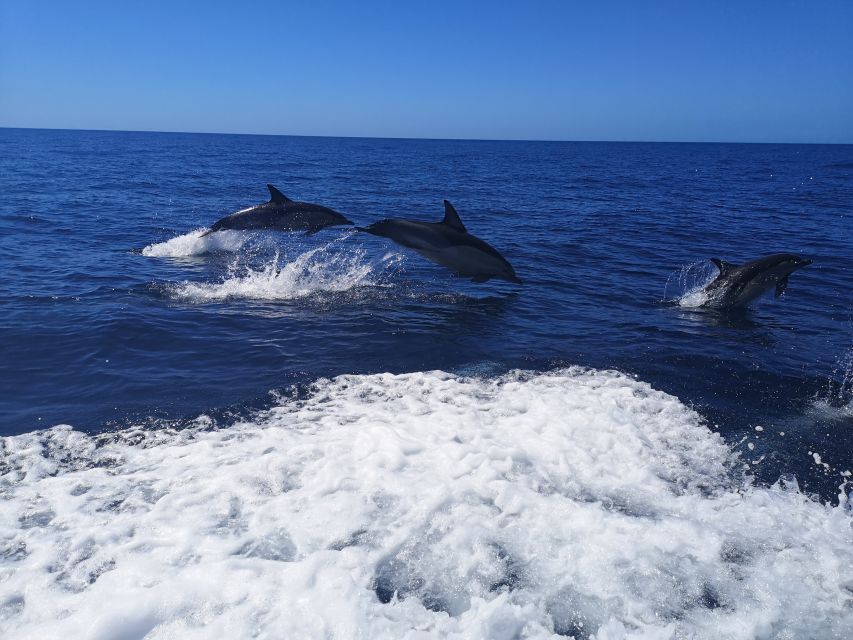
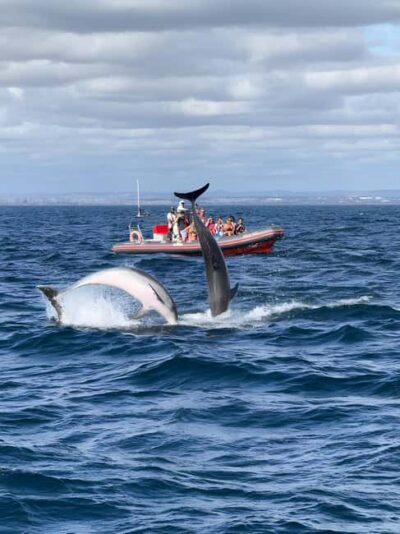
Wild dolphins are the star here, but the real thrill is the search. From Lagos, you head into the Atlantic on a fast RIB, covering more water than a slow sightseeing boat and giving the crew a better chance of finding a pod. When dolphins appear, you watch them swim, leap, and sometimes play in the boat’s bow wave.
I like the small 18-person group, which gives you a clearer view and a more personal exchange with the marine biologist. I also like the strictly respectful approach: no feeding, touching, chasing, or crowding the animals. The catch is simple: dolphins are wild, and rough weather or shy animals can leave you with a thrilling boat ride but only a brief sighting.
Key points
- Fast RIB for open water: The boat can travel well offshore and shift position quickly when dolphins are found.
- Maximum 18 people: A smaller group means fewer heads blocking your view and easier access to the guide.
- Marine biology on the move: Learn about dolphin species, communication, behavior, and conservation while searching.
- Wildlife is never guaranteed: Outings have found common dolphins, porpoises, fin whales, tuna, and young dolphins, but sightings vary.
- Prepare for wind and spray: Bring a jacket, leave valuables at home, and expect a bouncy ride in some conditions.
- Good value at $42: The price covers 1.5 hours on the water, a guide, safety gear, and insurance, without hotel pickup.
Leaving Lagos Marina for the Atlantic
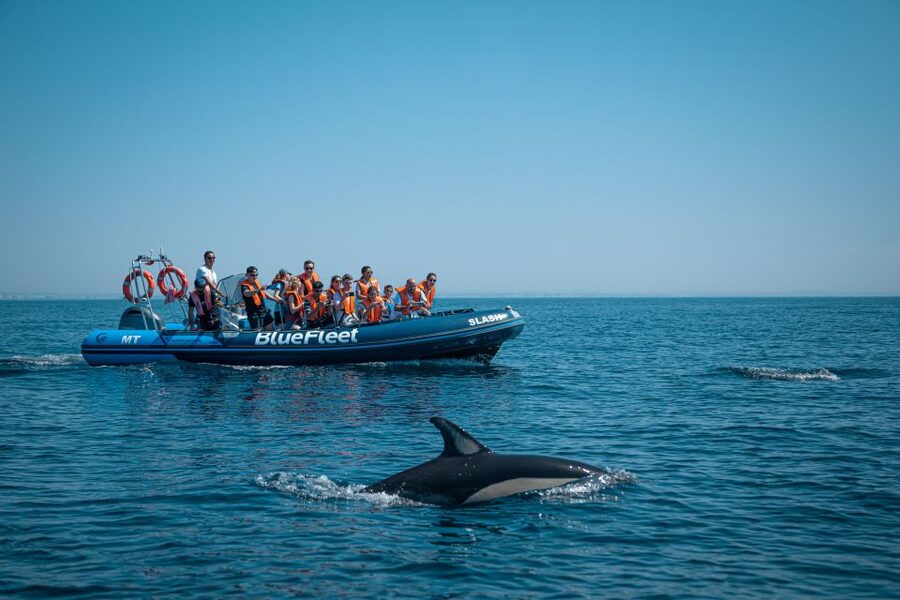
You meet the local supplier at the office beside Lagos Train Station on Estrada de São Roque. The listed meeting point is at 37.108669, -8.672152, and pickup from your hotel is not included, so allow time to reach the station area on your own.
After check-in, you receive a safety briefing and life jacket before boarding. The boat is a rigid inflatable boat, often called a RIB, built for offshore conditions. It is not a gentle harbor cruise. Its speed is part of the appeal, but it also means you should expect motion, spray, and occasional hard landings on the water.
The trip lasts 1.5 hours, which is long enough to get well beyond the marina while still fitting neatly into a morning or afternoon in Lagos. The crew may travel far from shore if the first search area is quiet. One outing went farther out after dolphins proved difficult to find, and the ride itself became part of the fun.
I would choose a morning departure if you have flexibility. A past outing at the first morning slot found dolphins almost at once, and early departures are a sensible choice for anyone who wants the best possible chance before spending the day on other plans. This is a practical tip, not a promise of better sightings.
More dolphin trips around the Algarve:
- Albufeira: 2.5-Hour Benagil Caves & Dolphin Watching
★ 4.6 · 10,710 reviews - Albufeira: Benagil Caves & Dolphin Watching Speed Boat Tour
★ 4.6 · 6,316 reviews - Albufeira: Dolphin Watching and Benagil Cave
★ 4.7 · 5,658 reviews
Finding dolphins instead of following a fixed route
This is a search trip, not a set sightseeing circuit. The captain and marine biologist scan the open water and adjust the route according to conditions and reports from other boats. If another boat finds dolphins, the crew may head that way, as happened on one outing in May.
That flexibility is a major advantage of the RIB. A larger boat may offer a steadier ride, but it cannot reposition as quickly. Here, the crew can cover more distance and respond when animals are reported in another area.
The tradeoff is that the first part may feel uncertain. You might spend time riding over open water without seeing anything. One group searched for a while before finding a large pod on the return journey. Another had a windy day and saw porpoises instead of dolphins. That is the honest nature of wildlife watching: the boat can improve your odds, but it cannot control the Atlantic.
The crew handles this uncertainty well when conditions are difficult. On one trip, the guides explained that the wind might limit dolphin sightings and offered a plan B. The outing still included a longer ride offshore, and the group spotted several porpoises, which are less common in the area according to the guide.
Watching common dolphins in the wild
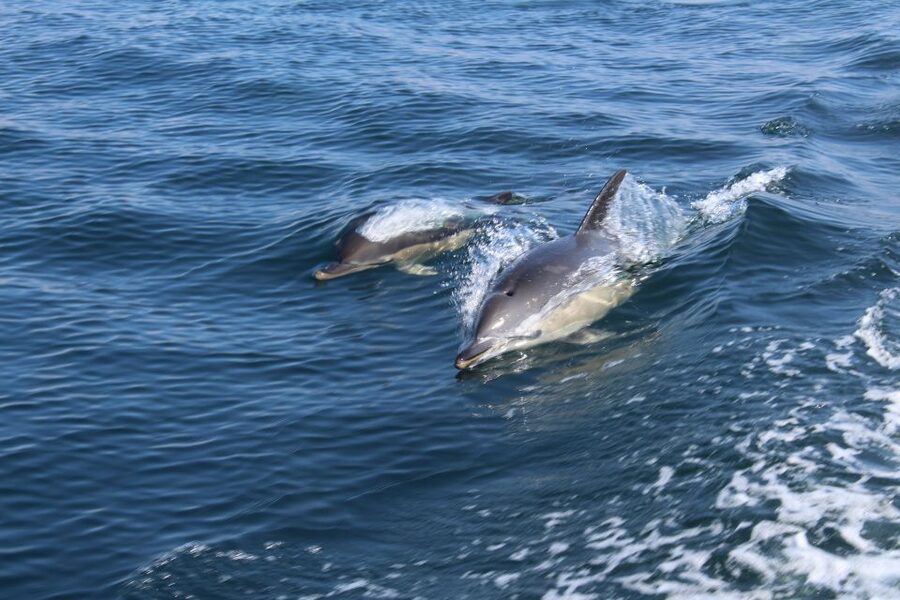
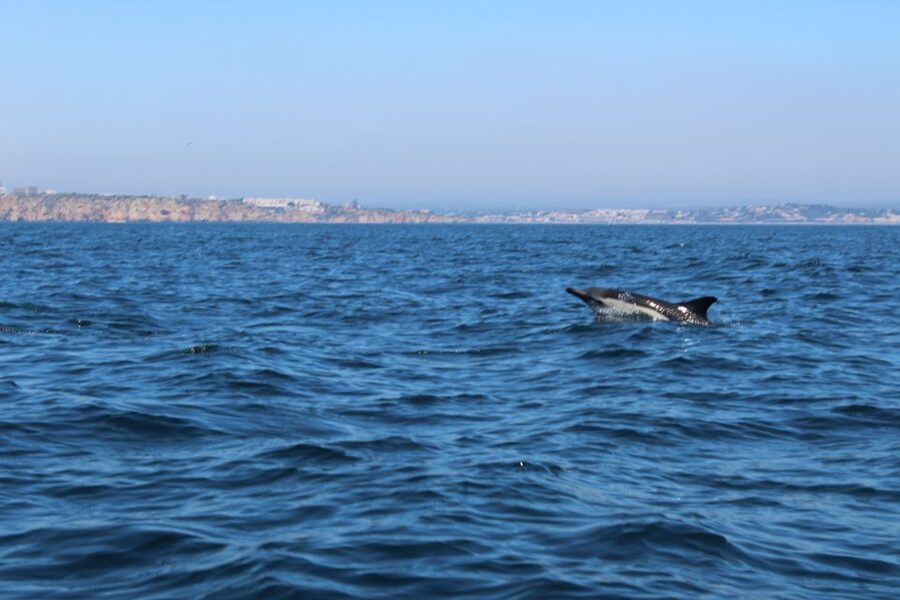
When a pod appears, the mood changes quickly. Common dolphins have been seen in groups of around 50 or 60, with smaller pods moving near the boat. Young dolphins have also been spotted leaping beside adults, creating the kind of quick, emotional moment you cannot reproduce in an aquarium.
You may see dolphins near the bow, especially if they choose to ride the pressure wave created by the moving RIB. This can give you close views, but the animals decide how near they come. The crew does not feed them or try to draw them toward the boat.
That restraint matters. The best sightings happen when the animals behave naturally, not when a captain forces the encounter. The crew has moved away when appropriate and allowed dolphins to choose whether to approach. You are there to watch a wild animal, not to stage a photo opportunity.
Sightings can include more than dolphins. Outings have also found porpoises, tuna, and fin whales. These are possibilities rather than promised additions, but they show why the search can remain interesting even when the main target is not cooperating.
Bring a jacket even in warm weather. Wind builds quickly once the boat leaves the coast, and one particularly successful outing ended with a reminder that the ride can feel cold. Sunglasses and a secure phone are sensible choices, though the operator is not responsible for lost or damaged personal belongings. Leave expensive items at home.
What the marine biologist adds
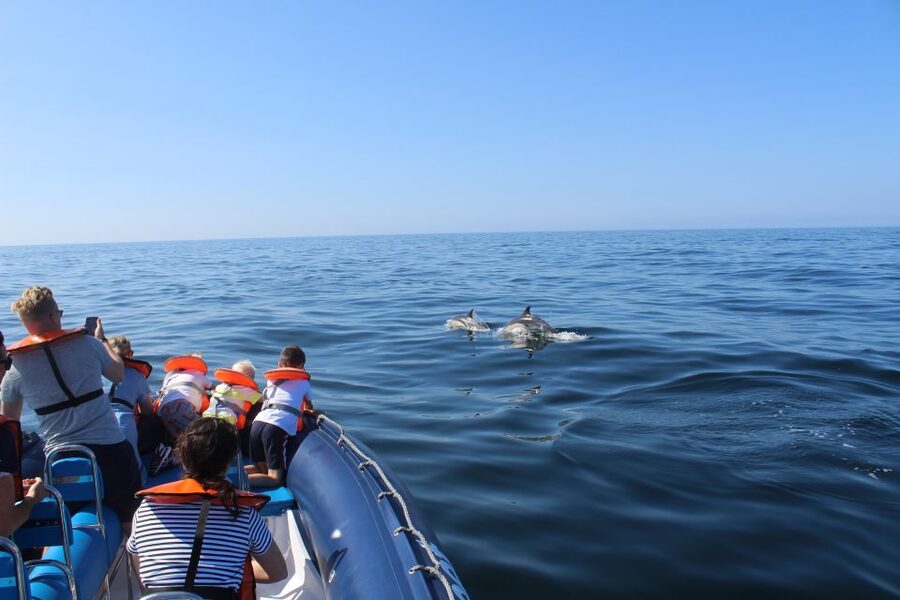
The guide does more than point toward a fin. You can expect explanations about dolphin species, habits, communication, behavior, and conservation during the ride. The guide may also explain why the boat changes direction, how the animals are being approached, and what you are seeing when a pod surfaces only for a moment.
The listed guide languages are English, Portuguese, and Spanish. Past outings have included guides called John, Marta, and Juan, with John and Marta receiving particular praise for keeping the group informed and entertained while searching. Staff names can change, but the format remains focused on a marine biology guide working alongside the captain.
This is especially useful for families. Children get the excitement of a speedboat, while the guide gives the wildlife encounter some meaning. You are not simply ticking off a dolphin sighting. You learn why animals travel in pods, how they communicate, and why the crew avoids feeding or touching them.
The education is delivered in short explanations between sightings, which suits the setting. You are on a moving boat, not in a classroom, so do not expect a long lecture. Instead, you get practical facts at the moments when they help you understand what is happening around you.
Same pod, another way to meet it:
- Albufeira: Dolphin Watching and Benagil Cave Boat Cruise
★ 4.8 · 4,226 reviews - Portimão: Benagil Caves & Dolphins Watching with Biologist
★ 4.8 · 3,795 reviews - Lagos: Dolphins & Caves – Catamaran
★ 4.9 · 1,512 reviews - Lagos: Dolphin Watch Tour with Professional Marine Biologist
★ 4.9 · 1,500 reviews
The RIB ride: fast, safe, and not especially gentle
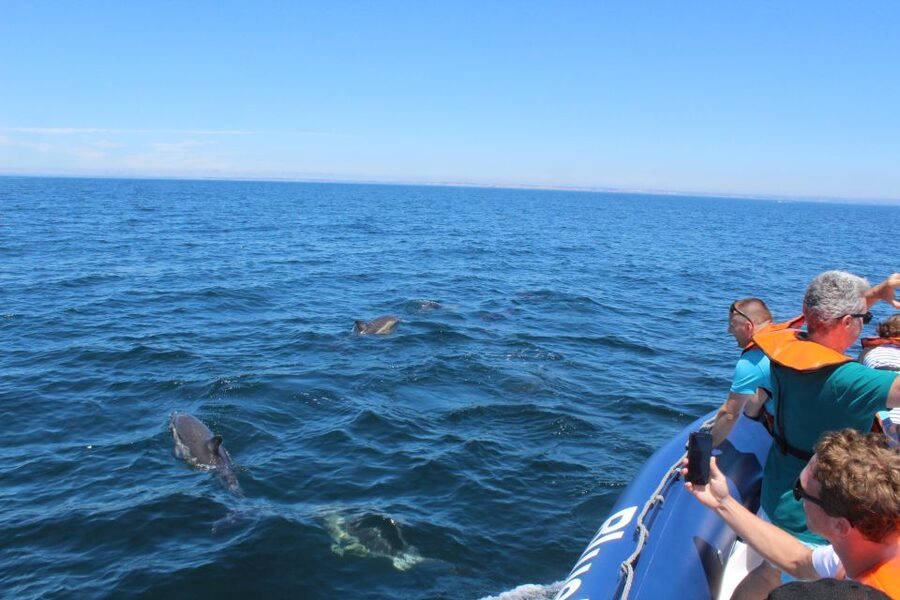
The boat is designed for open-ocean conditions and is described as fast and safe. Past outings report a wild ride that still felt secure, while another person who is prone to seasickness managed without trouble because the water was not too choppy that day.
Conditions vary. Wind can make the trip rough, and the RIB may bang down on the water. If you have back problems, this activity is not suitable, and one useful seating tip comes from an experienced passenger: the front offers the most excitement, while the back may be kinder to your back.
The operator excludes people with heart problems, mobility impairments, and pregnancy, and children under four cannot join. Wheelchair users cannot be accommodated. These are not minor footnotes. The boat’s speed, boarding setup, and offshore conditions make this a poor fit if you need a gentle or highly accessible ride.
Smoking, alcohol, drugs, jumping, and contact with animals are not allowed. Pets are also excluded. Life jackets, insurance, and the safety briefing are included.
A small group makes the sightings easier
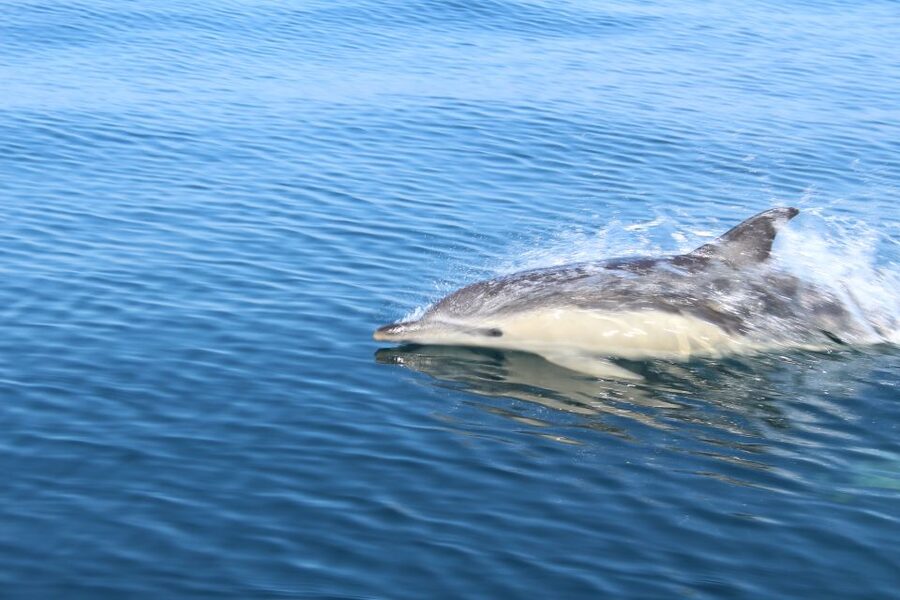
With no more than 18 participants, this feels more intimate than a large dolphin boat. A smaller passenger count gives you a better chance of seeing over the side and makes it easier to hear the guide when the boat slows near a pod.
You will still need to move your head and body to follow fast-moving animals. Dolphins do not pose in one place, and everyone may be looking in a different direction. Still, a compact RIB offers a much cleaner view than a crowded deck with several rows of people.
The smaller boat also helps the crew react quickly. It can relocate when dolphins move and cover more sea during the 1.5-hour window. That efficiency is one reason the $42 price feels fair to me, especially when you consider that a marine biologist, safety equipment, and insurance are included.
The price is less attractive if you want a calm cruise or guaranteed wildlife. You are paying for a serious attempt to find wild animals, not a fixed attraction with a guaranteed show. If the dolphins stay away, the RIB ride and guide can still make the outing worthwhile, but the main reward remains uncertain.
Weather can change the day
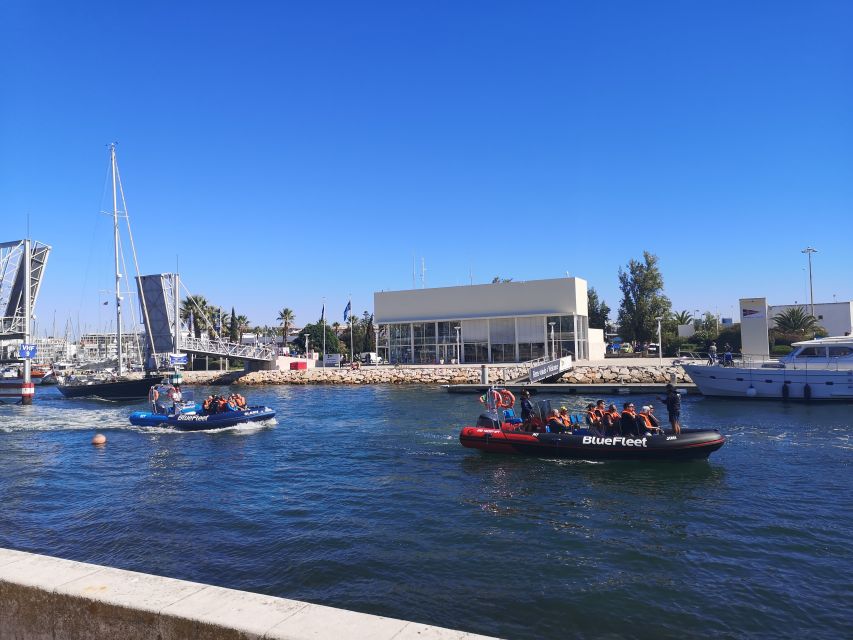
The tour runs subject to weather conditions. Strong wind or poor sea conditions can lead to rescheduling or cancellation, and you should keep some flexibility in your Lagos plans.
Weather also affects the quality of the sighting. A windy day may make the ride more exciting but make it harder to scan the water. Another outing had difficult wind yet still found many dolphins, while a different trip saw only limited dolphin activity. The crew may go farther offshore, but there is no way to remove the weather factor.
I would avoid scheduling this as the one and only highlight of a tightly packed departure day. Give yourself room for a change in timing if the sea turns rough. The activity allows free cancellation up to 24 hours in advance, and you can reserve now and pay later, which helps if your itinerary is still taking shape.
Occasional extras on the return journey
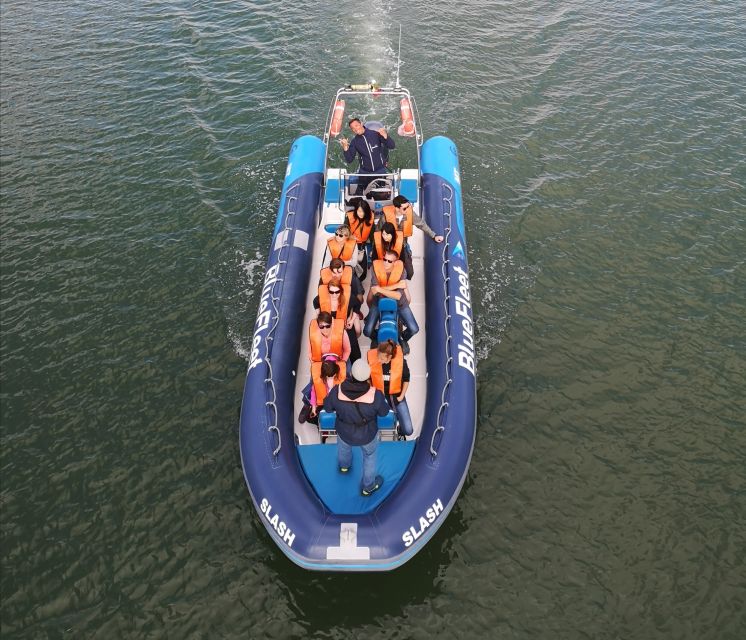
The main purpose is dolphin watching, but some trips have added coastal views on the way back. A few outings passed by the caves near Lagos after the wildlife search, giving the ride a little extra scenery.
Treat this as a possible bonus, not part of the guaranteed program. The crew’s first duty is to search for marine life and return safely. If time and conditions allow, you might get a coastal detour. If the dolphins are found late in the trip, the crew may quite reasonably focus on the animals instead.
That balance is right. I would rather have extra time with a pod than a rushed cave pass, and some outings have received additional time when a large group of dolphins was finally found. The crew’s willingness to let people watch properly is more valuable than squeezing in a second attraction.
Who will enjoy this most
This suits nature lovers, couples, families with children over four, and anyone who prefers an active outing to a slow boat cruise. You get wildlife, open water, a fast ride, and useful information in a compact package.
It is also a good choice if you care about responsible wildlife viewing. The rules are clear: no feeding, touching, chasing, or interference. The dolphins remain wild, and their decision to approach is respected.
I would think twice if you have a bad back, heart problems, limited mobility, or a strong dislike of rough rides. Pregnant people, wheelchair users, and children under four should choose another activity. If seasickness worries you, conditions are the deciding factor, and the operator does not offer a calm-water guarantee.
Practical details before you reserve
The tour is offered in English, Portuguese, and Spanish. Pickup and drop-off are not included, so plan your own route to the supplier’s office by Lagos Train Station.
Wear clothing suited to the season, but add a jacket even on a sunny day. Keep valuables at home, secure anything you bring, and expect spray. The crew provides a life jacket, but the information does not mention hotel transfers or personal item storage.
At $42 per person, I see solid value for a 1.5-hour small-group outing with a marine biologist. The value rises sharply when you find a large pod, young dolphins, or another marine species. It is less certain on a rough day with few sightings, though the fast boat and helpful crew still give the trip a worthwhile chance of success.
Should you book this dolphin trip from Lagos?
I would book it if seeing dolphins in the wild is high on your Algarve list and you can accept that nature sets the schedule. The combination of a small group, quick RIB, marine biology guide, and respectful viewing gives you better tools than a casual harbor cruise.
Choose an early morning departure when possible, bring a jacket, and do not sit at the very front if your back is sensitive. Book this for the experience of searching the Atlantic, not for a guaranteed close-up. If the dolphins arrive, you may get the unforgettable part: a pod moving freely beside the boat, with no tricks and no barriers between you and the wild.
FAQ
Where does the dolphin watching tour depart from?
The meeting point is the local supplier’s office at Lagos Train Station, Estrada de São Roque, 8600-318 Lagos. Hotel pickup and drop-off are not included.
How long does the boat trip last?
The dolphin watching trip lasts 1.5 hours. Starting times vary, so you need to check availability for your preferred date.
How many people can join the boat?
The tour is limited to a maximum of 18 participants, making it a small-group outing.
Is a marine biologist included?
Yes. A marine biologist guide accompanies the trip and explains dolphin species, behavior, communication, and conservation.
Are dolphin sightings guaranteed?
No. Dolphins are wild animals, and sightings depend on conditions and location. Outings have also seen porpoises, fin whales, and tuna, but no wildlife encounter is guaranteed.
What languages are available?
The live guide service is available in English, Portuguese, and Spanish.
Is the tour suitable for young children?
Children under four years old cannot join. The activity is also not suitable for pregnant women, wheelchair users, people with mobility impairments, or people with heart or back problems.
What happens if the weather is poor?
The tour is subject to weather conditions and may be rescheduled or canceled in bad weather. You can cancel up to 24 hours in advance for a full refund, and the reserve-now, pay-later option is available.
Newly spotted around the Algarve
- Quarteira: Algarve Coast, Caves and Dolphin Watching Cruise★ 4.6 · 27 reviews
- Portimão: 2-Hour Dolphin Watching Boat Tour★ 4.7 · 42 reviews
- Lagoa: Dolphin Watching & Benagil Tour with Biologist Guide★ 4.9 · 188 reviews
- Fuzeta: Dolphin Observation Tour★ 4.2 · 65 reviews
- From Lagos: Dolphin Watching Catamaran Cruise★ 4.7 · 257 reviews
- From Faro: Wildlife and Dolphin-Watching Speedboat Tour★ 4.7 · 41 reviews
- Faro: Dolphin and Marine Life Watching Boat Tour★ 5.0 · 2 reviews
- Dolphins Watching – Portimão★ 4.9 · 107 reviews
Algarve Dolphin Watching Tours, side by side.
Albufeira: 2.5-Hour Benagil Caves & Dolphin Watching
Read our review →
Albufeira: Benagil Caves & Dolphin Watching Speed Boat Tour
Read our review →
Albufeira: Dolphin Watching and Benagil Cave Boat Cruise
Read our review →
Portimão: Benagil Caves & Dolphins Watching with Biologist
Read our review →
Lagos: Dolphin Watch Tour with Professional Marine Biologist
Read our review →
Vilamoura: Benagil Cave Boat Tour with Entry&Dolphin search
Read our review →This trip also appears in