
Review · GRAN CANARIA
Maspalomas: Palmitos Park Ticket with Dolphin and Bird Shows
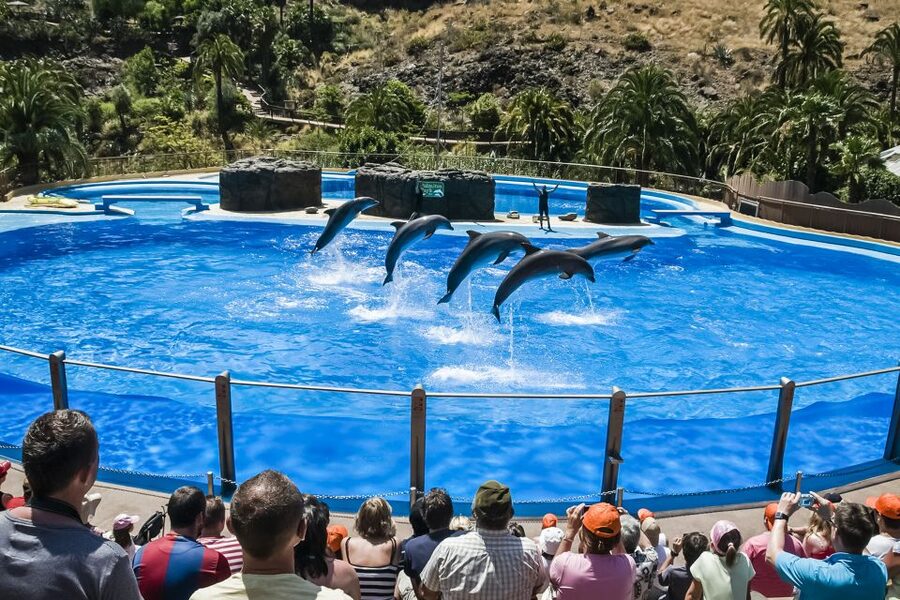
The dolphin show is the main event at Palmitos Park, but it is only one part of a much bigger day. Set in a valley in the hills above Maspalomas, the park combines a zoo, botanical garden, aquarium, butterfly house, and several live animal shows. The setting gives the bird of prey display an especially fine backdrop, with birds flying over the slopes rather than performing against a city view.
I like the mix of big-ticket shows and quieter animal areas. You can watch dolphins leap, then slow down among orchids, butterflies, reptiles, primates, and tropical birds. I also like that the ticket includes the dolphin, parrot, exotic bird, and birds of prey shows, so you are not paying extra each time you reach a popular attraction.
The catch is the terrain. Much of the park runs uphill and downhill, with some steep sections. You should also budget for expensive food and drinks inside. The park is wheelchair accessible, but anyone with limited mobility should plan carefully and ask about paid walkers or mobility scooters.
Key points to know before you go
- The dolphin show is the headline attraction: It is a polished, emotional performance and the highlight for many families.
- The birds of prey show uses the mountain setting well: Birds fly in open air above the valley, making this more than a standard indoor display.
- Four major shows are included: Your entry covers dolphins, parrots, birds of prey, and exotic birds.
- Plan on four to five hours: The park is larger than it first appears, and the hills slow you down.
- Bring water, snacks, and sun protection: Food and drinks inside can be costly, while the show areas have limited shade.
- The park is beautiful but hilly: The paths are manageable for many people, but steep climbs can change the day for anyone with mobility concerns.
Why the dolphin show is only the beginning

Palmitos Park sits about 10 kilometers from the Maspalomas Lighthouse, in a mountain valley rather than beside the resort’s flat coastal streets. That location matters. You come for animals, but you also get broad views and a setting filled with palms, flowers, rocky slopes, and planted gardens.
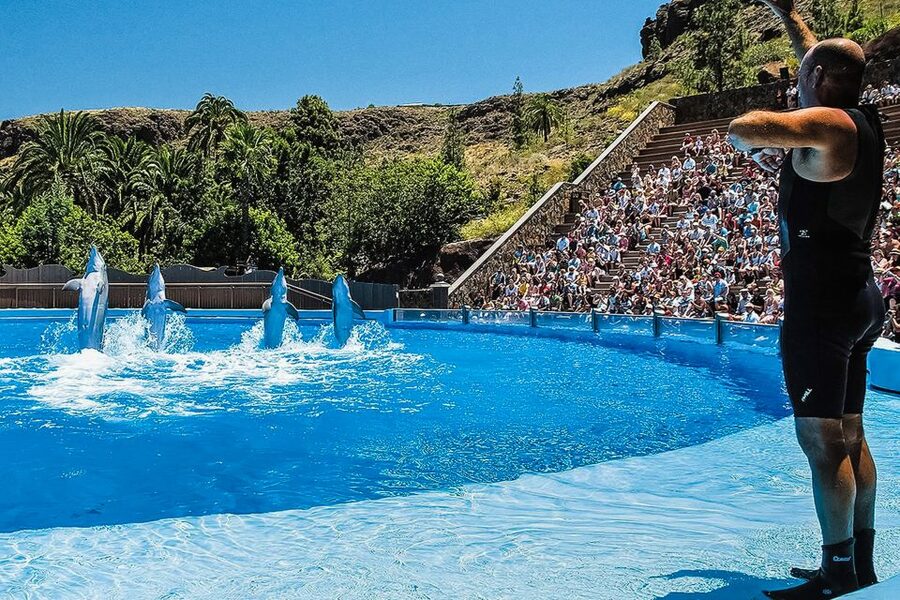
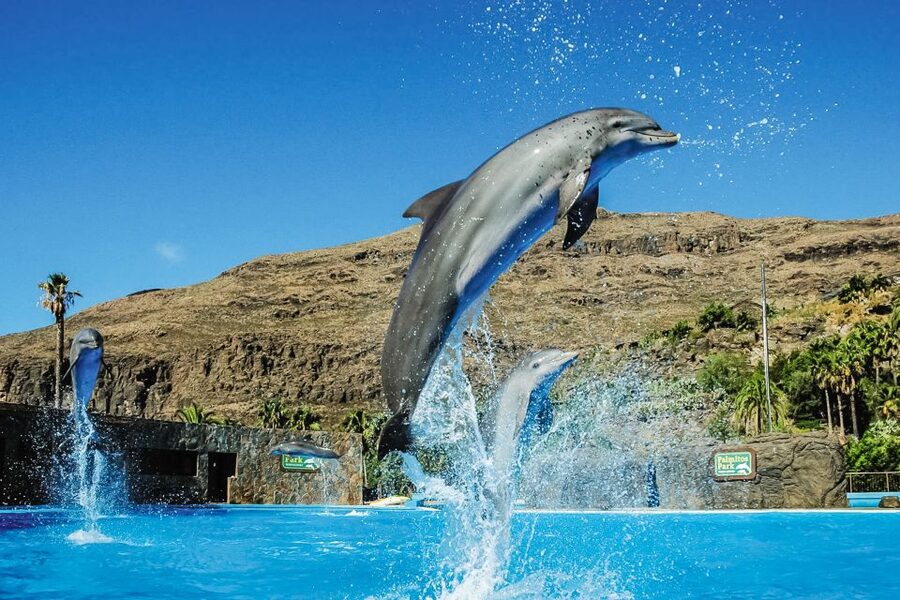
The dolphinarium is the obvious first choice for many families. The show includes trained dolphins performing jumps and other behaviors with their handlers. The experience is designed for a general audience, so young children can follow it easily, while adults will likely appreciate the close contact between the animals and staff.
I would treat the dolphin show as a fixed appointment in your day, not something to squeeze in at the end. Missing it would leave a large hole in your visit. Show times can change, so check the schedule when you arrive and shape your route around it.
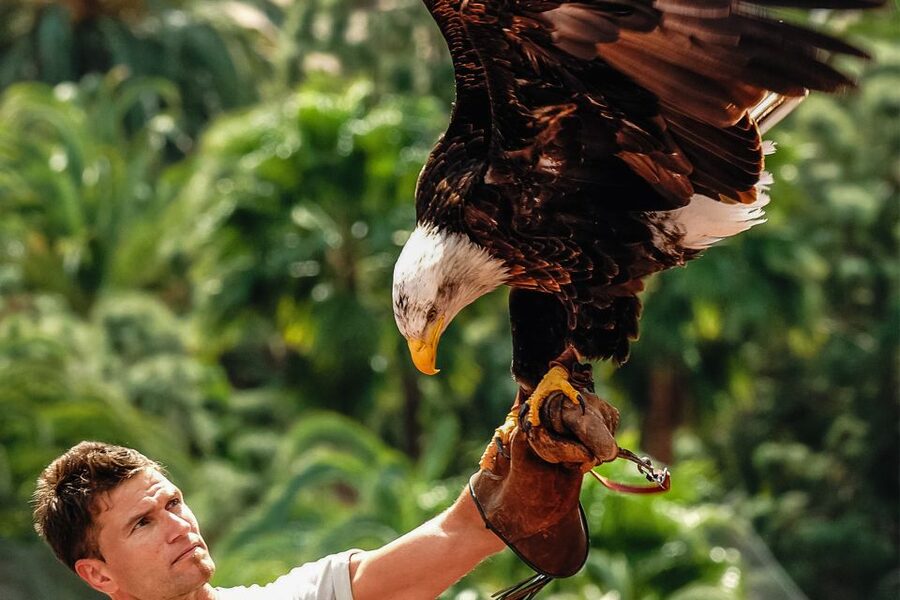
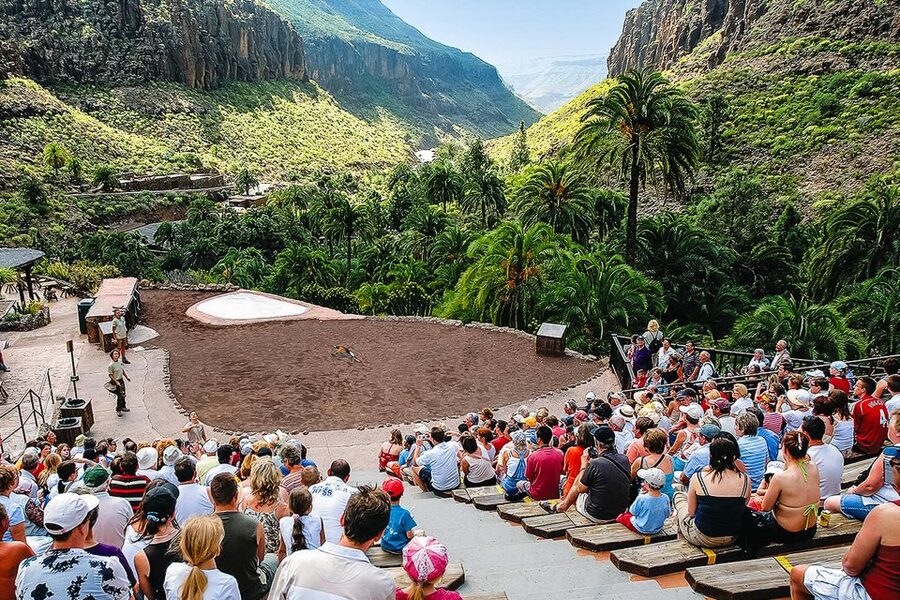
The park’s other shows give the day more variety. The birds of prey display is particularly memorable because the birds fly in the open air, with the hills behind them. The exotic bird and parrot shows are lighter and more colorful, with trained birds demonstrating movement and behavior at close range.
The exact show order and times should be checked on the day. The displays are spaced out so you can usually move around the park between them, but you still need to allow time for hills, stops, photographs, and the occasional slow walk with children.
More Dolphin Parks and Shows in Gran Canaria:
- Dubai: Dolphin Encounter & Aquaventure Waterpark Ticket
★ 4.6 · 1,269 reviews - Dubai: Swim with Dolphins at Atlantis Waterpark
★ 4.5 · 1,184 reviews - Dubai: Dubai Dolphinarium Dolphin, Seal & Bird Show Tickets
★ 4.5 · 1,020 reviews
The aquarium, butterfly house, and orchid displays
After the large animal shows, the indoor and planted areas provide a useful change of pace. The aquarium gives you a calmer stop between performances, while the butterfly house is one of the park’s most appealing areas for anyone who enjoys close views of small creatures.
The butterfly house works best when you take your time. It is easy to hurry through, especially when you are trying to reach a show, but the attraction is in watching movement at close range rather than checking off a list of species. The orchid house and other plant displays add color and make this feel like a botanical garden as well as a zoo.
I like this part of the park for adults who may not want nonstop animal demonstrations. It also gives families a break from the sun. Much of the park has shade, but the dolphin and birds of prey show areas are more exposed, so the indoor displays are a useful place to cool down.
The plant collection includes species from all five continents. That broad range is one reason the park feels larger than a simple animal enclosure. You move between gardens, animal areas, and show spaces instead of spending the whole day in one uniform setting.
Komodo dragons, caimans, and Gran Canaria’s giant lizard
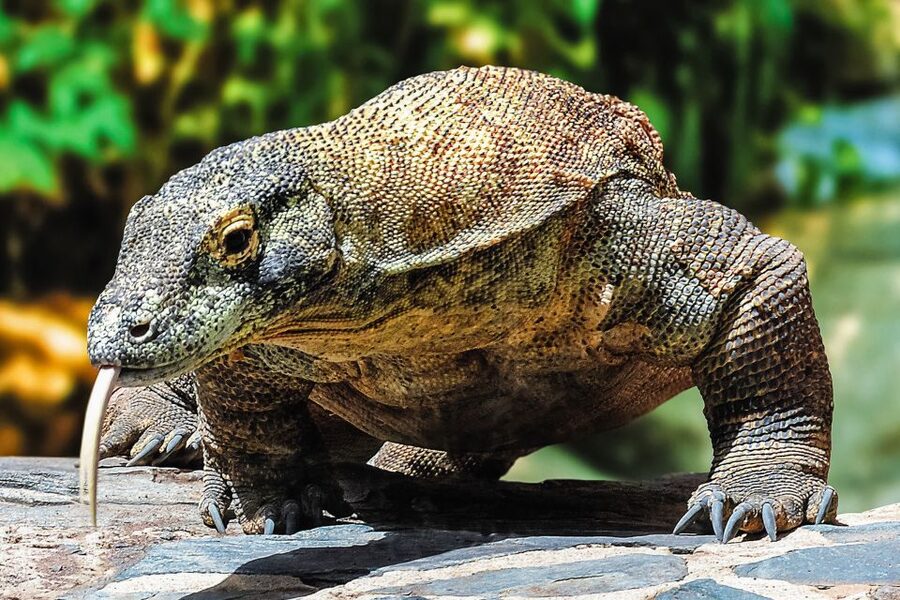
The reptile area supplies some of the park’s strongest creature encounters. The Komodo dragon is a major draw. It belongs to the first generation of this species raised in captivity in Europe, and it represents the largest lizard group, reaching up to 3 meters in length and weighing around 90 kilograms.
That scale is hard to picture until you see the animal at close range. The Komodo dragon is not a quick stop for a small lizard display. Give yourself time to look at its size, body shape, and slow movements.
At Caiman Lake, you might see spectacled caimans, Californian turtles, and the Gran Canaria giant lizard sharing the area in carefully managed surroundings. The mix gives you a chance to compare animals from different places while also seeing a local species connected to the Canary Islands.
The reptile section is a good reason to visit even if dolphins are not your main interest. It adds substance to the park and keeps the visit from feeling like a series of stage shows. It also suits older children who enjoy unusual animals more than traditional farm or petting attractions.
The Island of Primates and the smaller animals
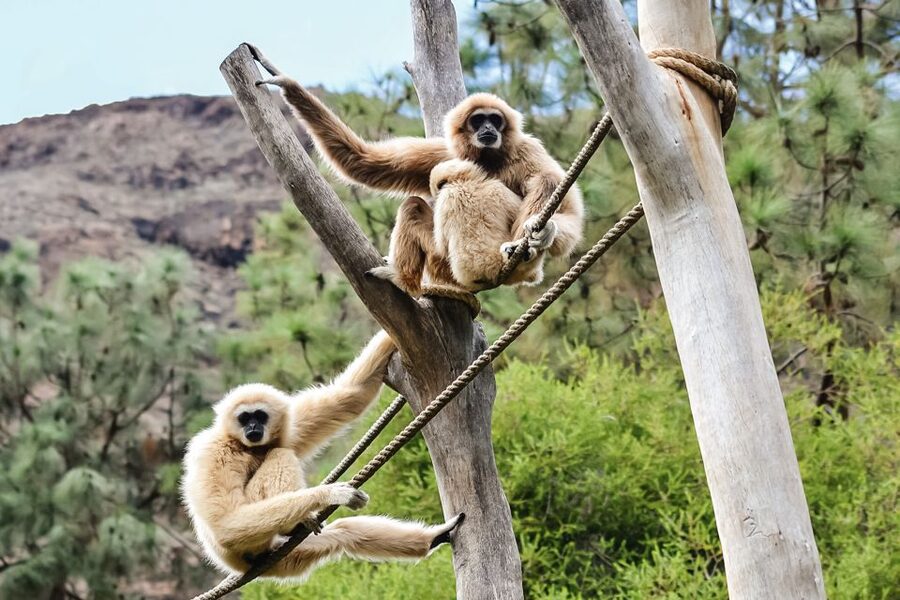
The Island of Primates is another must-see section. The park’s collection includes talapoins, a small primate species, as well as wallabies, meerkats, and aardvarks. These animals help fill out the day between the headline attractions.
Meerkats are easy family favorites because they are active and recognizable, while aardvarks offer something less familiar. Wallabies bring an Australian connection to a park that already covers animals and plants from several continents.
The smaller species also reward slower walking. At the dolphinarium, everyone tends to focus on the same performance. In the animal sections, you can stop when something catches your eye, watch behavior for a few minutes, and move on when you are ready.
The park’s layout lets you get fairly close to many animals within their enclosures. That makes the visit feel personal, but you should still follow the park’s instructions and avoid treating the animals as photo props. The staff are part of the experience, especially during the live shows, and the care shown in handling is an important part of the park’s appeal.
More dolphin trips around Gran Canaria:
- Gran Canaria: Catamaran Dolphin Watch Cruise with Snorkeling
★ 4.4 · 4,761 reviews - Gran Canaria: Dolphin and Whale Watching Cruise
★ 4.2 · 2,537 reviews - From Puerto Rico de Gran Canaria: Dolphin Watching Cruise
★ 4.3 · 2,520 reviews - Dolphin and Whales watching cruise from Puerto Rico de Gran Canaria
★ 4.0 · 508 reviews
A realistic route for four to five hours
I would allow at least four hours, with five hours being more comfortable if you want every major show and a proper look at the animals. One visitor spent five hours in the park, while another found four hours enough for the main experience. Your timing will depend on children, mobility, meal stops, and how often you pause for photographs.
Start by checking the show schedule at the entrance. Pick out the dolphin show and birds of prey display first, then fit the parrot and exotic bird shows around them. This avoids crossing the same steep paths repeatedly.
A sensible day might look like this:
- Enter and check the show timetable.
- Walk through nearby animal areas before the first scheduled show.
- Watch the dolphin performance.
- Visit the aquarium, butterfly house, and orchid displays.
- Stop for the birds of prey show.
- Continue through the reptiles, caimans, and primates.
- Fit in the parrot and exotic bird shows.
- Finish with any sections you skipped, then allow time for the exit and shop.
This is not a flat, compact attraction. The valley setting means you are constantly changing height. You may enjoy the views, but you will feel the climbs in hot weather, especially when moving between shows.
Wear comfortable shoes and bring water. Sun protection is important even though several parts of the park are shaded. A hat is useful, and I would not plan to arrive late and rush through the grounds. Last entry is at 5:00 PM, but entering near that time would leave little opportunity to see the park properly.
Food, prices, parking, and the real value
The ticket costs $44 per person and includes entry, all listed shows, and free car parking. That is not a cheap casual stop, particularly for a large family. The value improves if you stay for four or five hours and see the dolphin, parrot, exotic bird, and birds of prey performances rather than treating the ticket as a quick visit.
The park is more than a dolphin venue. You are also paying for the aquarium, butterfly house, gardens, reptiles, primates, and other animals. I think the price is easier to justify for a full half-day or full-day visit than for a short morning stop.
Food and drinks are not included. Prices inside can be high, with particularly sharp costs reported for simple hotdogs and snacks. The restaurant has been found to offer good food and better value than some of the quick options, but I would still bring water and permitted snacks if practical.
Free parking helps if you are driving. If you are staying around Maspalomas, the park is close enough for a taxi ride, but the cost of getting there can add to the day. One visitor described a taxi journey of about 30 minutes and found it expensive, though still worthwhile for the experience.
The meeting point is simple: go directly to Palmitos Park and show your voucher at the entrance. There is no hotel pickup or drop-off included, so you need to arrange your own transport.
One practical warning: make sure your navigation app takes you to Palmitos Park itself. The park is in the hills near Maspalomas, and an incorrect address can send you toward San Bartolomé de Tirajana instead. Check the destination before leaving your hotel.
Mobility, shade, and family comfort
The attraction is listed as wheelchair accessible, but accessibility does not mean the whole visit is flat or effortless. The steep paths are the main issue. Anyone with difficulty walking should contact the park or ask at the entrance about available walkers and mobility scooters, which can be rented for an additional cost.
Families with children aged four and seven can easily fill a day here, especially if the children like dolphins and birds. The shows create clear moments of excitement, while the animal areas offer enough variety to prevent the visit from becoming repetitive.
You will probably take plenty of photographs, but the most exposed show areas can be hot. Bring sunscreen and a hat, and use the shaded sections as rest stops. The park is clean and well maintained, which makes a difference when you are spending several hours there with children.
Animal encounters and photographs may carry additional charges. One family paid 34 euros for four photographs, so decide in advance how much you want to spend on extras. The exit gift shop is easy for children to notice, so a small souvenir budget can prevent an end-of-day negotiation.
Who will enjoy Palmitos Park most
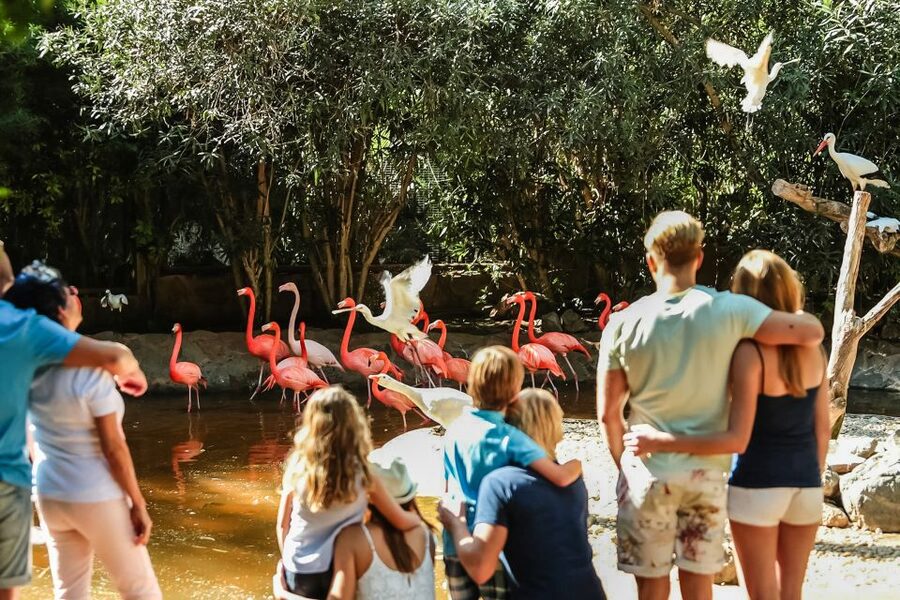
I would recommend this day to families, animal lovers, and adults who enjoy gardens and nature displays as much as formal shows. Children are likely to remember the dolphins, but adults may find the bird of prey display, butterfly house, orchids, and reptile section just as interesting.
It also suits people looking for a break from the beach. The park gives you several hours of activity and scenery, and it feels different from the resort area around Maspalomas. The mountain setting is a large part of the attraction.
I would be more cautious if you have limited mobility, dislike steep hills, or want a quiet, low-cost outing. You can still visit with mobility support, but the terrain needs planning. I would also skip it if you only have an hour or two, since the admission price makes more sense when you stay long enough to see several shows and animal areas.
The dolphin show is the most praised feature, but the birds of prey show may be the surprise favorite. Seeing those birds fly above the valley gives the performance a sense of space that a small indoor venue cannot match.
Should you book Palmitos Park?
Book it if you want a full animal day near Maspalomas and are happy to walk uphill. At $44, the ticket is fair value when you use the included shows and stay for four to five hours. The best plan is to arrive prepared with water, sun protection, comfortable shoes, and a realistic food budget.
I would make this a strong choice for families and animal lovers. I would think twice only if steep paths, extra food costs, or transport from your hotel will cause problems. For most visitors who plan around the hills, the dolphins, birds, gardens, reptiles, and mountain views create a varied day rather than a single short attraction.
FAQ
Where is Palmitos Park?
Palmitos Park is in the Canary Islands, Spain, about 10 kilometers from the Maspalomas Lighthouse. You should go directly to the park entrance.
How much does entry cost?
The listed price is $44 per person. Entry includes the park and all listed shows.
What shows are included?
Your ticket includes the dolphin show, parrot show, birds of prey show, and exotic bird show.
Is parking included?
Yes. Free car parking is included.
How long should I allow for a visit?
Allow at least four hours for the main attractions. Five hours gives you more time for the shows, animal areas, gardens, and meal stops.
Is Palmitos Park wheelchair accessible?
The park is wheelchair accessible, but it has many steep uphill and downhill paths. Walkers and mobility scooters may be available to rent for an additional cost.
Are food and drinks included?
No. Food and drinks are not included, and prices inside can be high. Bring water and consider bringing snacks if permitted.
What time is the last entry?
Last entry is at 5:00 PM. Check the available starting times and show schedule before you visit.
Newly spotted around Gran Canaria
- Half-Day Cruise Tour-Dolphin and Whale Watching★ 4.0 · 124 reviews
- Dolphin Observation In A Small Group On A Silent Hybrid Boat★ 4.5 · 21 reviews
- Dolphin Searching Tour in Puerto de Mogán (“KEEPER UNO” Boat)★ 4.5 · 91 reviews
- 2-Hour Dolphin and Whale Watching in Gran Canaria★ 4.0 · 166 reviews
- Sunset Dolphin Watching Tour on Hybrid Boat in Small Group★ 4.0 · 20 reviews
- Puerto Rico : 2 hour Dolphin Catamaran Excursion★ 4.2 · 129 reviews
- Puerto Rico de Gran Canaria: Premium Dolphin Catamaran Tour★ 4.1 · 40 reviews
- Mogan: Dolphin Watching Boat Trip with Swim Stop★ 4.6 · 217 reviews
Gran Canaria Dolphin Watching Tours, side by side.

Gran Canaria: Catamaran Dolphin Watch Cruise with Snorkeling
Read our review →
Gran Canaria: Dolphin and Whale Watching Cruise
Read our review →
From Puerto Rico de Gran Canaria: Dolphin Watching Cruise
Read our review →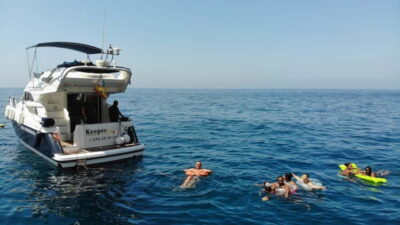
Mogan: Dolphin Watching Boat Trip with Swim Stop
Read our review →
2-Hour Dolphin and Whale Watching in Gran Canaria
Read our review →
Puerto Rico : 2 hour Dolphin Catamaran Excursion
Read our review →
Half-Day Cruise Tour-Dolphin and Whale Watching
Read our review →
Dolphin Searching Tour in Puerto de Mogán (“KEEPER UNO” Boat)
Read our review →This trip also appears in