
Review · AUSTRALIA
Bunbury: Swim with Dolphins Tour
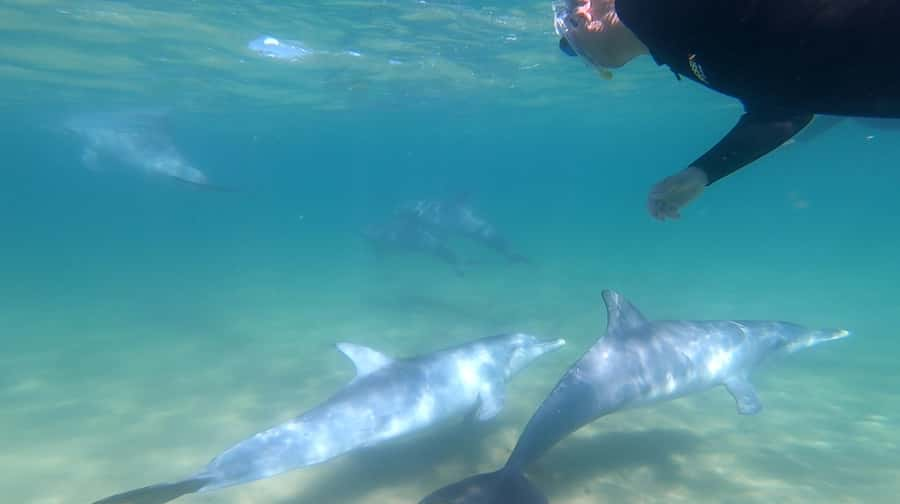
Wild dolphins decide how close they come, which makes this Bunbury tour feel like a real wildlife encounter rather than a staged animal show. You cruise into Koombana Bay, learn how to identify individual dolphins, then enter the water only when the animals are nearby and relaxed. Their clicks and whistles may be as memorable as the swim itself.
I like the careful work of the guides and volunteers, who keep swimmers together and help less confident snorkelers. I also like that your $155 supports a not-for-profit centre involved in research, education, rescue, and rehabilitation. The one thing to weigh is that interaction is never guaranteed, and the bay can be murky, which may limit underwater views.
Key points at a glance
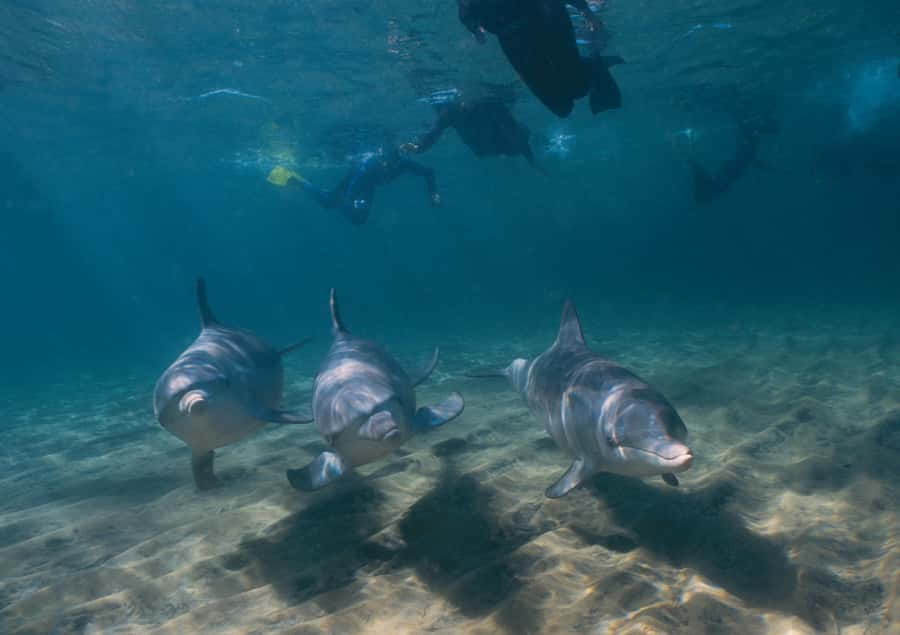
- Wild dolphins choose the interaction: You may swim beside, below, or near bottlenose dolphins, but their behaviour cannot be controlled.
- Four hours in Koombana Bay: The trip includes a boat ride, dolphin watching, marine life viewing, and possible swims.
- Strong support in the water: Guides and trained volunteers help swimmers stay together and assist people who are new to snorkelling.
- Full equipment is supplied: You get a warm wetsuit, mask, snorkel, fins, and a buoyancy vest if needed.
- A conservation-focused outing: The centre records dolphin numbers and behaviour while supporting research, education, and animal care.
- Free return if no dolphins are seen: If the tour does not find dolphins in the water, you can go again, subject to availability.
Meeting Bunbury’s dolphins at Koombana Bay
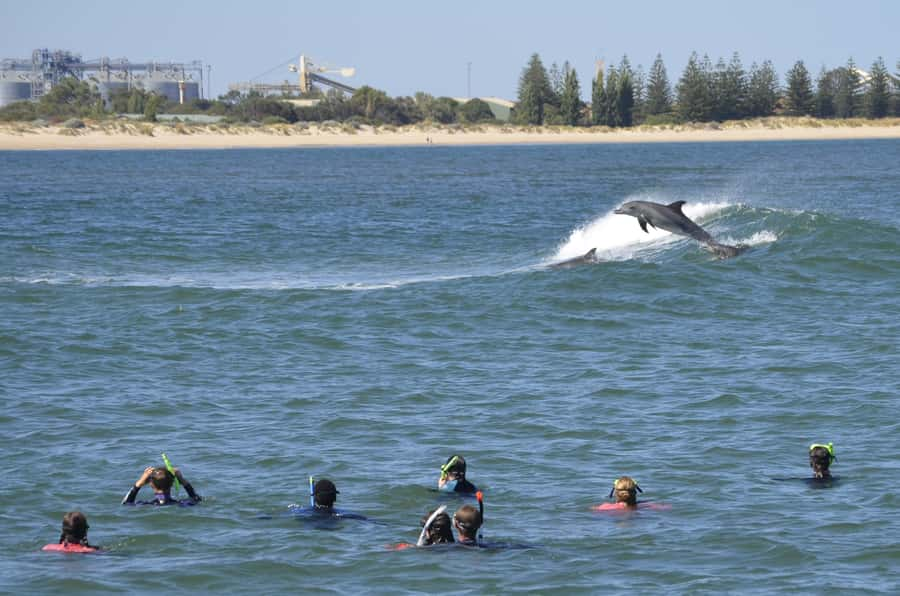
The tour begins at the Dolphin Discovery Centre on Koombana Drive in Bunbury. Go to the front counter first, where staff direct you to the meeting point and prepare you for the morning or afternoon outing.
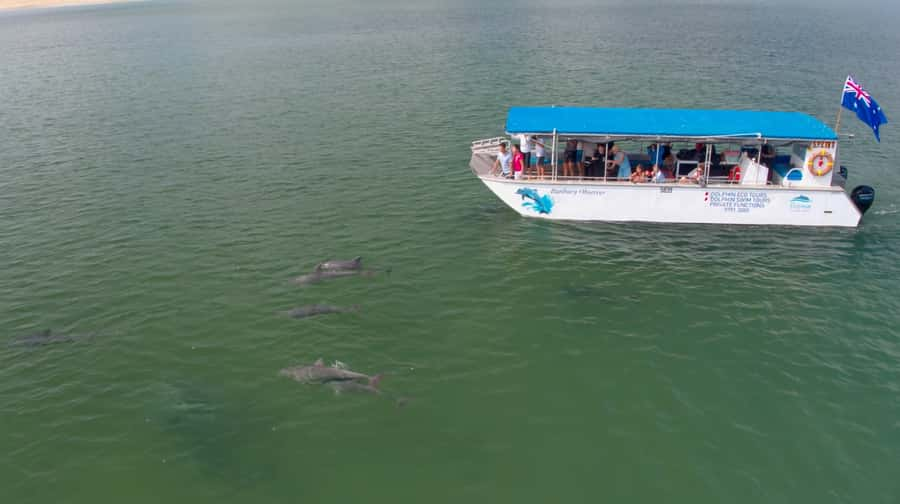
The main attraction is not a dolphin tank or a rehearsed performance. These are wild bottlenose dolphins living in Koombana Bay. The centre works in their home waters, and the animals decide if they want to approach the boat or swimmers.
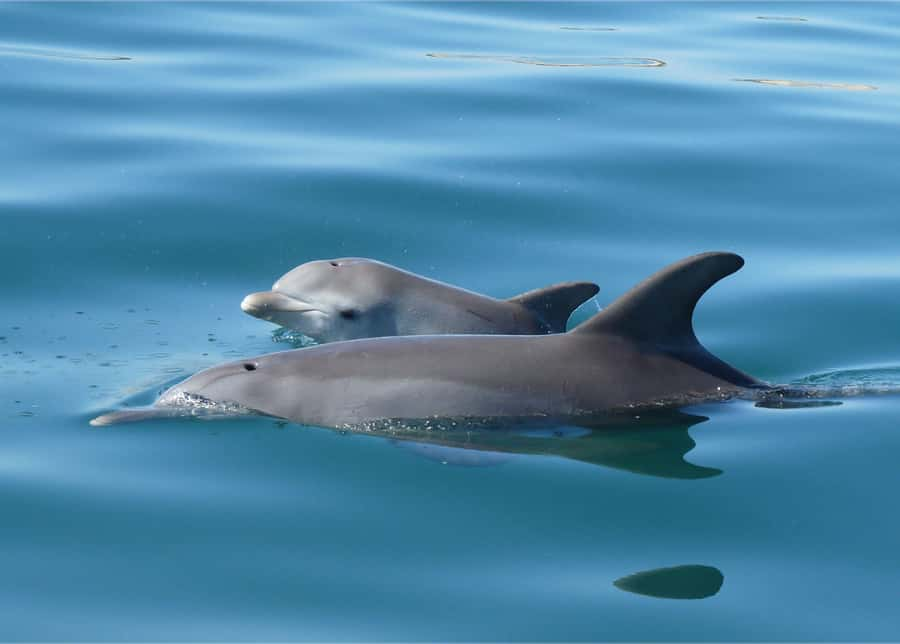
That difference matters. You might see dolphins feeding, playing, socializing, jumping, or resting. You might hear the sharp pulse of echolocation as they check the boat and people in the water. You may also spend time waiting and watching before the conditions are right for a swim.
I prefer this honest arrangement to an encounter built around guaranteed tricks. You get the excitement of uncertainty, along with the responsibility of accepting that wildlife does not follow a timetable.
The local population includes more than 100 bottlenose dolphins in the bay. That does not mean every tour sees a large group, but it helps explain why Koombana Bay is such an important setting for this outing.
More Swim with Dolphins in Australia:
- Swim with Wild Dolphins Day Tour
★ 4.5 · 669 reviews - Adelaide: 4-Hour Swimming with Dolphins Experience
★ 4.7 · 439 reviews - Perth: Swim with Wild Dolphins Tour
★ 4.7 · 326 reviews
From the centre to the boat
The entire experience lasts about four hours, including the preparation, boat trip, wildlife watching, and any time spent swimming or snorkelling. This is not a quick photo stop. You have time to settle into the water, watch animal behaviour, and listen to explanations from the crew.
Before departure, the team provides a warm wetsuit, mask, snorkel, and fins. A buoyancy vest is available if you need one. Bring your swimwear, towel, and warm clothing, since you can feel chilled after time in the water even with a wetsuit.
The centre has changing rooms, hot showers, and storage facilities. Those simple details make a real difference. You do not need to haul your own snorkelling kit or change in a cramped corner of the boat, and you can warm up properly at the end.
A cold drink and snack are provided on board. After the trip, the centre also offers hot barista-made coffee and other beverages. The morning can be active and tiring, so this small comfort is welcome.
How the dolphin swim works
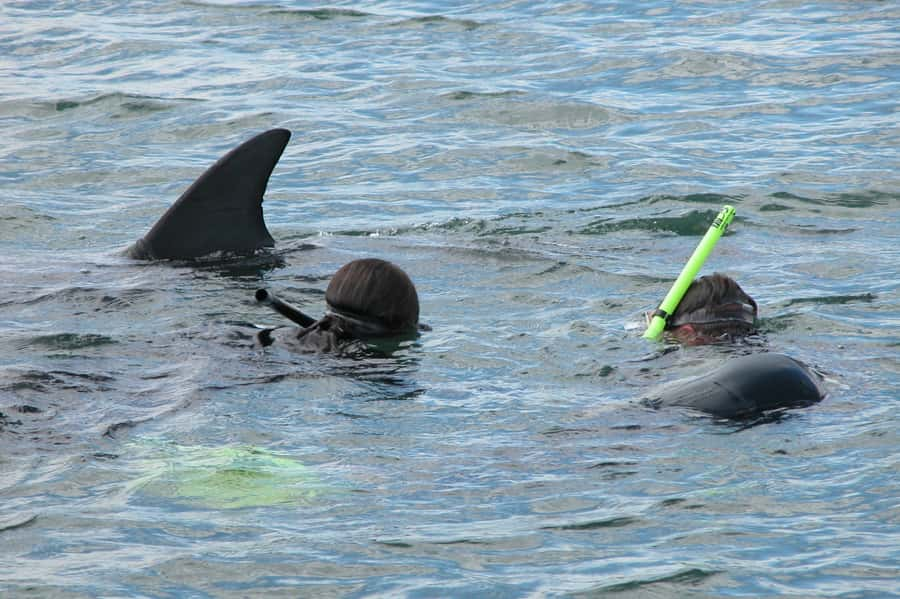
Once the crew locates dolphins and judges the conditions suitable, you may be guided into the water. The key word is may. The crew cannot order the dolphins closer, and they will not force an encounter for the sake of the schedule.
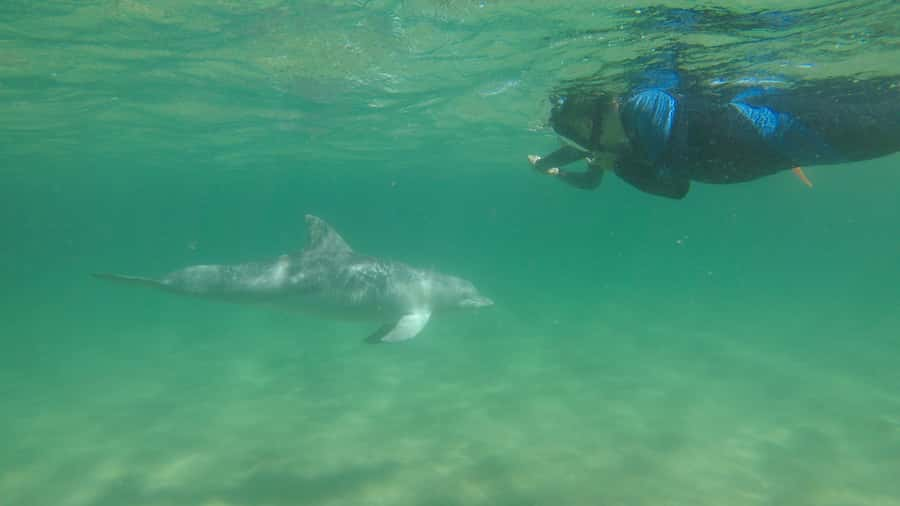
You could see dolphins moving beneath you, swimming alongside the group, or passing at a distance. Some days bring repeated visits. One account described three separate entries into the water, while another recalled seven dolphins moving underneath a swimmer. Those moments can be thrilling, but they are examples of what is possible, not a promise of a particular number.
The crew keeps everyone together and tells you when to look down. That guidance is especially useful because dolphins can appear quickly and disappear just as fast. If you are busy adjusting your fins or looking in the wrong direction, you can miss the best moment.
The staff also watch how the dolphins respond. If the animals move away, the group does not chase them. This gives you a better sense of what responsible wildlife tourism looks like: close enough for a possible encounter, but not built around pressure.
Do not expect crystal-clear tropical water. One swimmer described the water as murky, and visibility in the bay can vary. You may see a dolphin’s outline, back, fin, or shadow before the whole animal comes into view. That can be frustrating if your dream is a perfect underwater photograph, but it does not make the encounter less real.
Guides who make the water feel manageable
A strong part of this tour is the crew presence. Kathy is repeatedly singled out for her passion and clear explanations, and Cathy is praised for her detailed instruction. Yvette has led the group and helped fit participants with thick wetsuits, while skipper Jeff has also been mentioned warmly.
You should not read those names as a guarantee that one particular guide will lead your departure. Staff change from day to day. The useful point is that the centre has an experienced team, and the outing relies on more than one person.
The volunteers are trained to help in the water and keep the group together. That matters if you are an unsure snorkeler. One first-time participant in the sea felt well looked after from fitting the equipment through to the swim, with crew members staying beside less confident people.
I would still be honest with yourself before booking. You need to be comfortable entering the sea, wearing snorkelling equipment, and following directions in a group. You do not have to be an expert swimmer, and a buoyancy vest is available if required, but this is still an active water outing.
The minimum age for swimmers is eight. Children aged eight to 11 must have an adult with them in the water. Children under eight cannot take part as swimmers.
More dolphin trips around Australia:
- Moreton Island: Dolphin & Tangalooma Wrecks Snorkel Cruise
★ 4.5 · 1,039 reviews - Port Stephens: Dolphin Discovery Cruise
★ 4.4 · 926 reviews - Mandurah: Dolphin and Views Cruise
★ 4.6 · 920 reviews - Sydney: Jervis Bay Day Trip with Dolphins, Roos & Beach Time
★ 4.5 · 643 reviews
A conservation trip, not just a swim
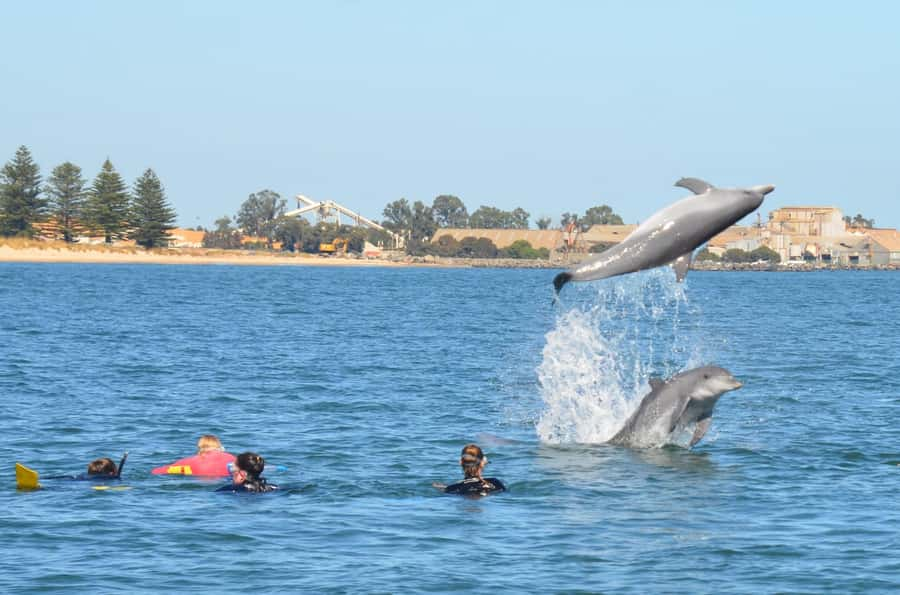
The Dolphin Discovery Centre is a not-for-profit environmental charity. Your booking helps support conservation, education, and research work, including records of dolphin populations and behaviour.
That research element adds meaning to the day. Staff and volunteers document what they observe, so the tour is connected to ongoing work rather than being only a recreational boat ride. You may learn how to identify dolphins and understand more about their social lives, feeding, movement, and communication.
This is also why the centre places dolphin welfare first. A wild animal may approach, circle the group, swim under you, or keep its distance. The crew will not turn a quiet day into a forced interaction.
You receive a 50 percent discount to the Marine Discovery and Interpretive Centre, though entry itself is not included. That can be a sensible add-on if you want more background after the water portion. Plan for it as a separate activity rather than assuming it is part of the four-hour tour.
What the itinerary feels like from start to finish
Your first stop is the Dolphin Discovery Centre, where you check in and receive directions from the front counter. Allow time to change and collect your equipment without rushing.
The boat then heads into the protected waters of Koombana Bay. The crew explains what to watch for while they search for dolphins and other marine life. You might see animals from the boat before any decision is made about entering the water.
When dolphins are nearby, the guide explains where to position yourself and when to move in. The goal is not to surround the animals. Instead, the group waits for the dolphins to show interest and chooses a safe, respectful moment for the swim.
The water portion can include more than one entry, depending on dolphin behaviour and the day’s conditions. Some people may have several close passes. Others may get a shorter look or spend more time watching from the boat.
After the wildlife viewing and swimming, the boat returns to the centre. You can use the changing rooms and hot showers, collect your belongings, and warm up with a drink. The included snack and beverage on the boat are useful, but I would still eat a proper meal before or after the trip if you tend to get hungry after swimming.
Is $155 a fair price?
At $155 per person, this is not a cheap sightseeing cruise. The price makes more sense when you count what is included: a four-hour guided outing, boat transport within the bay, a wetsuit, mask, snorkel, fins, a buoyancy vest if needed, a snack, a cold drink, changing rooms, hot showers, and storage.
You are also paying for trained staff and volunteers, not just a seat on a boat. Their job includes locating dolphins, assessing their behaviour, managing the swimmers, and protecting the animals from unwanted pressure.
The conservation contribution improves the value for people who want their wildlife spending to support local work. The 50 percent discount to the interpretive centre adds another benefit, though you will still pay entry there.
The main value question is simple: are you paying for guaranteed close contact, or for a well-run chance to meet wild animals? The first is not what this tour offers. The second is exactly the point.
If no dolphins are seen in the water, you can take the tour again for free, subject to availability. That policy reduces the risk of a completely empty wildlife day, although it cannot guarantee the same weather, water clarity, or level of interaction on a return visit.
Who should book this tour?
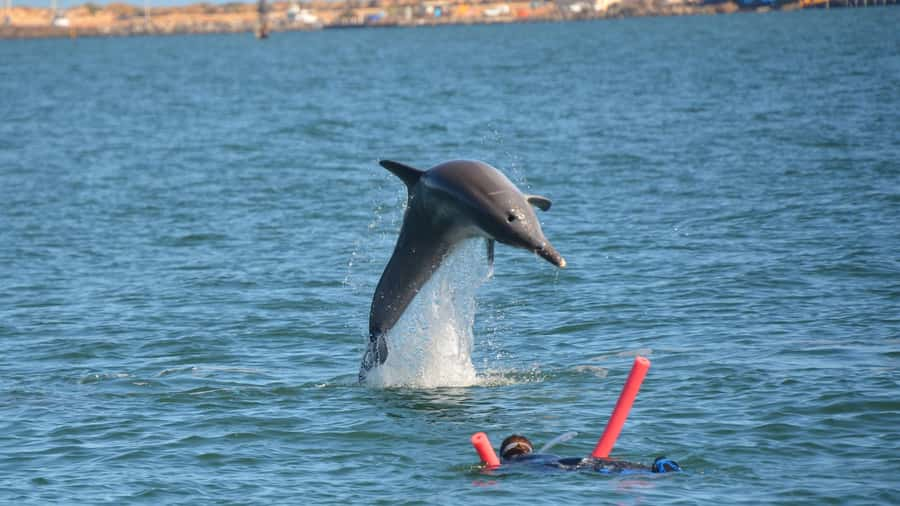
I would recommend it to adults, families with older children, and first-time snorkelers who want a guided introduction to wild dolphin encounters. The crew support is a real advantage if you are nervous in the sea or unsure how to use fins and a snorkel.
It suits you especially well if you care about animal welfare and want to learn about dolphin behaviour rather than simply collect a close-up photograph. The research and charity work give the outing a stronger purpose.
You may want to think twice if you dislike uncertain wildlife encounters or need clear water for underwater photography. The dolphins may keep their distance, and murky water can reduce visibility.
This is also not the right choice for children under eight, or for anyone who cannot comfortably take part in a supervised sea swim. The minimum age and adult requirement for children aged eight to 11 are firm.
Practical ways to prepare
Wear swimwear under your clothes so changing is easier. Pack a towel and warm layers for before and after the boat trip.
Listen closely during the equipment fitting. A properly adjusted mask and wetsuit can make the difference between enjoying the water and spending the whole time fiddling with gear.
If you are a nervous snorkeler, tell the crew early. Their support is most useful when they know you need help, and the guides can encourage you to stay with the group and look down at the right time.
Keep your expectations flexible. You may see dolphins from the boat, hear their echolocation, watch them pass beneath you, or have several close encounters. You may also have a quieter swim with brief sightings. Both are part of meeting wild animals on their terms.
The activity is conducted in English. Alcohol and drugs are not allowed.
Should you book the Bunbury dolphin swim?
Book it if you want a responsible, hands-on wildlife outing and accept that the dolphins control the experience. The crew support, supplied gear, warm showers, conservation work, and free return option make the $155 price easier to justify.
I would be cautious only if your priority is guaranteed close contact or perfectly clear water. For everyone else, this offers a thoughtful way to meet Koombana Bay’s wild bottlenose dolphins while helping the centre study and protect them.
FAQ
Where does the Bunbury dolphin swim tour start?
The tour starts at the Dolphin Discovery Centre on Koombana Drive, Bunbury, Western Australia. Staff at the front counter direct you to the meeting point.
How long does the dolphin tour last?
The full experience lasts four hours, including the boat trip, dolphin watching, marine life viewing, and possible swimming and snorkelling.
What is included in the price?
The price includes a guide, boat tour, warm wetsuit, mask, snorkel, fins, a buoyancy vest if required, a cold drink and snack on board, changing rooms, hot showers, storage facilities, and a 50 percent discount to the Marine Discovery and Interpretive Centre.
Do I need to bring my own snorkelling equipment?
No. The tour supplies a wetsuit, mask, snorkel, fins, and a buoyancy vest if needed. Bring swimwear, a towel, and warm clothing.
What happens if no dolphins are seen?
If you do not see any dolphins in the water, you can take part in another tour for free, subject to availability.
Can children join the swim?
Children must be at least eight years old to swim. Children aged eight to 11 must be accompanied by an adult in the water. Children under eight cannot take part.
Are the dolphins guaranteed to swim close to me?
No. The dolphins are wild and decide if they want to approach or interact with the swimmers. The crew cannot predict the level of contact.
Is entry to the interpretive centre included?
No. Entry is not included, but the tour provides a 50 percent discount to the Marine Discovery and Interpretive Centre.
Can I cancel the booking?
Yes. You can cancel up to 24 hours in advance for a full refund. A reserve-now, pay-later option is also available.
Newly spotted around Australia
- Mornington Peninsula Kayak Coastline Tour of Dolphin Sanctuary★ 3.0 · 2 reviews
- 3-Hour Dolphin and Seal Sightseeing Cruise, operated with swim tour passengers★ 4.0 · 24 reviews
- Dolphin and Seal snorkel adventure from Sorrento★ 4.0 · 20 reviews
- 3 hour Dolphin and Seal Swim (NOV-APR)★ 4.0 · 43 reviews
- Giant and Dolphin Sightseeing Cruise in Mandurah★ 5.0 · 12 reviews
- 1 Hour Deluxe Scenic Dolphin Cruise★ 5.0 · 5 reviews
- Jervis Bay Dolphin Cruise★ 4.0 · 294 reviews
- Kangaroo Island – Swim with Dolphins/Seals/Coastal Snorkel★ 4.5 · 261 reviews
Australia Dolphin Watching Tours, side by side.
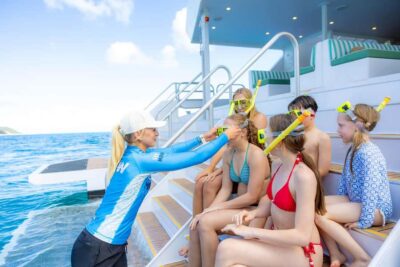
Moreton Island: Dolphin & Tangalooma Wrecks Snorkel Cruise
Read our review →

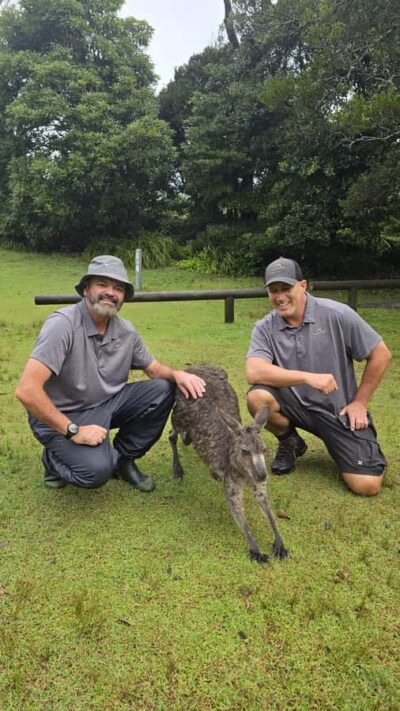
Sydney: Jervis Bay Day Trip with Dolphins, Roos & Beach Time
Read our review →
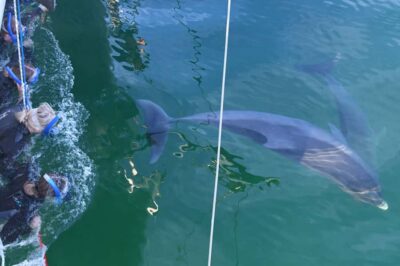
Adelaide: 4-Hour Swimming with Dolphins Experience
Read our review →This trip also appears in