
Review · WHALE AND
Durban: Durban: Whale and Dolphin Watching Boat Tour
Humpback whales can reach about 15 meters and weigh 30 tons, yet they may appear almost quietly beside your boat before suddenly breaching. From June through November, this Durban cruise gives you a real chance to watch them on their migration, with dolphins and other sea life possible in every season.
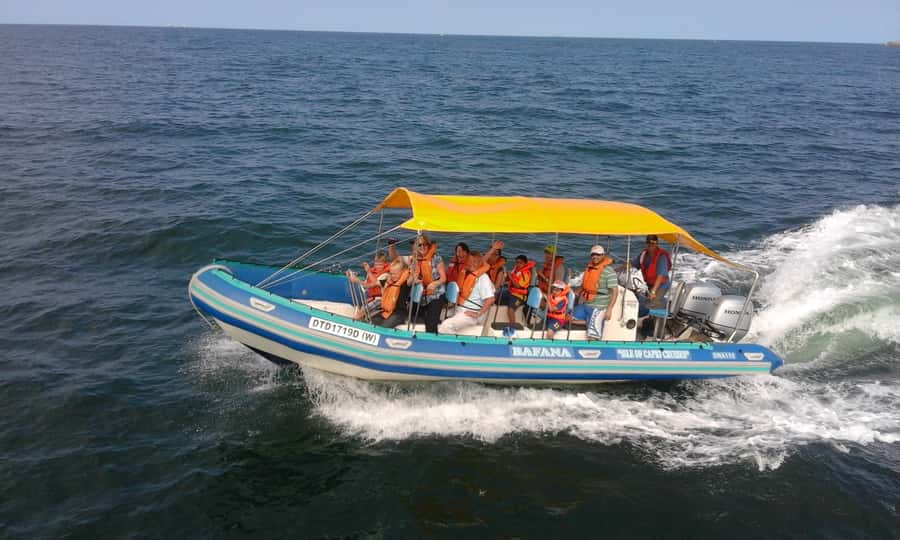
I like the small 11-passenger boat, which gives you a better view than a large sightseeing vessel, and I like the guides’ clear respect for the animals’ space. Guide Bennie has earned particular praise for his enthusiasm, whale knowledge, and knack for finding the best viewing position. The catch is simple: wildlife follows its own timetable, and rough weather can change the route or reduce what you see.
Key points to know
- Best whale season: Humpbacks pass Durban from May or June through November, with the strongest chance generally in the winter and spring months.
- Small boat setting: The standard vessel carries 11 passengers, though another available boat may be used for your departure.
- Wildlife beyond whales: Dolphins are possible year-round, with fish, seabirds, turtles, manta rays, orcas, and sharks seen occasionally.
- Guide-led experience: Expect information about whale behavior, migration, body size, and family life in English, with Afrikaans listed as an available language.
- Weather matters: Calm, light-wind days make it easier to watch animals and hear whales breathe near the boat.
- Not a swimming trip: You stay aboard and are not permitted to swim with the animals.
Leaving Wilson’s Wharf for the Indian Ocean
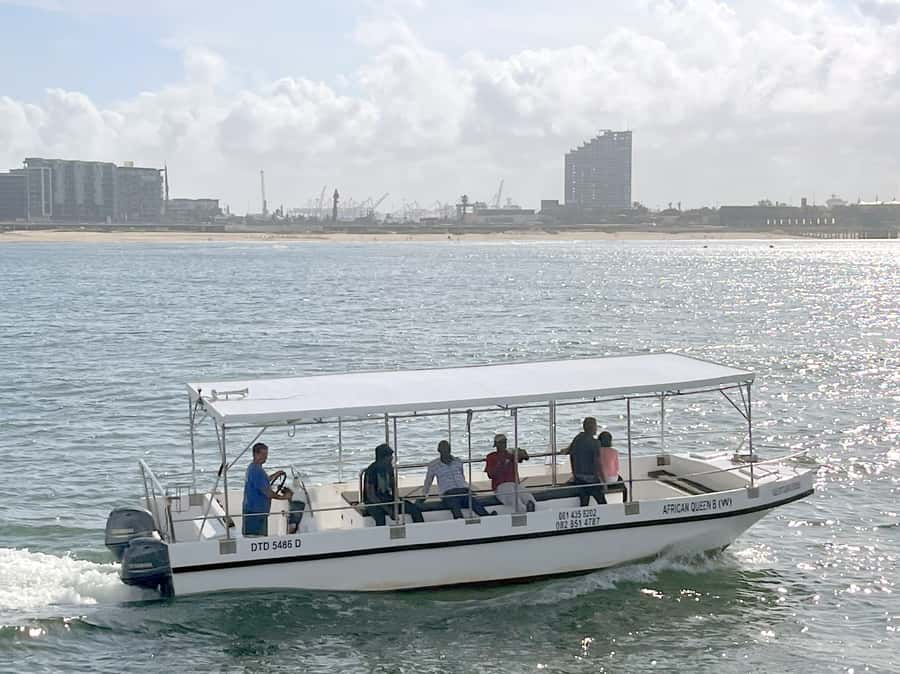
Your outing begins at the Isle of Capri Cruises office at Wilson’s Wharf Marina, beside the Casadena Spur end of the complex. Arrive with your ticket 30 minutes before departure, giving yourself time to find the kiosk, check in, and settle before the boat leaves.
The marina setting keeps the start straightforward. Once aboard, you take a forward-facing seat, with the skipper and crew behind you. That seating arrangement puts your eyes toward the open water, where the next whale or pod of dolphins could surface. It also means the boat’s movement is part of the experience, so you should expect a proper ocean ride rather than a quiet harbor cruise.
The vessel is registered with the South African Safety Authority as a whale and dolphin watching boat and has held one of Durban’s limited whale watching permits since 2012. The usual boat carries 11 passengers, creating a personal feel and giving you a fair chance to see from the front or sides.
There is one practical wrinkle. The operator uses a pool of available vessels rather than promising one dedicated boat for every departure. Maintenance, weather, and changing passenger numbers can affect which vessel goes out. Two boats may also depart at overlapping times. The exact boat can change, but the stated cruise format remains the same.
More Whale and Dolphin Watching Tours in the world:
- Tenerife: Eco-Yacht Whale and Dolphin Watching and Swimming
★ 4.7 · 15,619 reviews - Los Cristianos Respectful No-Chase Whale and Dolphin Safari
★ 4.6 · 12,782 reviews - From Funchal: Ecological Catamaran Dolphin Whale Watching
★ 4.5 · 8,204 reviews
The open-ocean ride and what it feels like
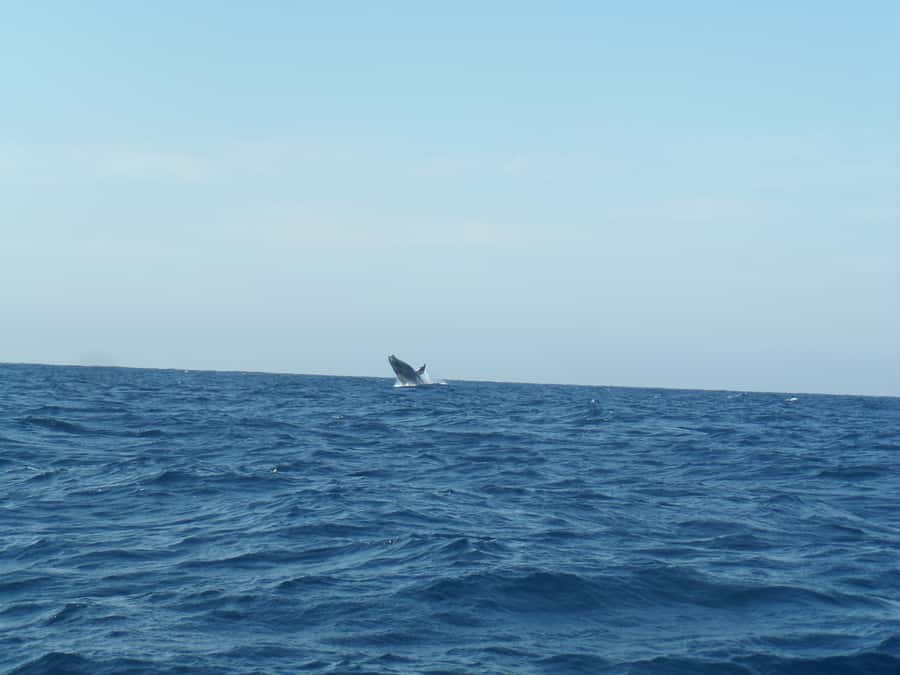
The boat heads from the marina into the Indian Ocean toward the Mozambican Current. The trip takes you away from the sheltered waterfront and into open water, where swells, wind, and spray become part of the outing.
That movement can be exciting, but it is worth taking seriously. People with back problems, mobility impairments, or pregnancy are advised not to join. The activity is also not wheelchair-friendly, and it is not recommended for toddlers. You should wear comfortable clothes and bring a hat, sunscreen, water, a scarf, and clothing suited to the weather.
A calm day can make a major difference. One particularly useful tip is to watch the forecast for a windless day with small swells. Better conditions make the ride more comfortable and give you a clearer chance to spot a blow, fin, tail, or breaching whale.
The cruise lasts about two hours. That is long enough to reach the whale areas and spend meaningful time watching, but short enough to fit into a day of sightseeing in Durban. The route is not fixed, since the skipper must respond to the weather and sea conditions.
June to November: following humpback migration
The main attraction is the seasonal visit of humpback whales. They pass Durban during the cooler months as they move from the Southern Ocean toward warmer tropical waters for mating and giving birth. You may see them from May through November, with the tour information identifying June to November as the key period.
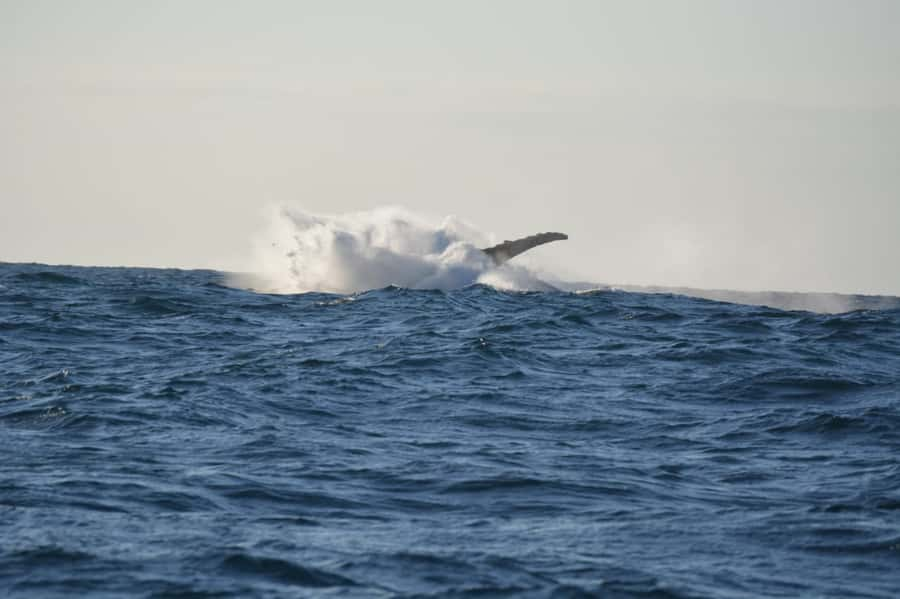
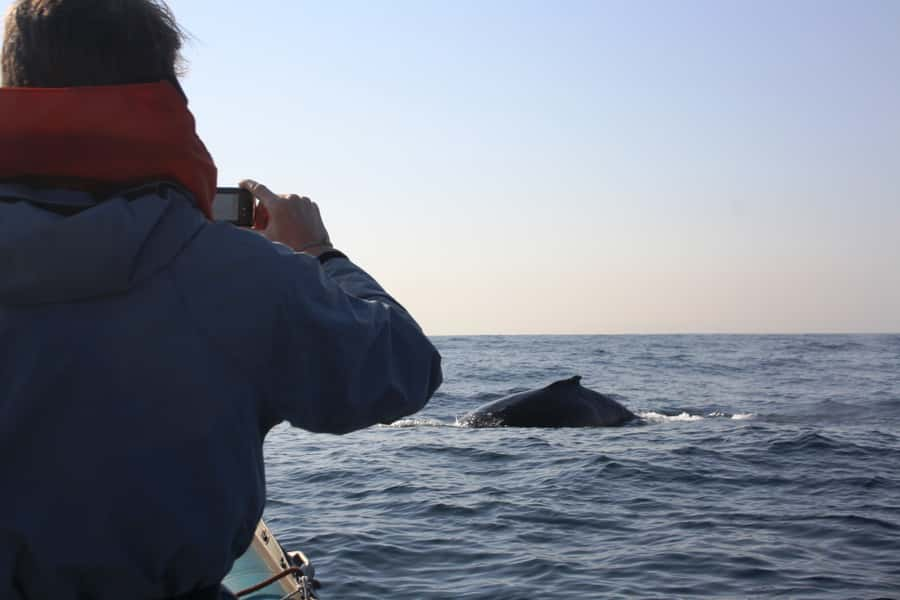
What makes this more than a simple animal-spotting trip is the chance to watch natural behavior. A whale may travel steadily, surface to breathe, slap its tail, or launch its body from the water in a full breach. You might see a mother with a calf, adults moving in pairs, or younger whales making repeated jumps and splashes.
The scale is hard to grasp from photographs. A humpback can reach around 15 meters in length and weigh about 30 tons. From a small boat, you may hear the animal breathe before you see it, especially when the sea is calm. That sudden exhalation, followed by a dark back rising from the water, can be the most memorable part of the trip.
Sightings are never promised. Even during migration season, the whales decide where to swim and when to surface. Some departures may bring several animals close to the boat, while others may offer only distant views or none at all. That uncertainty is part of genuine wildlife watching, but you should understand it before paying the $102 price.
The best whale encounters are not always the most dramatic ones. A mother and calf moving calmly beside the boat can tell you more about family behavior than a single distant breach. The guide’s job is to help you read those moments and explain what you are seeing without treating the animals like performers.
Dolphins, turtles, birds, and the wider sea
Dolphins give the tour value outside whale season. They can be seen all year, and the boat may encounter them playing in the swells or moving alongside the vessel. From June through November, you have a chance of seeing both whales and dolphins, but during the warmer months the focus shifts toward dolphins and other sea creatures because the humpbacks have migrated elsewhere.
Turtles may occasionally rise from the clear water to feed near the surface. Fish and seabirds add smaller flashes of movement while you search for larger animals. On rare occasions, the boat may encounter orcas, manta rays, or sharks.
Those possibilities should be treated as bonuses, not a checklist. The most dependable promise is access to the ocean and a guide looking for marine life. You are not being sold a guaranteed parade of whales, dolphins, turtles, and sharks.
This variety also gives the guide more to discuss. Even when a whale stays below the surface, you may learn how the animals breathe, migrate, raise calves, and interact. The cruise works best when you enjoy the watching itself, not only the moment of a perfect photograph.
More dolphin trips around the world:
- Albufeira: 2.5-Hour Benagil Caves & Dolphin Watching
★ 4.6 · 10,710 reviews - Albufeira: Benagil Caves & Dolphin Watching Speed Boat Tour
★ 4.6 · 6,316 reviews - Benalmadena: Dolphin Watching Boat Tour
★ 4.4 · 5,786 reviews - Funchal: Dolphin and Whale Watching Catamaran Cruise
★ 4.5 · 5,697 reviews
Why the guide can shape the whole outing
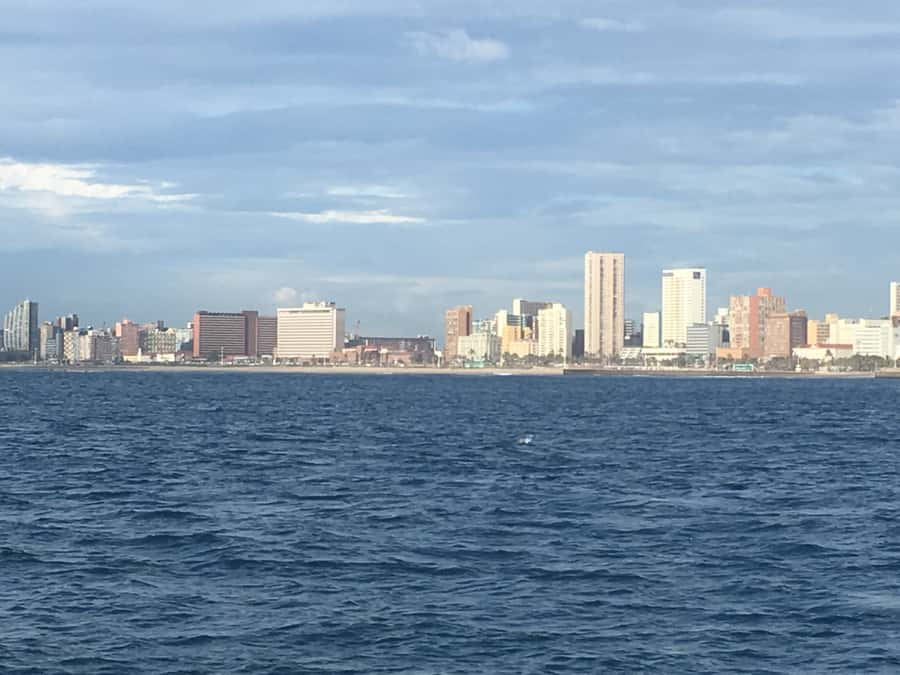
A good skipper matters on a small wildlife boat. The guide must scan the water, judge the animals’ direction, keep the vessel in a respectful position, and explain what is happening at the same time.
Bennie is one guide associated with especially strong outings. He has taken a boat out even when only one person had booked an early slot, and he has sometimes started earlier or stayed out longer when conditions and scheduling allowed. His enthusiasm is useful because whale watching includes plenty of quiet stretches between sightings.
His approach also shows why experience matters. On one outing, he worked to give passengers a good viewing angle while respecting the animals’ behavior. That balance is important. A boat that chases too aggressively may spoil the encounter for both the animals and the people watching them.
Some guides may also share photographs or videos after the trip. That is not presented as a guaranteed inclusion, but it can be a welcome extra when your own camera struggles with distance, spray, or fast movement.
The listed languages are English and Afrikaans. The inclusions also refer to an English guide and a Zulu guide, so it is sensible to confirm the language arrangement if that matters to your booking.
Group size, comfort, and the boat question
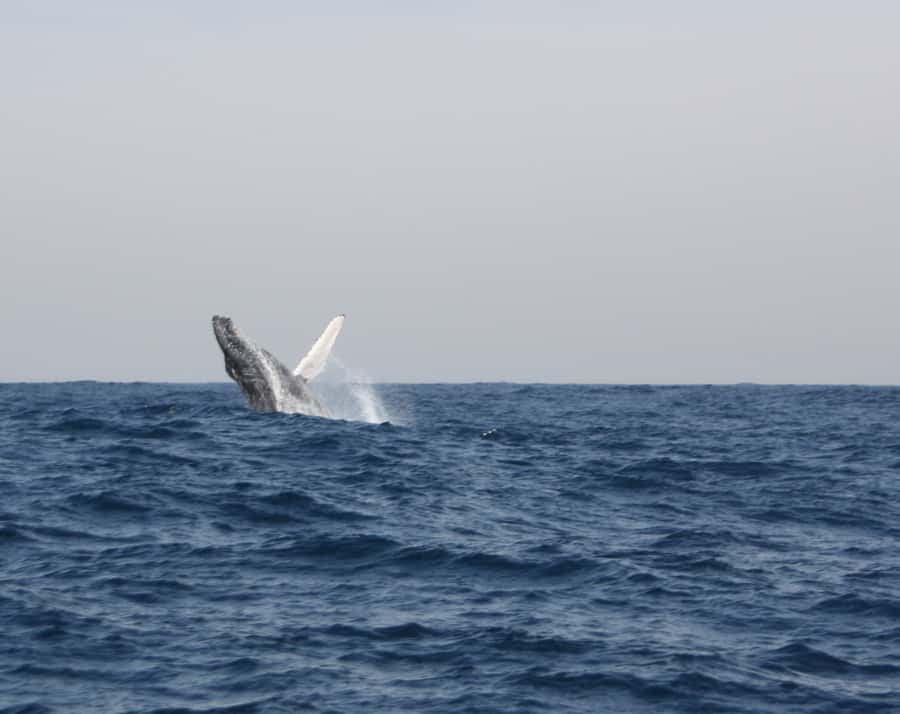
An 11-passenger boat is a strong feature for this type of outing. You are less likely to feel lost in a crowd, and you can usually shift your attention quickly when the guide points toward a surfacing whale or pod of dolphins.
Small boats also bring tradeoffs. There is less room to move around, the ride can feel more exposed, and every passenger feels the ocean conditions. You should not expect a lounge, a restaurant, or a dry indoor sightseeing cabin.
The operator does not guarantee one particular boat. A different vessel may be used because of planned maintenance, weather, or seasonal demand. This could matter if you have seen photographs of a particular boat and expect exactly that design. The more important point is that the operator keeps the cruise running with available vessels.
There is no food or drink included. Bring your own water, but check the operator’s rules before bringing anything beyond that. A hat with a secure fit, sunscreen, and weather-appropriate layers are more useful than dressing for a normal city outing.
Swimming is not allowed, and this is not a swim-with-whales experience. You remain aboard throughout the cruise, watching the animals in their natural setting.
Is $102 a fair price?
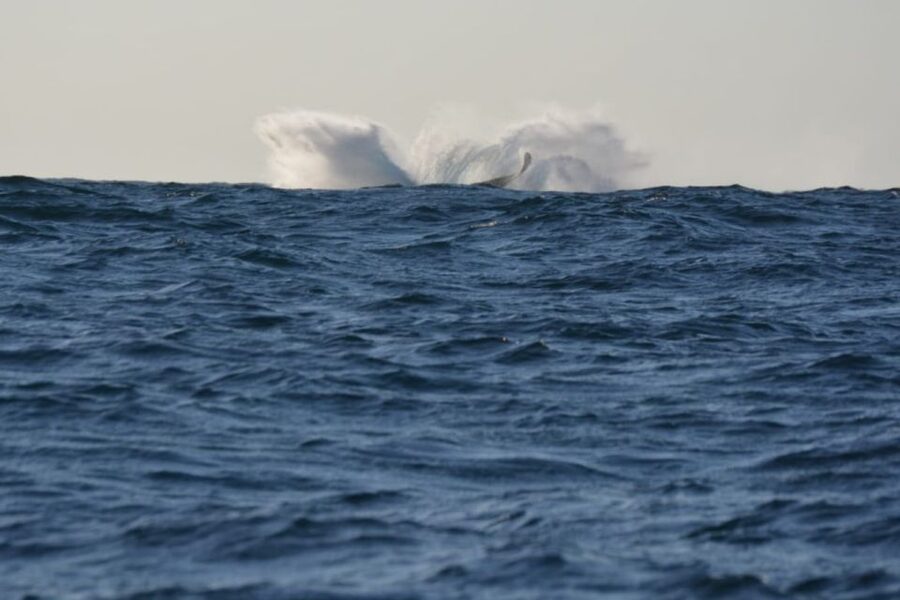
At $102 per person, this is not a casual, budget boat ride. The price pays for a two-hour open-ocean trip, a permitted whale and dolphin watching operation, a small vessel, a skipper, and a guide who can search a wide area for animals.
The value depends heavily on your timing and expectations. During the whale season, a calm day with several close humpbacks can make the price feel worthwhile, especially if you see breaching, tail slapping, or a mother and calf. A short period of memorable whale activity can outweigh the quieter travel time.
Outside the migration season, the trip becomes a dolphin and general marine life cruise. That may still suit you if you enjoy being on the ocean and watching wildlife without needing a whale sighting. If whales are your only reason for booking, choose a date between June and November and keep an eye on the weather.
The 4.7 rating from 45 bookings supports the idea that the experience often delivers strong wildlife encounters and engaging guiding. Still, no rating removes the basic risk of nature-based activities. You are paying for the chance to find wild animals, not a guaranteed show.
Free cancellation up to 24 hours before departure and the option to reserve now and pay later reduce some of the planning risk. You still need to arrive at the marina 30 minutes early and accept that the route can change with weather.
How to get the best possible outing
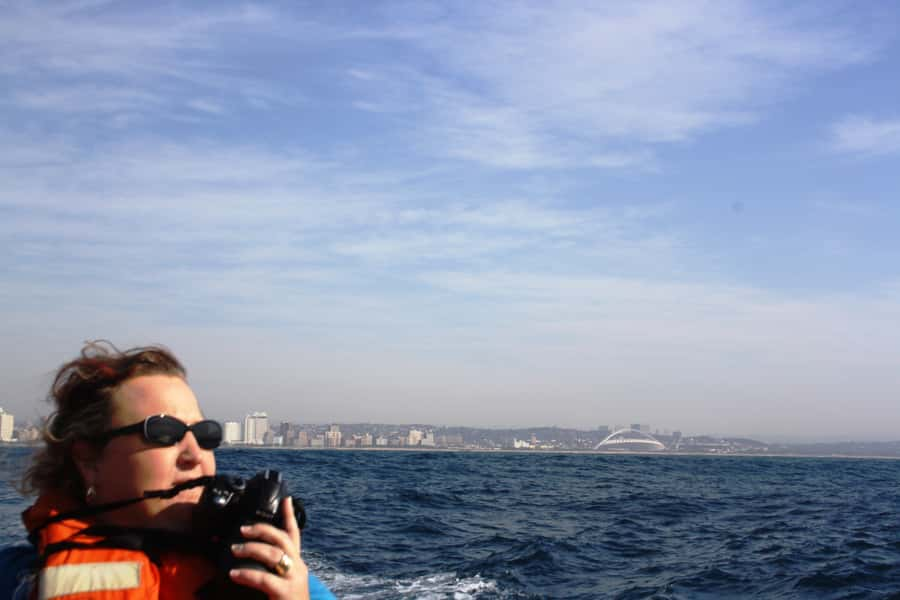
Choose a date during the whale season if humpbacks are your priority. July through October sits within the main migration period, while November can still produce excellent sightings but may be closer to the end of the season.
Look for a calm forecast with small swells and little wind. Conditions can affect both comfort and visibility. A calm sea may even let you hear whales breathing close to the boat.
Keep your camera ready, but do not spend the whole cruise looking through a screen. Whales can surface without warning, and the guide may point to an animal that disappears before you frame it. A hat, sunscreen, water, and a scarf are practical choices even when the weather looks mild from the marina.
Give yourself permission to enjoy a quiet stretch. The boat may travel for a while before finding marine life, and a dolphin sighting or a distant whale can still become worthwhile when you understand what you are seeing.
If you are prone to motion sickness or uncomfortable on small boats, the open-ocean setting deserves careful thought. The supplied information specifically excludes people with back problems and pregnant women, and the boat is not suitable for people with mobility impairments.
Who should book this Durban cruise?
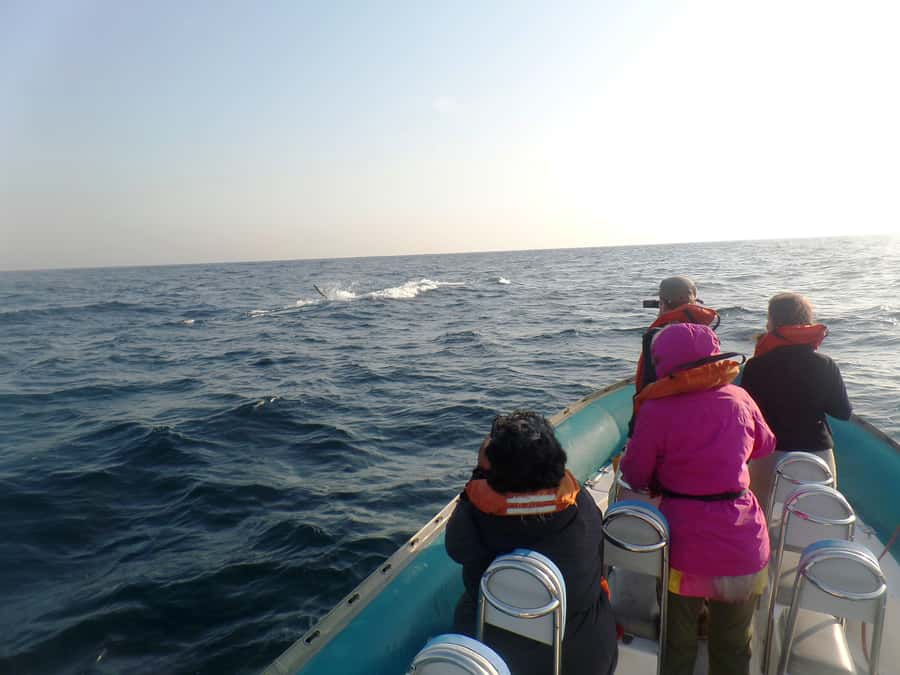
I would recommend it to anyone who wants a close look at Durban’s marine life and accepts that wild animals set the schedule. It suits photographers, families with older children, couples, and anyone who finds a small boat more appealing than a large harbor vessel.
It is especially well suited to you if you can visit between June and November, remain flexible about the exact vessel, and enjoy learning from a guide while scanning the sea. The experience can be particularly rewarding when the guide is as energetic and attentive as Bennie.
I would think twice if you need guaranteed whale sightings, a smooth ride, wheelchair access, or plenty of indoor space. Toddlers, pregnant women, people with back problems, and people with mobility impairments should not book this activity.
FAQ
Where does the whale and dolphin cruise depart from?
It departs from the Isle of Capri Cruises office at Wilson’s Wharf Marina, next to the Casadena Spur end of the complex.
How early should I arrive?
You should present your ticket at the office or kiosk 30 minutes before departure.
When can I see humpback whales?
Humpback whales pass Durban from May through November, with June to November identified as the main whale watching period.
Can I see dolphins outside whale season?
Yes. Dolphins and other marine life can be seen year-round. During the summer months, humpback whales migrate elsewhere, so the outing focuses on dolphins and other sea creatures.
Is swimming with the animals allowed?
No. Swimming with the whales, dolphins, or other animals is not permitted.
What happens if the weather changes?
The cruise route is subject to weather conditions. The operator may also use a different available vessel because of weather, passenger numbers, or maintenance.
Newly spotted around the world
- Oman Dolphin Watching Tours★ 5.0 · 111 reviews
- 2 Hours Dolphin Watching Cruise in Muscat★ 4.5 · 3 reviews
- Sea Wonders Dolphin Watching and Snorkeling in Muscat★ 5.0 · 5 reviews
- Amazing Dolphin Watching Tour In Muscat★ 5.0 · 4 reviews
- Daymaniyat island Natural Reserve and Dolphin Watching★ 5.0 · 50 reviews
- Mornington Peninsula Kayak Coastline Tour of Dolphin Sanctuary★ 3.0 · 2 reviews
- Charleston Harbor Sunset Cruise Scenic Views and Dolphin Spotting★ 5.0 · 2 reviews
- 3-Hr Private Snorkeling and Dolphin Watching Tour at Muscat★ 4.5 · 3 reviews
Whale and Dolphin Watching Tours, side by side.
Tenerife: Eco-Yacht Whale and Dolphin Watching and Swimming
Read our review →
Los Cristianos Respectful No-Chase Whale and Dolphin Safari
Read our review →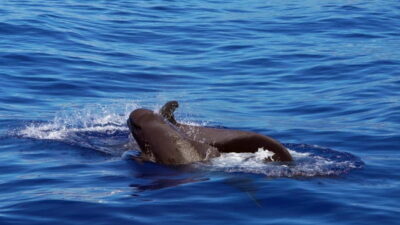
From Funchal: Ecological Catamaran Dolphin Whale Watching
Read our review →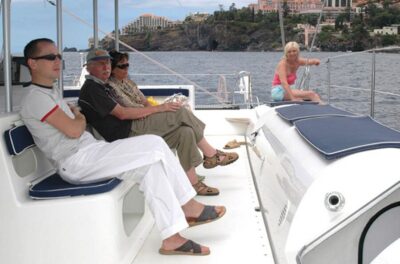
Funchal: Dolphin and Whale Watching Catamaran Cruise
Read our review →
Costa Adeje: Whale & Dolphin Eco-Cruise with Snacks & Drinks
Read our review →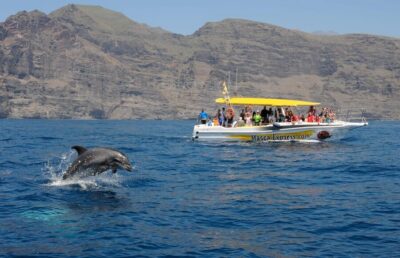
Los Gigantes: Dolphin & Whale Watching Cruise with Swim Stop
Read our review →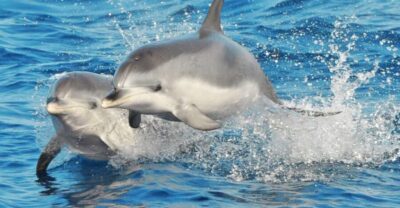
Morro Jable: Dolphin & Whale Watching Cruise, Drinks & Swim
Read our review →
From Ponta Delgada: Whale and Dolphin Watching Trip
Read our review →This trip also appears in