
Review · FLORIDA
Fort Pierce: 4-hr Mangroves & Dolphin Watch Sandbar in FL
The best part of this Fort Pierce outing is the change of pace: two miles of quiet paddling through a coastal lagoon, followed by two miles under electric power. You get time to work for the view, then time to simply watch for dolphins, manatees, birds, and rays.
I like the small group of no more than eight people, which should make it easier to hear the guide and keep the wildlife focus personal. I also like the sandbar pause, since you can wade, swim, or stay in your kayak while the guide fits the return motor.
The main consideration is physical effort. Two miles of paddling can feel long in Florida heat, and the trip is not suited to people with respiratory, heart, back, or other pre-existing medical conditions.
Key points at a glance
- Two ways to travel: Paddle two miles, then return two miles using an electric propulsion motor.
- Mangrove island stop: Get close to the trees, roots, shore plants, fish, and wading birds that depend on this habitat.
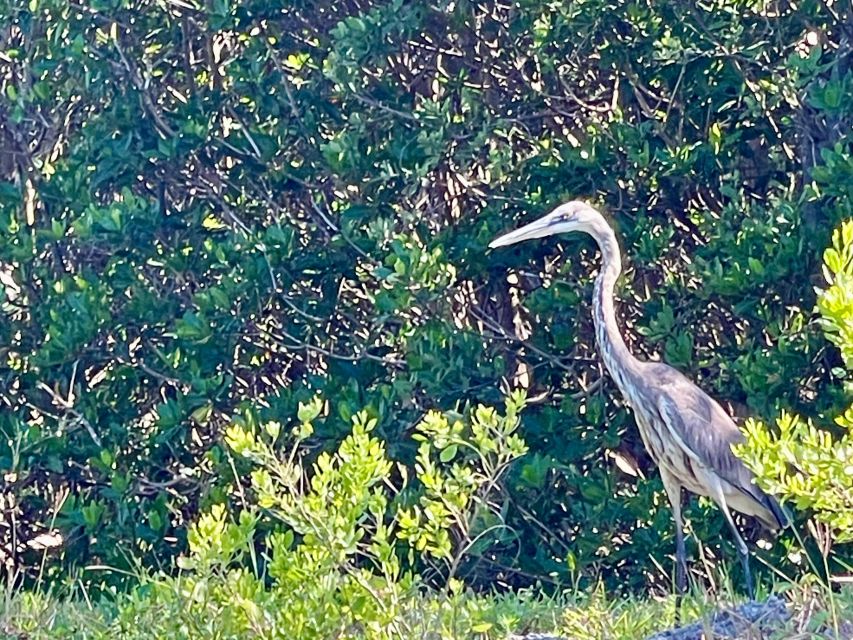
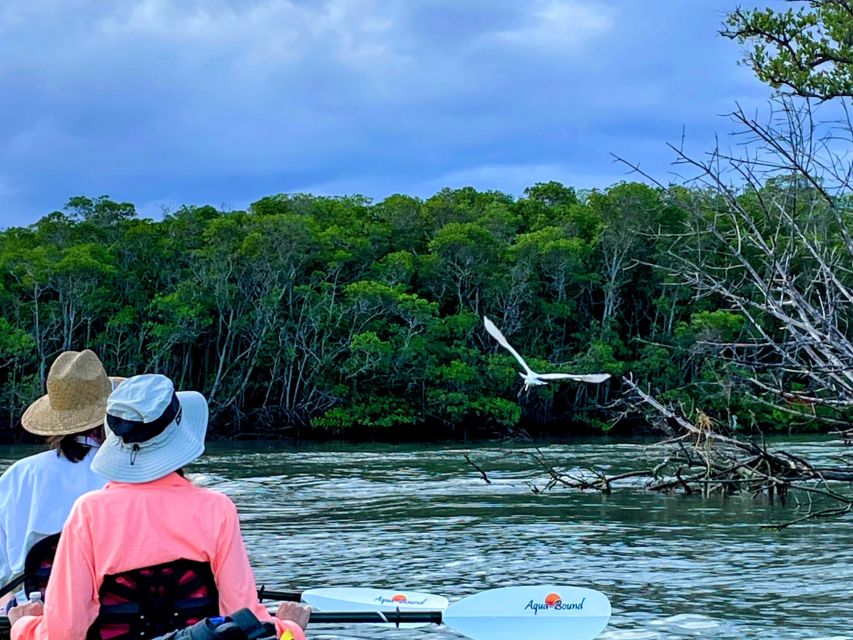
- Wildlife watch: Look for dolphins, manatees, stingrays, eagle rays, snowy egrets, great egrets, pelicans, ibises, and small fish.
- Sandbar break: Swim, wade, relax on your kayak, or keep your eyes on the water while the guide prepares the motor.
- Comfort-focused gear: Use a roomy 13- or 16-foot kayak, high-back support chair, light carbon-fiber paddle, life vest, and dry bags.
- Family rule: The operator requires one adult for every child on the reservation.
A four-hour route through Fort Pierce’s coastal lagoon
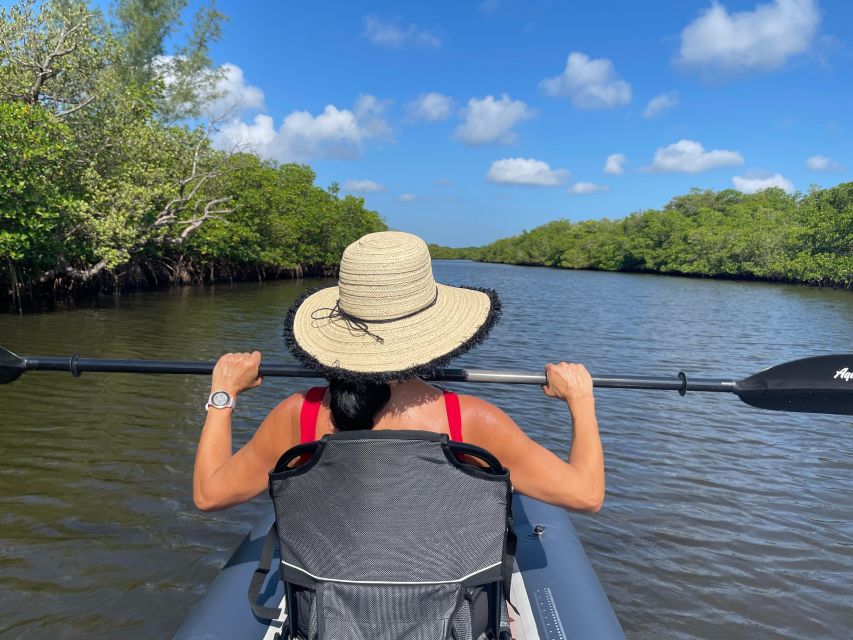
This is not a speed trip or a long open-water crossing. The route covers about four miles in all, with two miles under your own paddle power and two miles assisted by an electric motor. That split matters. You get a real kayaking experience without spending all four hours pushing against the water.
The setting is the Florida Treasure Coast’s intracoastal lagoon, where calm water meets mangrove islands and tidal shallows. Your guide leads the route and explains the ecology, local history, and role of the mangroves. Since the group is capped at eight, you should have a better chance of hearing those explanations than on a large boat excursion.
The exact order of stops can depend on conditions. The day generally centers on three things: paddling through the lagoon, examining a mangrove island, and stopping at a sandbar when the tide allows. Wildlife is never guaranteed, but the route puts you in the right kind of habitat to watch for it.
More dolphin trips around the USA:
- Little Toot Dolphin Adventure at Clearwater Beach
★ 5.0 · 5,594 reviews - Shell Island Snorkel and Dolphin Catamaran Cruise with Island Time
★ 5.0 · 4,362 reviews - Maui Eco-Raft Tour: Eye-Level Whale or Dolphin Watching – Lahaina
★ 5.0 · 2,482 reviews
Starting at Pepper Beach Park
The meeting point is the Pepper Beach Park Riverside Kayak Launch, across the road from the Navy Seal Museum. Once you enter the main parking lot, drive through it and continue down the access road past the restroom facility.
Give yourself enough time to find the launch area without rushing. If you use the what3words app, the location is listed as ///elects.kayak.peacekeeping. That can help if your map app takes you toward the larger park area instead of the exact launch.
The activity is offered in English and is listed as wheelchair accessible. Still, accessibility at a kayak launch can involve several steps, transfers, and uneven ground, so ask the operator for the practical details before booking if you need specific assistance.
Paddling two miles among the mangroves
The first two miles provide the most hands-on part of the outing. You paddle calm lagoon water toward a mangrove island, with the guide setting the pace and pointing out plants and animals along the way.
Mangroves are more than attractive shoreline trees. Their tangled roots shelter young fish and other small marine life, while their structure helps protect the coast from erosion and wave action. The trees also create a meeting point for land, water, and birds, which is why this short route can offer so much to watch.
You may see snowy egrets and great egrets stalking through shallow water, along with pelicans and ibises overhead or near the shore. Fish are easier to spot when the water is clear and the sun is well placed, but conditions vary with tide, weather, and light.
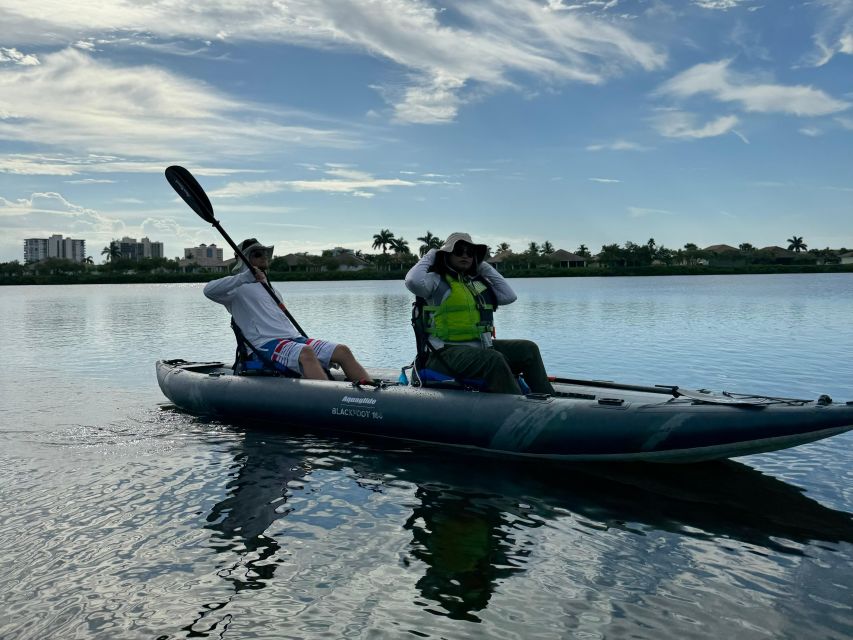
The boats and paddles are designed to make this portion less tiring. You use a roomy 13- or 16-foot kayak, with space for children, a high-back support chair, and a carbon-fiber paddle weighing just 28 ounces. Those details are useful rather than flashy. A light paddle can reduce strain over two miles, and supportive seating can make a real difference if you are new to kayaking.
You should still expect to work. Calm water does not mean no effort, and Florida sun can make a moderate paddle feel harder than it looks. Wear breathable clothes, bring water, and use biodegradable sunscreen. A hat and sunglasses are sensible, while insect repellent may be useful around mangrove edges.
Getting close to the mangrove island
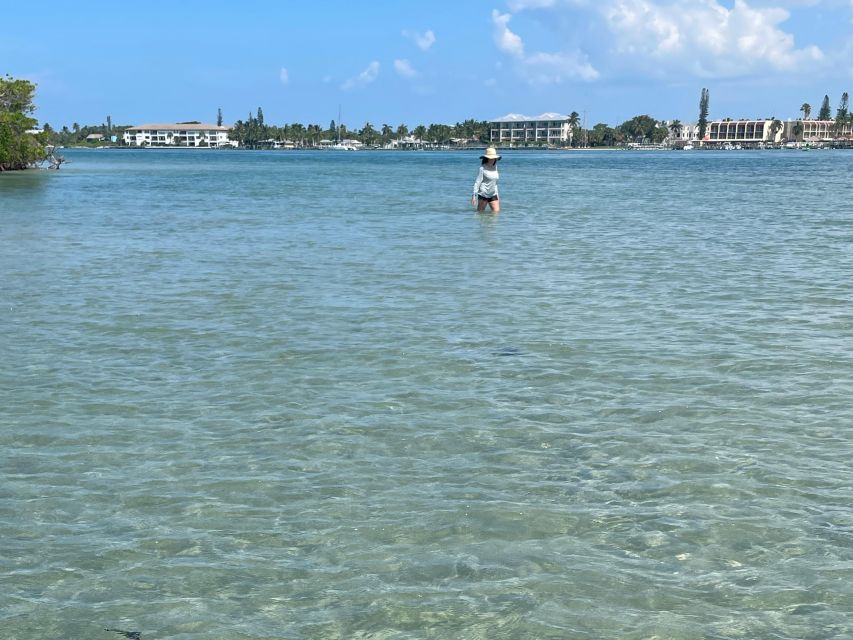
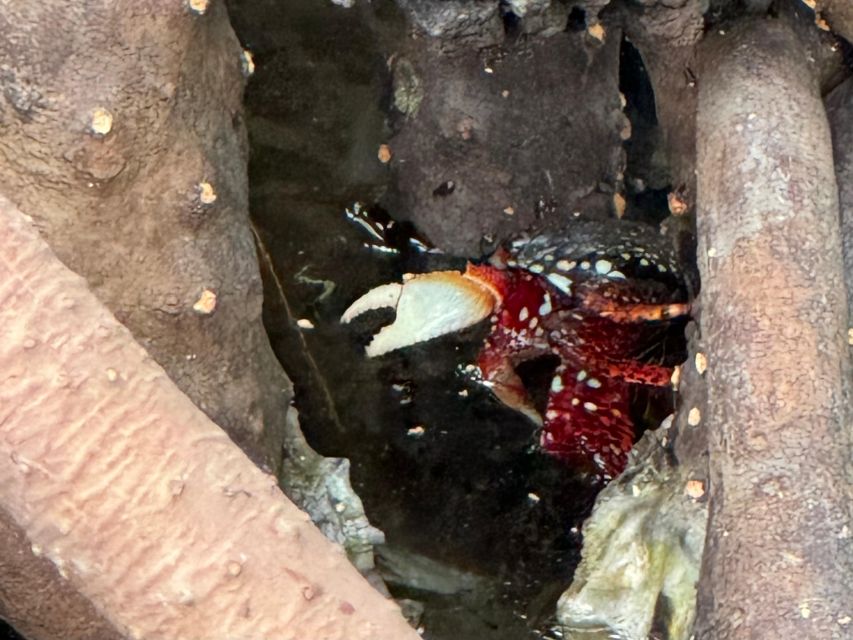
The mangrove island is the most educational part of the route. Rather than simply passing trees from a distance, you get closer to the roots, shoreline plants, birds, and shallow-water habitat.
Your guide explains how the ecosystem works and why it matters to the wider lagoon. Look down as well as out. Small fish and other marine life can gather around the roots, while birds use the shallows as feeding areas.
This stop rewards patience. You might spend several minutes watching a bird work the water instead of constantly moving to the next sight. Bring binoculars if you have them, but keep your expectations sensible. Wildlife is free to move where it wants, and the value of this stop lies partly in learning how to read the habitat.
The trip’s wildlife list includes snowy egrets, great egrets, pelicans, ibises, fish, dolphins, manatees, stingrays, and eagle rays. You may see only some of these, depending on conditions. That is normal for a nature outing, not a shortcoming of the route.
Same pod, another way to meet it:
- Dolphin and Manatee Stand Up Paddleboard Tour in Daytona Beach
★ 5.0 · 2,328 reviews - Jekyll Island Dolphin Tours
★ 5.0 · 2,242 reviews - Clearwater Encounters with Dolphins Tour
★ 5.0 · 2,185 reviews - Dolphin and Manatee Adventure Tour of Fort Myers
★ 5.0 · 2,167 reviews
Watching for dolphins, manatees, and rays
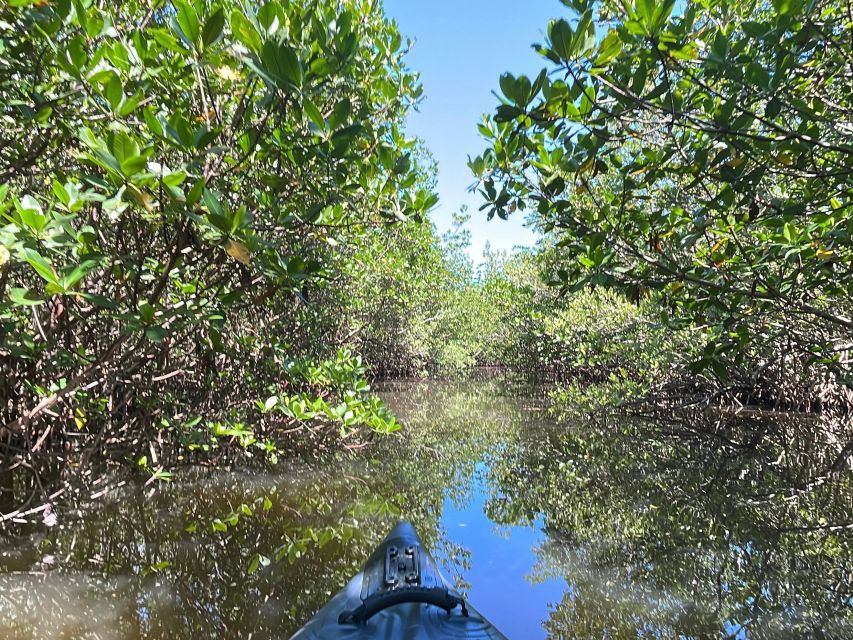
The lagoon gives you several chances to scan the water. Dolphins may surface nearby, and manatees can appear in the area. Stingrays and eagle rays are also known to frequent the sandbar region.
Keep your eyes moving rather than staring at one spot. A fin, ripple, or brief surface movement may be all you see. Your guide’s local knowledge should help with the best places to pause and watch, but no ethical wildlife trip can promise an animal appearance.
This is one reason a kayak works well here. You sit close to the water and travel quietly, without the engine noise of a larger sightseeing boat. That does not guarantee a closer animal encounter, but it gives you a calmer way to observe the lagoon.
Do not expect a formal wildlife show. The experience is better suited to people who enjoy noticing small details, waiting a little, and learning why the animals use the area.
The sandbar stop and the tidal question
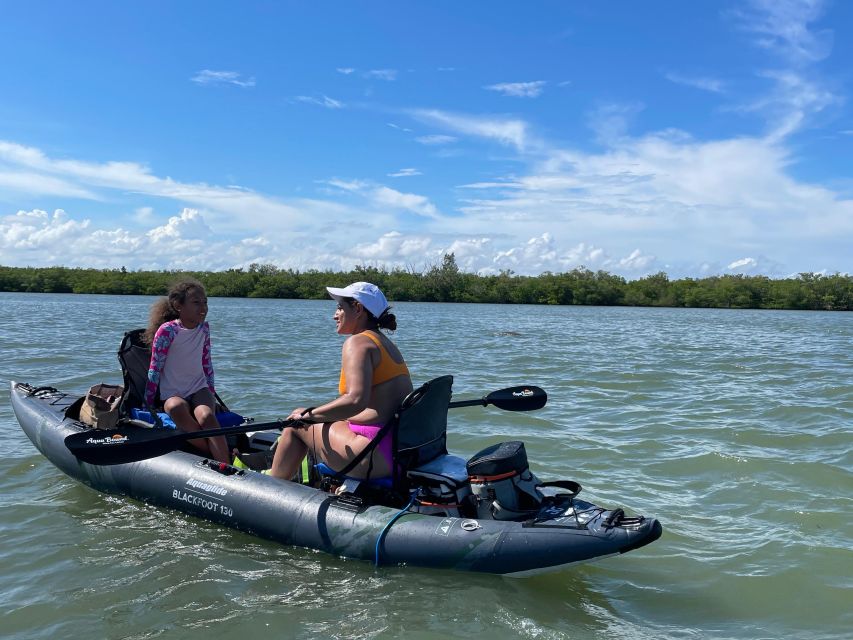
The sandbar is the trip’s built-in rest period. If tidal conditions are favorable, you can wade or swim, take a break, or simply stay on your kayak and enjoy the open water around you.
This stop is flexible, which is useful for mixed groups. One person can get in the water while another remains dry. If you have children, bring swimwear and a change of clothes, even if swimming is only a possibility.
The sandbar is also a good wildlife-watching point. Keep an eye out for stingrays, eagle rays, and dolphins. If you enter the water, follow the guide’s instructions and watch where you step. The provided information specifically warns that rays frequent the area, so water shoes are a practical item to pack.
The tide controls how much time and access you get here. A sandbar is not a fixed attraction with guaranteed swimming conditions every day. Think of it as a bonus shaped by the lagoon, not a promised beach stop.
Returning by electric propulsion
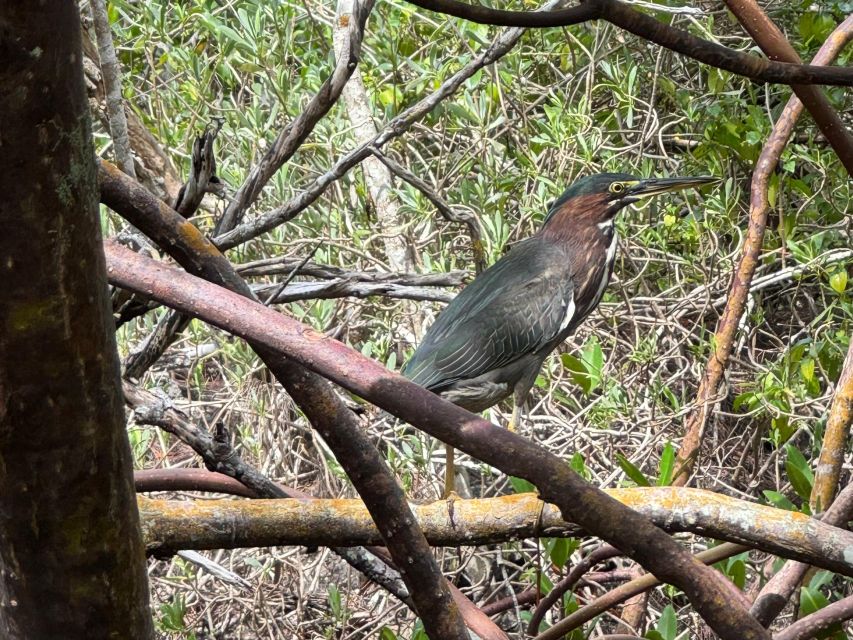
While you relax at the sandbar, the guide installs the electric propulsion motor for the return trip. The final two miles then take place with motor assistance rather than full paddle effort.
This is a smart design for a four-hour excursion. You use your arms during the wildlife route, then get a quieter, easier ride back while you continue looking around. The motor also leaves more energy for the final stretch, especially on hot days or when the lagoon feels less sheltered.
The return does not turn the trip into a motorboat ride. You remain in the kayak and continue seeing the water from a low position. You can keep watching for birds and marine life instead of treating the return as dead time.
The exact ride may vary with water and weather conditions, but the two-part format offers a useful balance between activity and relaxation.
What the $89 price includes
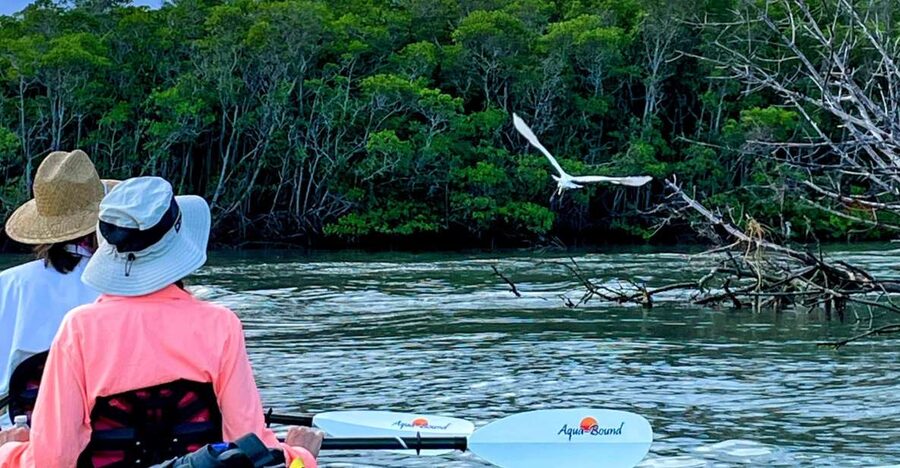
At $89 per person, this sits in a reasonable range for a four-hour guided small-group nature outing, especially because the price includes the kayak, paddle, life vest, dry bags, guide, and electric return assistance.
The equipment is a real part of the value. You are not expected to bring your own boat or paddle, and the high-back chairs and light carbon-fiber paddles add comfort. The dry bags are handy for protecting small items, though you should still bring only what you need.
The group limit also affects the value. Eight people is small enough for a more personal outing, and it should help the guide manage questions and wildlife stops without losing the group. You are paying for time on the water, equipment, instruction, and a route chosen around the local ecosystem.
Food and drinks are not included. Pack your own snacks and water. There is no reason to expect a meal stop, so eat beforehand or carry something simple in a protected bag.
The trip allows cancellation up to 24 hours before departure for a full refund, and you can reserve now and pay later. Those policies help if your Florida plans are still shifting, though they do not change the need to check the available starting times.
Packing for a Florida kayak outing
Bring practical gear rather than a heavy day bag. The operator lists the following items as useful:
- Water, food, and drinks
- Breathable clothing and swimwear
- A hat and sunglasses
- Biodegradable sunscreen
- Insect repellent
- Water shoes
- A camera and binoculars
- A change of clothes
- Passport or ID card
- Cash
Water shoes are especially helpful if you plan to wade at the sandbar. A change of clothes is worthwhile even if you stay in the kayak, since paddle splashes and wet seating can catch you by surprise.
Use the dry bags for essentials, but do not treat them as a reason to bring electronics you do not need. Keep your camera and phone protected, and ask the guide about the best way to carry them before launching.
The operator also asks you to bring a passport or ID card and cash. That may not be needed during the activity itself, but it is better to have the requested items than to arrive without them.
Who will enjoy this trip most
I would choose this outing if you want a gentle introduction to the Treasure Coast lagoon rather than a hard workout or a fast sightseeing ride. The electric return makes it more approachable than a four-hour paddle under your own power.
It is a good fit for people interested in coastal ecology, birdwatching, and quiet wildlife observation. Families may also find the roomy kayaks useful, but remember the strict adult-to-child rule: one adult is required for each child on the reservation.
You should be comfortable sitting in a kayak and paddling for two miles. The experience is not suitable for people with respiratory issues, heart problems, back problems, a cold, or other pre-existing medical conditions.
If your main goal is guaranteed dolphin viewing, this may disappoint you. Wildlife sightings depend on nature. If you want a calm, informative outing where dolphins and manatees are possible highlights rather than promises, the format makes more sense.
Is the Fort Pierce mangrove and sandbar trip worth booking?
Book it if you want a small-group nature outing with a useful mix of activity and rest. The strongest features are the two-part route, the close look at the mangrove ecosystem, the light and supportive equipment, and the chance to stop at a sandbar when the tide cooperates.
Think twice if you dislike heat, wet clothes, wildlife uncertainty, or physical activity. The $89 cost is fair for four hours of guided time and included equipment, but you still need to bring your own food, drinks, and personal gear.
For the best fit, arrive prepared to paddle, watch quietly, and accept that the lagoon sets the schedule. That is the tradeoff for seeing Fort Pierce’s coastal habitat on its own terms.
FAQ
How long is the Fort Pierce kayaking experience?
The activity lasts four hours.
How far will I travel by kayak?
The route covers about four miles in total. You paddle for two miles and use an electric propulsion motor for the remaining two miles.
Where is the meeting point?
Meet at the Pepper Beach Park Riverside Kayak Launch. Drive through the main lot and continue down the road past the restroom facility. The launch is across the road from the Navy Seal Museum.
What animals might I see?
You might see dolphins, manatees, stingrays, eagle rays, snowy egrets, great egrets, pelicans, ibises, and various fish.
Can I swim at the sandbar?
You can swim or wade if tidal conditions are favorable. You can also relax on your kayak instead.
Is food included?
No. Food and drinks are not included, so bring your own.
Is the activity suitable for children?
Children can join, and the kayaks have room for them. The operator requires one adult for every child on the reservation.
Is the experience wheelchair accessible?
The activity is listed as wheelchair accessible. Contact the operator for details about the launch and any assistance you may require.
Can I cancel the booking?
You can cancel up to 24 hours in advance for a full refund. The activity also offers a reserve-now, pay-later option.
Newly spotted around the USA
- Charleston Harbor Sunset Cruise Scenic Views and Dolphin Spotting★ 5.0 · 2 reviews
- Your Private Miami Yacht Tour with Music and Fun★ 4.5 · 65 reviews
- MIAMI: Key West Dolphin Watch Tour★ 3.5 · 47 reviews
- Key West Tours from Miami: Dolphin Discovery, Snorkeling & More !★ 4.5 · 3 reviews
- Half Day Snorkel to Lanai from Kaanapali Beach + Dolphin Search★ 4.5 · 99 reviews
- Lana’i Snorkel And Dolphin Quest with Maui Turtle Spot Tour★ 5.0 · 33 reviews
- Lanai Deluxe Dolphin Adventure & 3 Snorkel Sites★ 5.0 · 102 reviews
- Maui Eco-Raft: 2 Hour Dolphin Watch Sightsee Tour (Semi-Private)★ 5.0 · 95 reviews
Florida Dolphin Watching Tours, side by side.
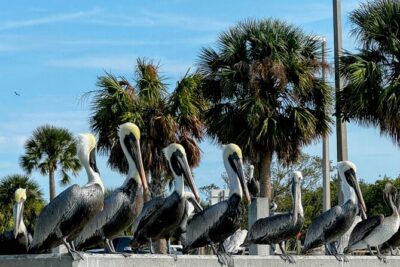
4-Hour Mangrove Island and Dolphin Watch Sandbar in Fort Pierce
Read our review →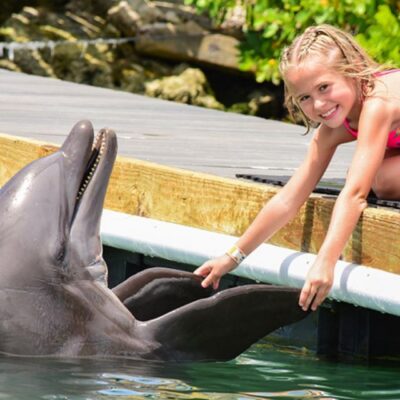
Dolphin and Manatee Adventure tour of Osprey with Florida History
Read our review →
Dolphin and Manatee Adventure Tour of Sarasota with Olde Florida History!
Read our review →
This trip also appears in