Review · AUSTRALIA
Nelson Bay: Whale and Dolphin Watching Catamaran Cruise
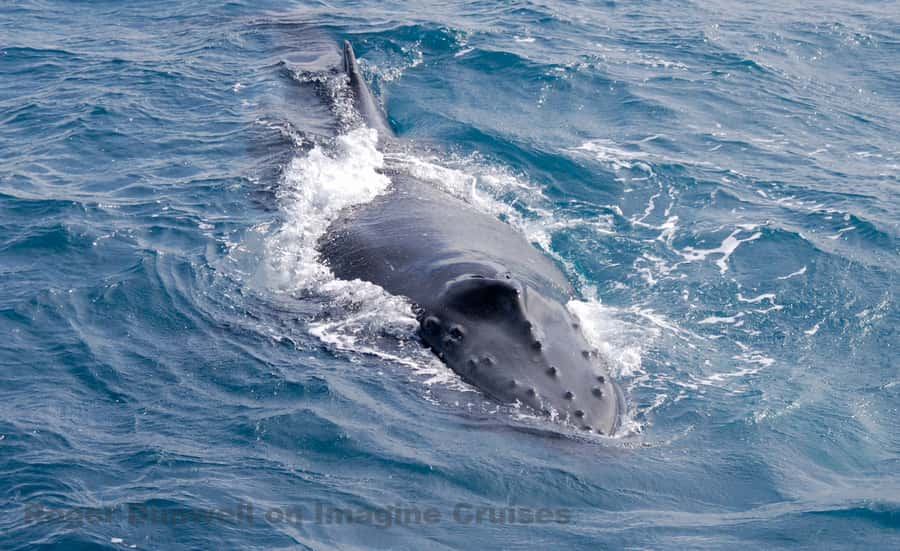
Humpback whales are the main event here, but the best moments may come when the sea gets busy all at once. A whale can breach or slap its pectoral fin, while dolphins race through the wake and seabirds work the surface below. This 54-foot sailing catamaran gives you a steady platform and open views from its covered decks.
I like the small, low-key feel and the crew’s clear commentary, which covers wildlife as well as the area’s pre-European and post-European story. I also like the practical extras: tea, coffee, wet-weather jackets, fleece blankets, and seasickness tablets are available. The catch is that wildlife does not follow a timetable, and a three-hour trip can feel chilly or rough if the sea turns lively.
Key points to know before you sail
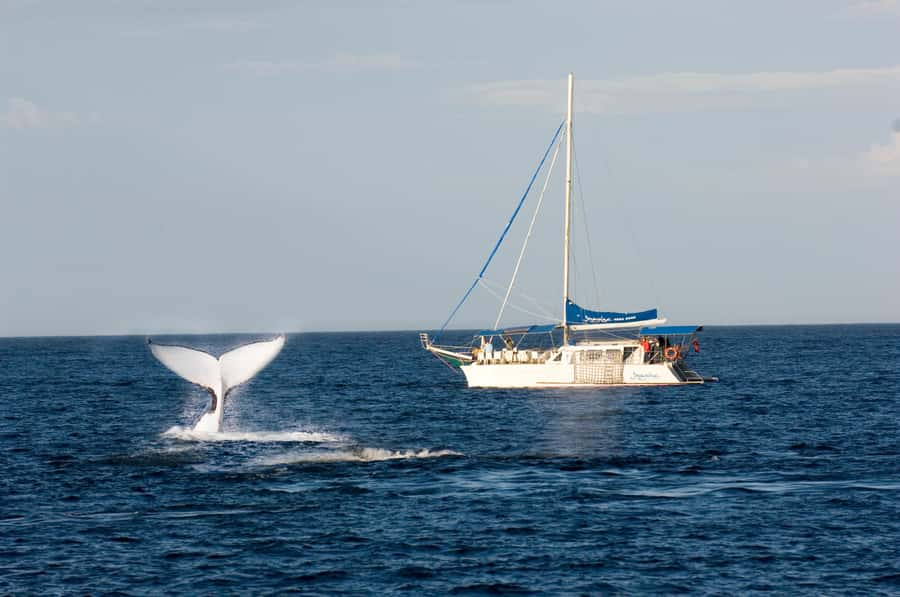
- Whales are guaranteed from June 1 through October 31, with a free return cruise offered if you do not see one.
- Dolphins can provide the most playful action, including a reported pod of 30 to 40 common dolphins riding the wake for about 20 minutes.
- The covered decks offer shelter without shutting you away from the sea, useful in cold or wet weather.
- The catamaran has a licensed bar, with soft drinks, alcohol, snacks, tea, and coffee available.
- Parking takes planning, since marina parking is paid and sold in four-hour time slots.
- The cruise is not suitable for wheelchair users, and high-heeled shoes are not allowed.
Setting out from d’Albora Nelson Bay
Your trip begins at d’Albora Marina in Nelson Bay, a practical launch point for Port Stephens wildlife cruises. The catamaran is at Dock C, opposite Magnolia’s Cafe. Walk through the C Dock gate, down the ramp, and past the Bay Booking Office. The white catamaran with the blue sail cover and Imagine lettering should be about 50 metres along on your right.
Give yourself extra time before departure. Parking is paid, spaces can be harder to find at busy times, and the marina uses four-hour time slots. That matters because a three-hour cruise can easily become a longer outing once you add check-in and the walk to the dock.
The boat is operated by Imagine Cruises. You board the 54-foot sailing catamaran, find a place on the covered decks, and settle in for the trip out toward open water. You are not being taken from one fixed viewing station to another. The crew moves the boat in search of wildlife, so the experience has a real sense of looking, waiting, and responding to what appears.
More Dolphin Watching Cruises in Australia
- Moreton Island: Dolphin & Tangalooma Wrecks Snorkel Cruise
★ 4.5 · 1,039 reviews - Port Stephens: Dolphin Discovery Cruise
★ 4.4 · 926 reviews - Mandurah: Dolphin and Views Cruise
★ 4.6 · 920 reviews
Why the 54-foot catamaran matters
A catamaran gives you more than a pleasant shape for photographs. Its broad design helps provide a stable ride, and one review described the boat as especially smooth even in fairly choppy ocean conditions. That will not remove all motion, but it can make a real difference if you are worried about seasickness.
The covered decks are another useful feature. You can stay outside with a clear view while gaining some protection from wind and light rain. The boat also has wet-weather jackets and fleece blankets to borrow, which is welcome on a cold winter morning or a grey afternoon.
You should still dress for the conditions. Bring warm layers, a sun hat, and closed-toe shoes. High heels are not allowed, and practical footwear is the sensible choice on a moving boat.
There is no promise that every person will see the same thing from the same side of the vessel. Wildlife may surface behind you, off the bow, or close to one rail. Keep your head moving and avoid spending the entire trip watching through a phone screen. The most memorable sight may last only a few seconds.
Three hours in search of migrating humpbacks
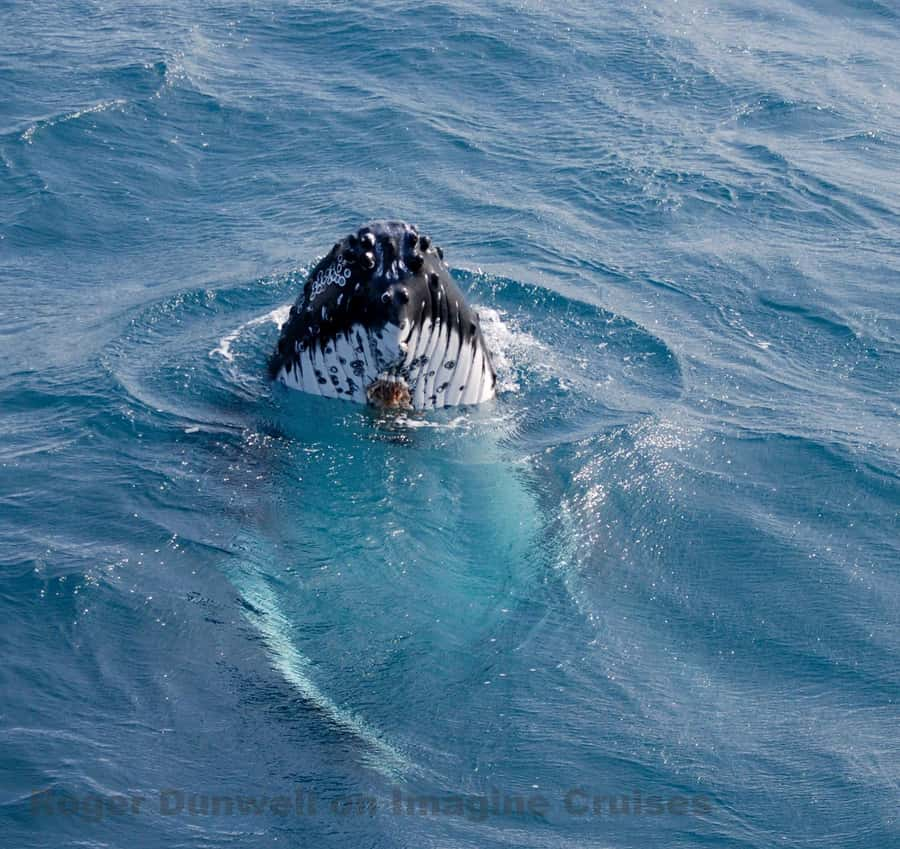
The cruise lasts three hours, giving the skipper time to leave the bay and search wider water for migrating humpback whales. That length is useful. A short ride might catch a whale quickly, but it would have less room for the crew to look around if the animals are farther out or moving in another direction.
From June through October, humpbacks migrate past the region. The cruise offers a whale sighting guarantee between June 1 and October 31. If you do not encounter whales during that period, you are offered another cruise at no extra charge. This is a helpful safeguard, though it does not turn wildlife into a scheduled performance. You still need to accept that the quality of a sighting can range from a distant blow to a close, active display.
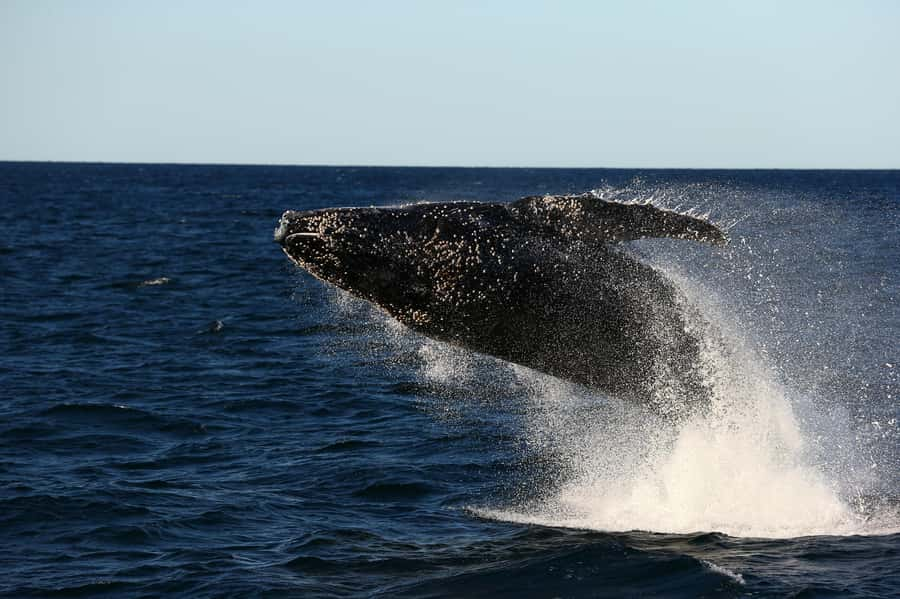
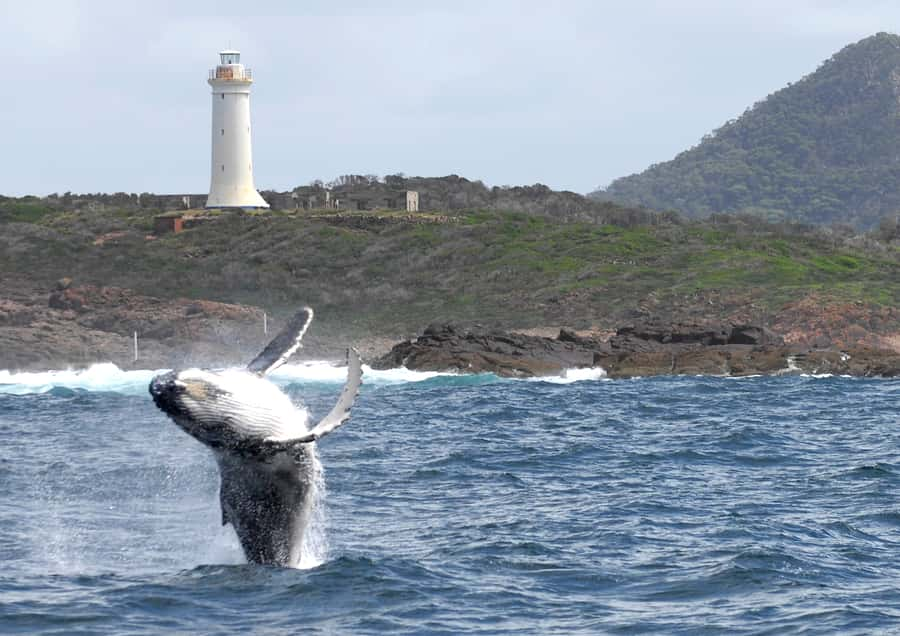
The crew watches for several kinds of behavior. A whale may breach clear of the water, slap a pectoral fin against the surface, or come close to the boat in what is often called mugging. Breaching is dramatic, but it is also unpredictable. You might wait through several quiet minutes and then see the full body rise in an instant.
One August trip produced only two whale sightings, yet the commentary and overall time on the water still made it worthwhile. That is a useful expectation to carry with you. A whale cruise is not measured only by the number of animals seen. Weather, distance, behavior, and viewing angle all shape the experience.
Dolphins, seals, and the extra wildlife
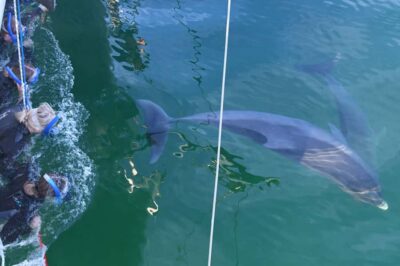
Dolphins may appear in the bay or around the boat as you travel. Their behavior can be easier to follow than a whale’s because they often move in groups and may ride the wake. One particularly strong encounter involved a pod of roughly 30 to 40 common dolphins playing alongside the boat for about 20 minutes.
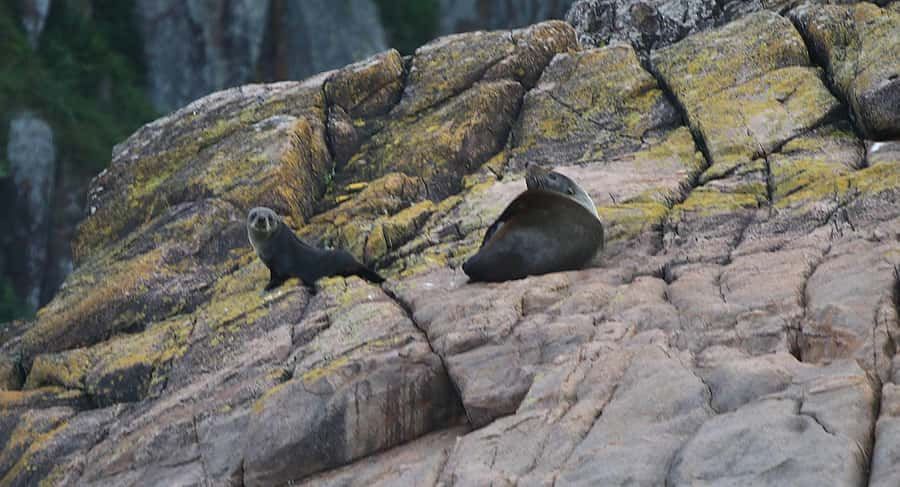
You might also see Australian fur seals and seabirds. These sightings add variety during the quieter stretches, and they give you something to watch while the skipper checks the horizon for whales. A trip that includes whales, dolphins, seals, and birds feels much fuller than one built around a single species.
The cruise has also produced a few unexpected sights. One July outing included six F-35 jets flying low over the area. That is not a promised part of the program, but it shows how the open water can bring in passing activity beyond the wildlife.
The best approach is to treat each sighting as its own event. Dolphins may stay with the boat, while a seal could surface once and vanish. Seabirds can be easy to miss unless you watch the waterline and the air above it.
More Whale and Dolphin Watching Tours in Australia
- Moreton Island: Tangalooma Whale Watching & Dolphin Feeding
★ 4.7 · 57 reviews - Port Stephens 3 Hour Whale and Dolphin Watch Cruise
★ 5.0 · 53 reviews - Philip Island: Dolphin and Whale Cruise
★ 4.4 · 48 reviews - Hervey Bay: Pre-season Whale and Dolphin Watching Cruise
★ 4.5 · 13 reviews
Commentary that adds more than animal names
The live commentary is in English and comes throughout the cruise. It covers the whales and other animals you see, but the crew also discusses the area’s pre-European and post-European story. That gives the boat ride a little more local context than a simple wildlife search.
The commentary is practical because it helps you understand what to watch for. A pectoral slap means something different visually from a breach, and a close approach can look very different from a whale passing at a distance. The crew can also explain what is happening when the sea appears empty, which helps prevent the quiet periods from feeling like wasted time.
The crew has received especially strong praise for being friendly, helpful, and courteous. One account described the skipper handling the vessel with skill, while another highlighted how the staff kept the experience enjoyable even in poor weather. That matters on a wildlife cruise, where patience and sensible boat handling affect your comfort.
No individual guide names are provided, so you should not book expecting a particular naturalist. What you can expect is an English-speaking crew with an informative approach and a willingness to explain both wildlife and local background.
Comfort, food, and dealing with the weather
Tea and coffee are included and available for self-service. The boat also has a fully licensed bar where you can buy soft drinks, alcohol, and snacks. Bringing warm clothing remains important, since a hot drink does not replace a proper layer when you are exposed to wind for three hours.
The covered decks offer shelter, but this is still a marine outing. Cold weather can make the time feel longer, especially if you plan to stand outside for the full cruise. A fleece blanket or wet-weather jacket can help, and you should bring sun protection even on a cool day.
Seasickness deserves serious attention. Tablets are available if required, but preventative medicine works best when taken at least one hour before boarding. If you know that planes, cars, or other moving vehicles make you sick, ask a local pharmacy for advice before the cruise rather than waiting until the boat leaves the marina.
The catamaran has been described as smooth in choppy conditions, but smooth is not the same as still. Sea conditions can change, and the cruise operates only when conditions are suitable and the minimum number of participants is reached.
The cost and what you receive for $63
At $63 per person, this is a reasonable price for a three-hour wildlife cruise, especially during the June to October whale season. You are paying for the vessel, crew, commentary, and the time needed to search a large area, not for a guaranteed close-up performance from a whale.
The value improves if you use the full outing well. You have access to covered viewing areas, tea and coffee, wet-weather jackets, fleece blankets, and seasickness tablets if needed. The licensed bar is convenient, though snacks and other drinks cost extra.
The whale guarantee also reduces some of the financial risk during the main season. If you do not see a whale between June 1 and October 31, you can take another cruise on a different date without paying again. That is useful if your schedule allows a return visit. It is less useful if you are leaving Nelson Bay immediately after the first attempt.
The price does not include parking, so add that to your planning. You should also budget for any food or drinks purchased on board.
Who will enjoy this cruise most
I would choose this cruise if you want a relaxed wildlife outing rather than a high-speed thrill ride. It suits families, couples, photographers, and anyone who enjoys being outside and watching natural behavior unfold at its own pace.
It is also a good choice for people who value commentary. The crew does more than point toward an animal. You receive background on local history and explanations of the wildlife around you, which gives the ride more substance.
You should think twice if you dislike open water, struggle with motion sickness, or need step-free wheelchair access. You also need to be comfortable with a little uncertainty. Even in whale season, the exact number of sightings and their distance from the boat cannot be promised.
The cruise can work well for repeat visitors to Nelson Bay, too. The wildlife changes from day to day, and one trip may bring a distant whale while another produces dolphins close to the wake. That variety is part of the appeal.
Booking, cancellation, and practical planning
You can cancel up to 24 hours before departure for a full refund, and the reserve-now, pay-later option keeps your plans flexible. The cruise may be rescheduled or refunded if sea conditions are unsuitable or the minimum number of participants is not reached.
Check the starting time when you book, since departure times can vary. Arrive early enough to find paid parking and walk to Dock C without rushing.
Wear closed-toe shoes and warm clothing. Leave high heels at home, bring a sun hat, and consider taking motion sickness medication before boarding if you need it. The boat is not suitable for wheelchair users.
Should you book the Nelson Bay whale cruise?
Book it if you want a well-priced three-hour outing with a real chance of seeing humpbacks, dolphins, seals, and seabirds from a comfortable catamaran. The strongest reasons to choose it are the friendly crew, useful commentary, covered viewing decks, and whale guarantee during the main season.
I would book between June and October if whales are your priority. If your date falls outside that period, the cruise can still offer dolphins and other wildlife, but the stated whale guarantee does not apply. Go with realistic expectations, dress warmly, and give yourself time to find parking.
If you can accept changing sea conditions and the patience wildlife requires, Imagine Cruises offers a solid way to spend part of a Nelson Bay day. The real prize may be a breaching humpback, but a pod of dolphins racing the wake can be just as memorable.
FAQ
Where does the Nelson Bay whale and dolphin cruise depart from?
The catamaran departs from Dock C at d’Albora Marina in Nelson Bay, opposite Magnolia’s Cafe.
How do I find the catamaran at the marina?
Enter through the C Dock gate, walk down the ramp, and pass the Bay Booking Office on your right. The white 54-foot catamaran with a blue sail cover and Imagine written in white should be about 50 metres along on your right.
How long does the cruise last?
The cruise lasts three hours, including the boat trip from Nelson Bay and the return to d’Albora Marina.
When are whale sightings guaranteed?
Whale sightings are guaranteed from June 1 through October 31. If you do not see whales during that period, you can take another cruise on a different date at no additional charge.
What happens if the cruise is cancelled?
If the cruise cannot operate because of sea conditions or because the minimum number of participants is not reached, you can reschedule or receive a full refund.
Is tea or coffee included?
Yes. Complimentary tea and coffee are available for self-service on board.
Can I buy food and other drinks on the boat?
Yes. The vessel is fully licensed, and you can purchase soft drinks, alcohol, snacks, and other drinks from the bar.
What should I bring?
Bring warm clothing, a sun hat, and closed-toe shoes. Wet-weather jackets and fleece blankets are available if required.
Is the cruise suitable for wheelchair users?
No. The experience is not suitable for wheelchair users.
More Catamaran Dolphin Cruises in Australia
- From Funchal: Ecological Catamaran Dolphin Whale Watching
★ 4.5 · 8,204 reviews - Funchal: Dolphin and Whale Watching Catamaran Cruise
★ 4.5 · 5,697 reviews - Gran Canaria: Catamaran Dolphin Watch Cruise with Snorkeling
★ 4.4 · 4,761 reviews - Shell Island Snorkel and Dolphin Catamaran Cruise with Island Time
★ 5.0 · 4,362 reviews
Newly spotted around Australia
- Mornington Peninsula Kayak Coastline Tour of Dolphin Sanctuary★ 3.0 · 2 reviews
- 3-Hour Dolphin and Seal Sightseeing Cruise, operated with swim tour passengers★ 4.0 · 24 reviews
- Dolphin and Seal snorkel adventure from Sorrento★ 4.0 · 20 reviews
- 3 hour Dolphin and Seal Swim (NOV-APR)★ 4.0 · 43 reviews
- Giant and Dolphin Sightseeing Cruise in Mandurah★ 5.0 · 12 reviews
- 1 Hour Deluxe Scenic Dolphin Cruise★ 5.0 · 5 reviews
- Jervis Bay Dolphin Cruise★ 4.0 · 294 reviews
- Kangaroo Island – Swim with Dolphins/Seals/Coastal Snorkel★ 4.5 · 261 reviews
Australia Dolphin Watching Tours, side by side.
Moreton Island: Dolphin & Tangalooma Wrecks Snorkel Cruise
Read our review →
Sydney: Jervis Bay Day Trip with Dolphins, Roos & Beach Time
Read our review →