Review · NEW ZEALAND
Auckland: Whale and Dolphin Watching Half-Day Eco Cruise
Auckland’s best wildlife surprise may be just outside its downtown waterfront. On this 4.5-hour eco-cruise, you sail into Hauraki Gulf Marine Park aboard the 65-foot Dolphin Explorer, watching for common dolphins, orcas, Bryde’s whales, penguins, gannets, and other seabirds. The boat also supports marine research, so the trip is more than a ride around the harbor.
I like two things here. First, the crew gives you time with the animals rather than rushing past them. Second, a dollar from every ticket supports the Hauraki Gulf Guardians fund, and the team may collect samples or explain ongoing research during the trip. The main drawback is simple: wildlife follows its own timetable. You may see dozens of dolphins and no whales, or no marine mammals at all.
Key points to know before you book
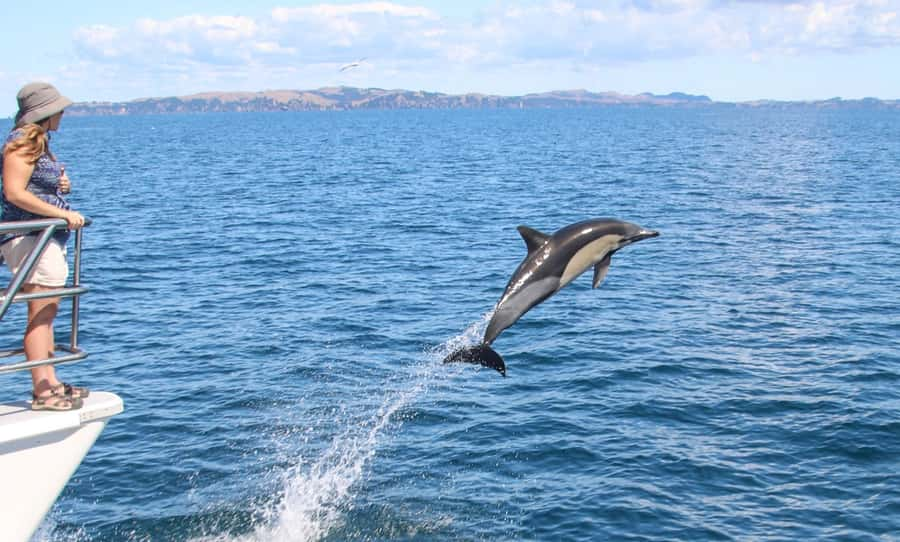
- Dolphins are the most dependable highlight: Sightings can include large pods, young dolphins, and animals swimming close to the boat.
- Whales are possible, not promised: Bryde’s whales and other species have been seen, sometimes at a distance.
- The boat is used for research: Marine scientists may discuss plankton, tracking methods, and conservation work during the cruise.
- The downtown departure is easy: Check in at Berth 9, Eastern Viaduct Marina, opposite the Maritime Museum.
- You receive a second chance if needed: If no marine mammals are seen, you can take the cruise again for free.
- Prepare for wind and motion: Bring warm layers, a showerproof jacket, sunscreen, and seasickness medication taken before departure.
From Auckland’s waterfront to the open gulf
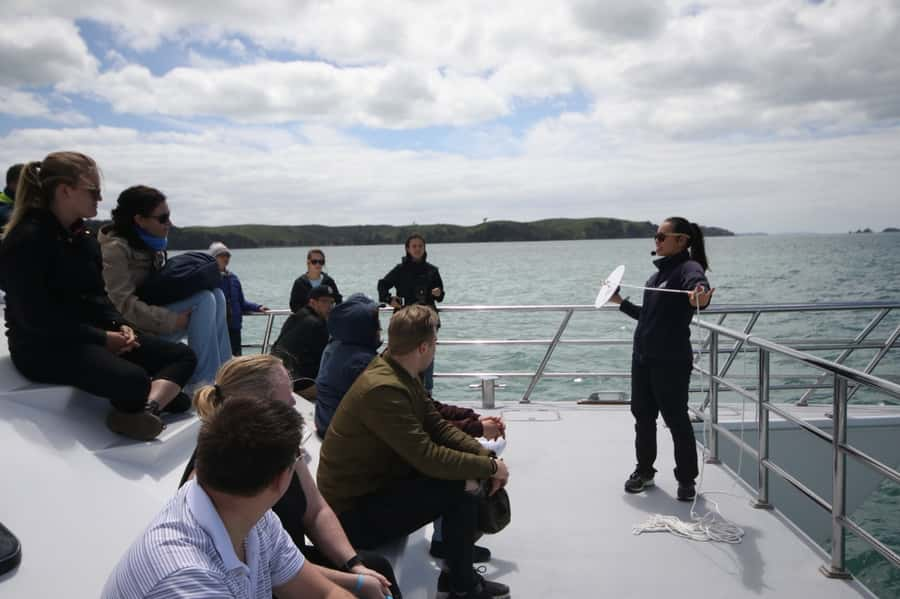
The trip begins at Berth 9 in the Eastern Viaduct Marina, at the end of Quay Street and opposite the Maritime Museum. You need to check in 30 minutes before departure, and check-in closes 15 minutes before sailing. That timing matters, since the crew must get everyone aboard and ready before the catamaran leaves.
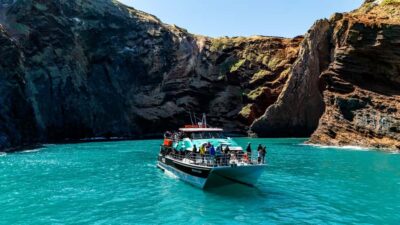
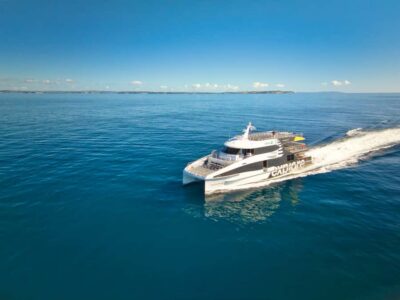
The Dolphin Explorer is a 65-foot catamaran with a good mix of seating and viewing areas. It is large enough to feel stable and comfortable, but not so huge that wildlife watching becomes a distant group exercise. Several reports describe the boat as a good size, with room for people to find a place along the edge.
The first part gives you a quick water-level introduction to Auckland. You pass North Head and Devonport, then head toward Rangitoto Island. The city looks different from the gulf, and this opening section helps you shift from urban sightseeing to open-water wildlife watching.
Rangitoto is especially useful as a reference point. Its volcanic shape gives the trip a strong sense of place, and the views remain part of the experience even if the animals are hiding. You are not simply waiting for a whale to appear. You are moving through one of Auckland’s most scenic marine settings.
More Dolphin and Wildlife Eco Tours in New Zealand:
- Akaroa Dolphins ~ Harbour Nature Cruise
★ 5.0 · 2,143 reviews - Akaroa: Dolphin Nature Cruise
★ 4.9 · 440 reviews - Akaroa Harbour 2-Hour Dolphin Nature Cruise
★ 4.7 · 235 reviews
What happens during the wildlife search
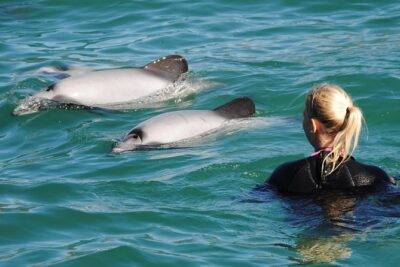
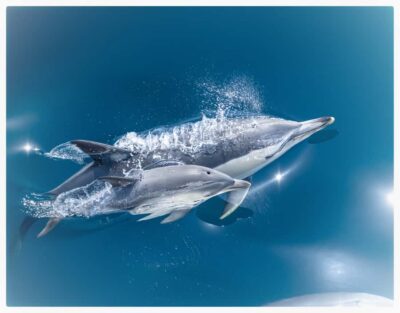
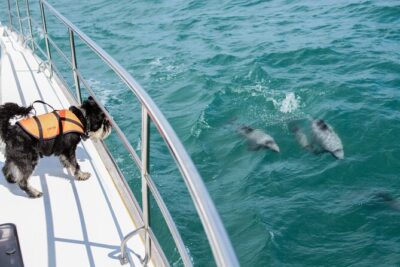
The crew watches the water for signs of marine life. Dolphins may appear in pods, sometimes close enough to swim alongside or beneath the boat. Reports include sightings of baby dolphins, large groups of more than 100 animals, and dolphins that stayed with the catamaran for around 30 minutes.
That is the kind of encounter you should hope for, but not demand. The boat can search, and the crew can use experience and research to improve the odds, but no operator can control the gulf. A calm day may make spotting easier, while wind, rain, glare, or swell can make even large animals difficult to find.
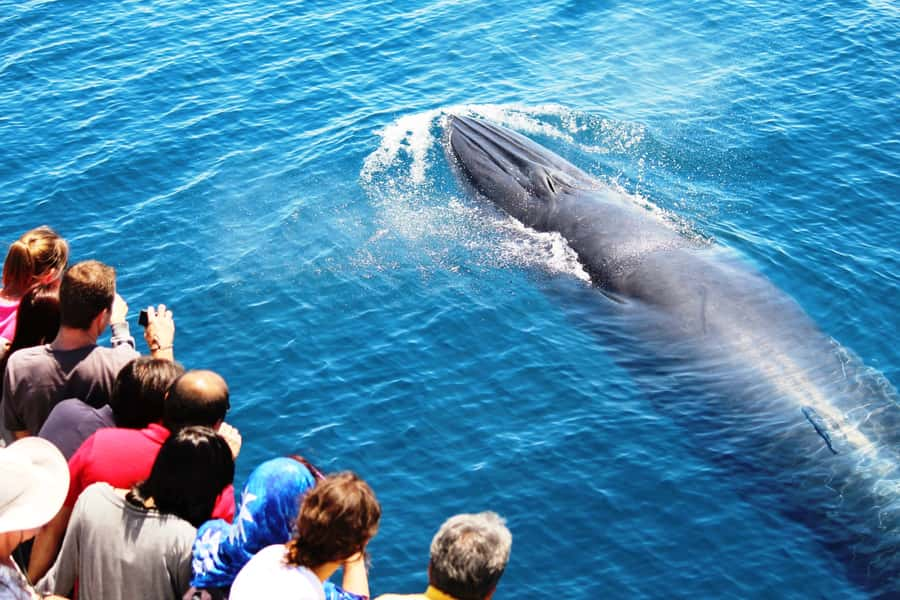
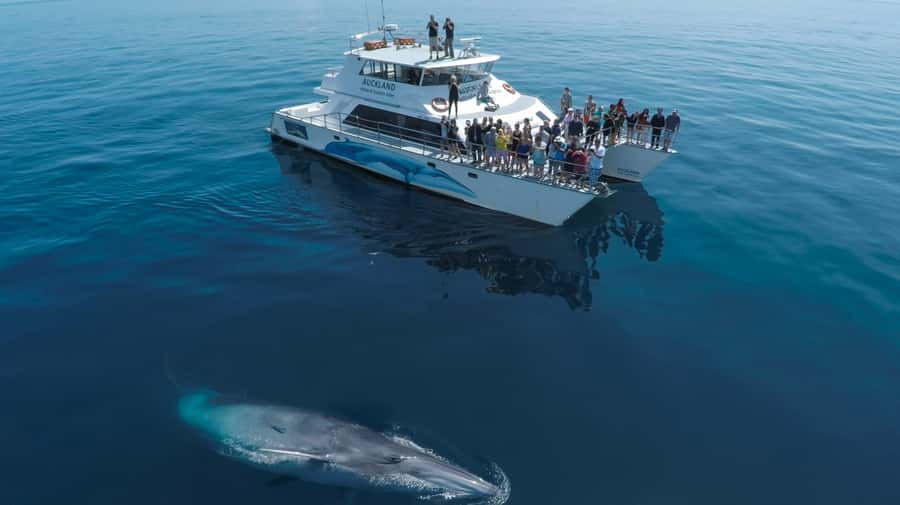
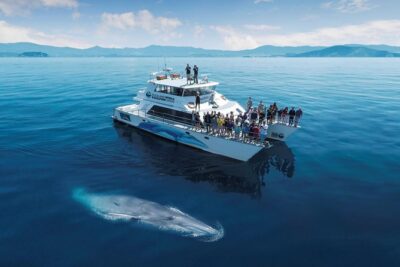
Whales are a less certain part of the trip. Bryde’s whales have been seen, along with whales at a distance and, on especially successful outings, several animals in one cruise. You might see a whale’s back or blow briefly, rather than watch one perform close to the boat. That can feel modest compared with a guaranteed zoo encounter, but it is also the honest nature of wildlife in the open sea.
The crew keeps the viewing respectful. The boat is able to approach more closely than some whale-watching operations, but the emphasis remains on keeping appropriate distance and avoiding pressure on the animals. That matters if you want a wildlife experience connected to conservation rather than a noisy chase.
Seabirds, penguins, sharks, and the smaller story
Do not treat the birds as filler between dolphin sightings. Australasian gannets can be a major part of the trip, especially when they gather over fish. Their sudden drops from the sky are among the most dramatic sights on the gulf, and they give you another way to understand where marine life is concentrated.
The sightings can also include shearwaters, blue penguins, and other seabirds. Several outings have included penguins, while gannets have appeared regularly enough to become a welcome part of the trip. Bring binoculars if you have them, though the boat still gives you plenty to watch without special equipment.
Sharks are possible too. Blue sharks and a hammerhead shark have been seen, but they are occasional surprises rather than advertised targets. The same goes for other creatures connected to the food chain. One of the more useful lessons of this cruise is that a productive patch of water may bring birds, dolphins, whales, and fish together.
The guides may also explain plankton and collect samples for research. That detail gives the cruise more depth. You learn that the animals are not random attractions scattered across the water. They are responding to food, currents, weather, and seasonal conditions.
The guides bring science to the deck
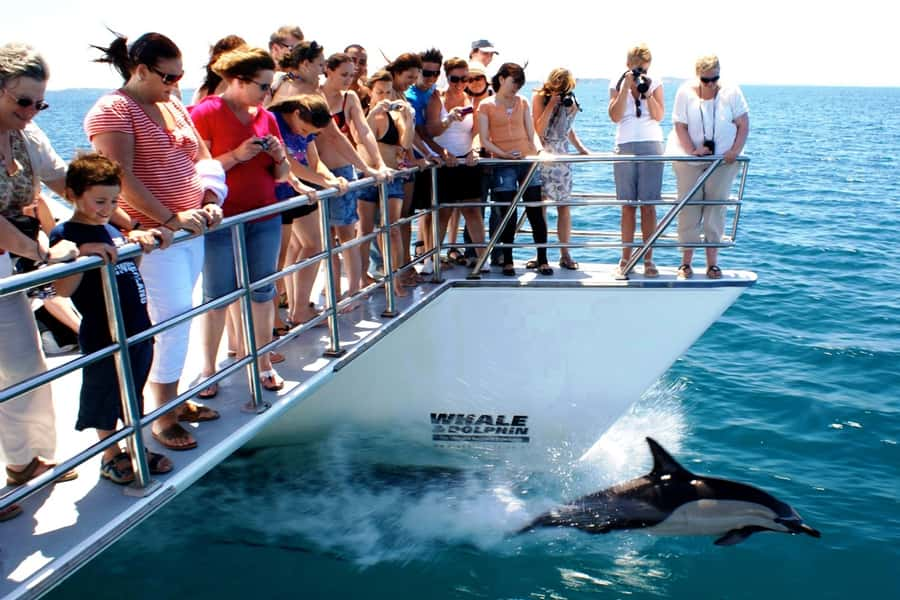
The crew is one of the strongest reasons to choose this cruise. Guides and marine scientists explain animal behavior, seabirds, geography, and the way the team locates marine mammals. Names associated with particularly praised trips include Emily, Sanaa, John, Joseph, Toni, George, Jo, Jess, and Brittany.
You should not assume every named crew member will be aboard your departure, but the pattern is clear: the guiding team combines boat handling with field knowledge. Skipper John, for example, has been singled out for keeping the mood light while sharing useful information. Other guides have explained how they follow feeding activity, or workups, to locate marine mammals.
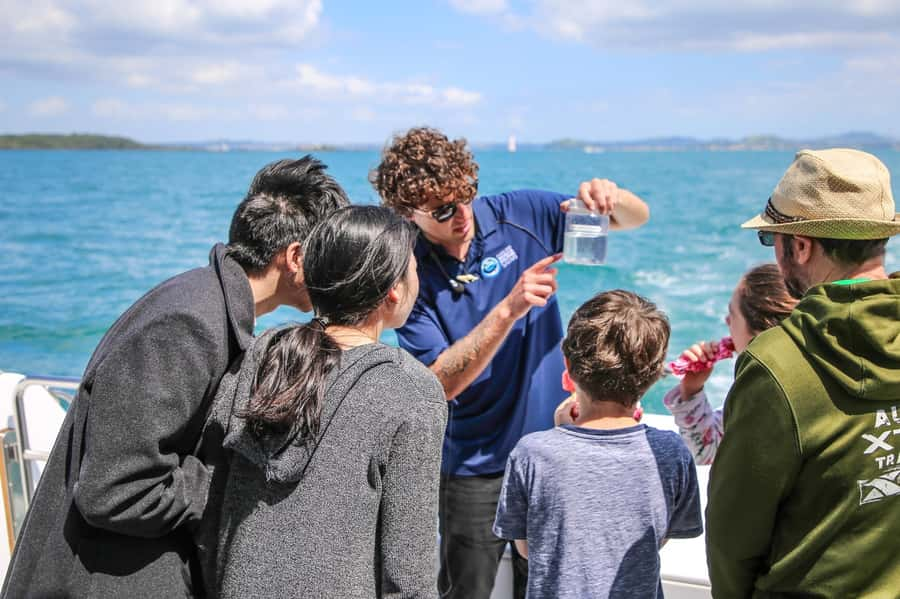
The research element is not just a marketing line. During some cruises, the crew has taken plankton samples or carried out other scientific work while guests watched. On the way back, you may get a presentation that ties the day’s sightings to the wider marine environment.
I like this approach because it gives you something useful even during a quiet wildlife day. If the sea stays empty, you can still learn why the gulf supports so many species, how scientists track animals, and what conservation work is being done. One cruise with no mammal sightings was still described as a worthwhile afternoon because the commentary covered marine science, birds, geography, and the surrounding area.
More Whale and Dolphin Watching Tours in New Zealand:
- Auckland Dolphin and Whale Watching Eco-Safari Cruise
★ 4.5 · 1,790 reviews - Auckland: Tikapa Moana Whales, Dolphins and Islands Cruise
★ 3.9 · 292 reviews - Auckland: Tikapa Moana Dolphin, Whale and Island Cruise
★ 4.0 · 17 reviews - Kaikoura Whale and Dolphin Overnight Tour from Christchurch
★ 4.0 · 9 reviews
How much value do you get for $130?
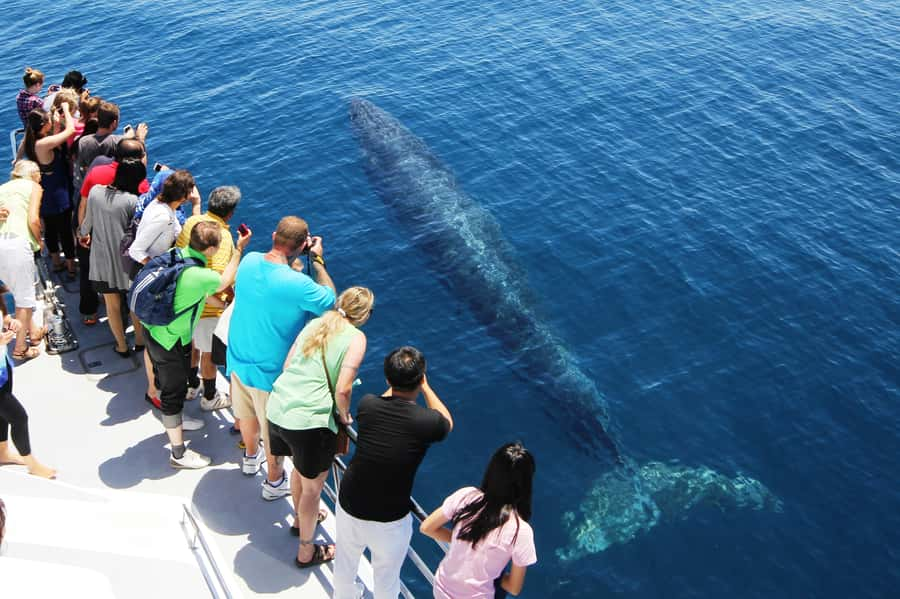
At $130 per person, this is not a cheap harbor outing. You are paying for 270 minutes on the water, a specialized catamaran, a guide team, fuel, wildlife searching, and the possibility of close encounters with free-ranging animals.
The value improves if you care about the research and conservation side. A dollar from each ticket goes to the Hauraki Gulf Guardians fund, and the boat contributes to marine research. You are not merely buying a sightseeing transfer. You are helping fund work connected to the place you are visiting.
The free second cruise also changes the calculation. If you see no marine mammals, you can return at no extra charge. This does not guarantee a whale or dolphin on the next trip, and you will need enough time in Auckland to use the voucher, but it shows that the operator recognizes the limits of nature-based excursions.
The cruise is a better buy for someone who values the full experience: gulf scenery, birds, science, and the chance of whales and dolphins. If your only goal is a guaranteed whale photograph, the price may feel high when conditions fail. If you see dolphins, seabirds, and a whale or two, the four-and-a-half-hour outing feels much more convincing.
Weather, comfort, and seasickness
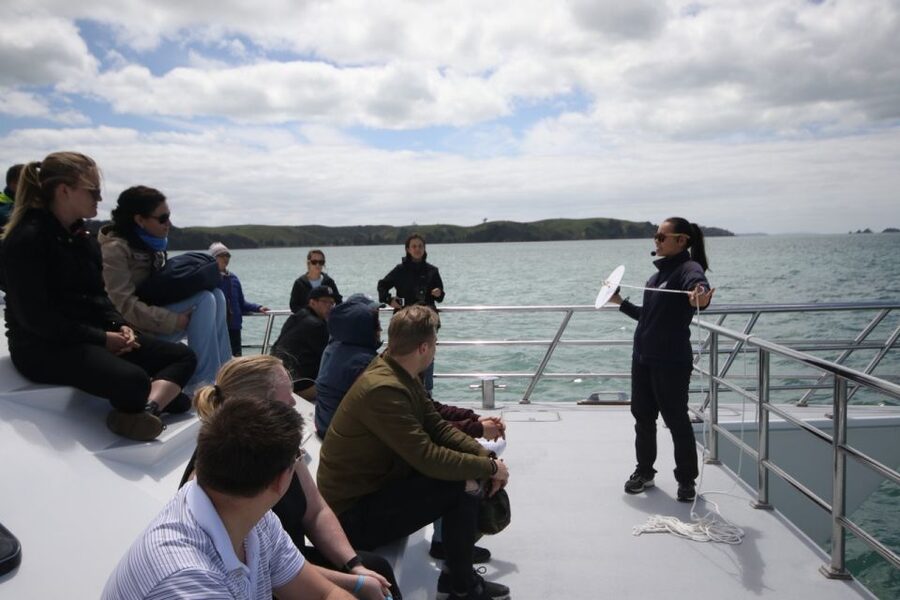
You should dress for a cooler day than the forecast suggests. The boat moves into open water, and wind can make the trip feel brisk even when Auckland is sunny. Bring warm layers, a showerproof jacket, a sun hat, and sunscreen.
Seasickness medication should be taken before the trip, not after symptoms begin. The provider warns that wind, weather, or sea conditions can force a cancellation, and recent departures have been offered a refund or rebooking when storm warnings or large swell created safety concerns.
Conditions can also change during the cruise. One outing had mostly cooperative weather before rain arrived near the end. Another went ahead after an earlier warning for large swell. The crew’s weather communication is important here, and you should keep some flexibility in your Auckland schedule.
Food and drinks are not included, though a small selection of snacks, hot food, and drinks can be bought aboard. Beer and wine are available as well. I would still eat something before boarding, especially if you are prone to seasickness, since the onboard selection is limited.
The vessel is not wheelchair accessible because of stairs and narrow doorways. Unaccompanied minors are not allowed. Children under five may join only when closely supervised by a parent or guardian, and the activity is not suitable for heavily pregnant women.
Who will enjoy this Auckland cruise most?
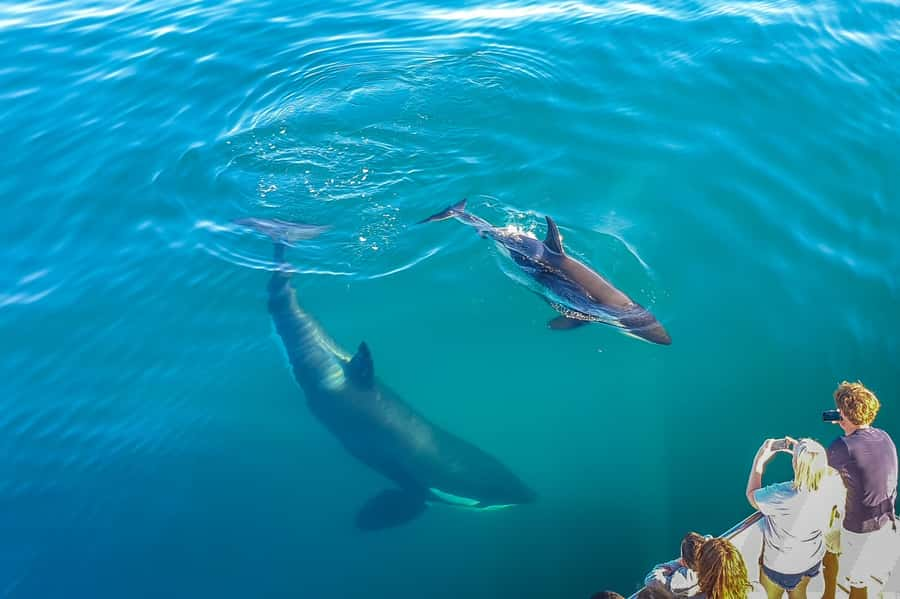
This trip suits people who enjoy wildlife without needing a guaranteed performance. Families with older children can find plenty to watch, though young children may struggle with the long duration, wind, and the patience needed between sightings.
It is also a strong choice for visitors with only a short time in Auckland. The marina is in the heart of the city, and the cruise combines waterfront scenery, Rangitoto views, seabirds, and marine mammals in one half-day outing. You do not need a separate transfer to a distant departure port.
Photographers should bring a camera, but keep expectations realistic. Dolphins can move quickly, birds may appear suddenly, and whales may remain far away. A fast phone camera or a camera with a useful zoom will help, but the best souvenir may be the sight itself rather than a perfect frame.
I would be more cautious if you dislike boats, cannot tolerate wind, or need an accessible vessel. I would also avoid booking this as your final Auckland activity before an important flight, since weather can affect departure times or lead to rebooking.
My take: should you book it?
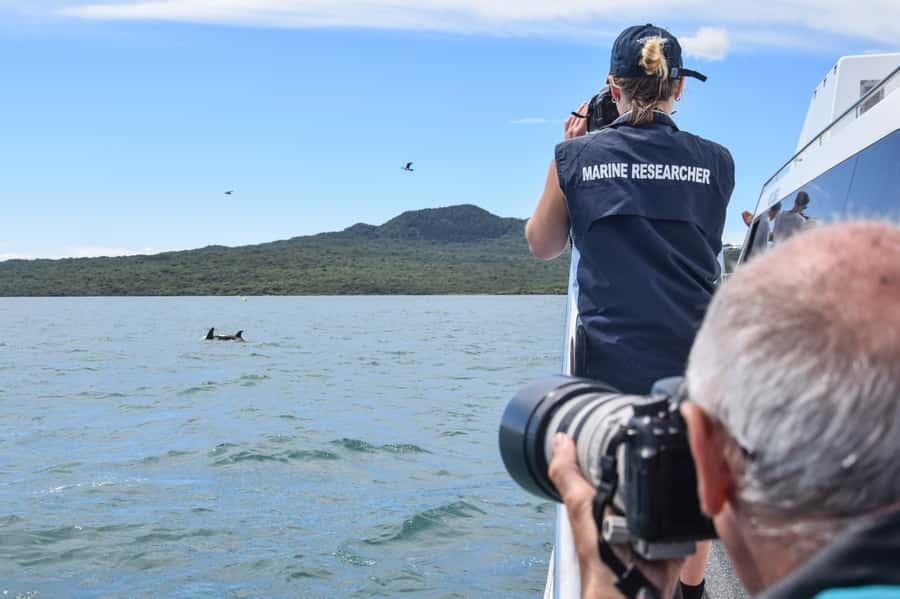
I would book this cruise if you want a responsible wildlife outing that combines scenery, science, and a real chance of dolphins and whales. The strongest feature is not one particular animal. It is the way the crew treats the gulf as a living system, from plankton and seabirds to whales and conservation work.
Book with an open mind. You may see baby dolphins, gannets, penguins, sharks, and Bryde’s whales in one memorable morning. You may instead get Rangitoto views, a careful explanation of the marine environment, and a free return voucher. The second outcome is less exciting, but it is still an honest day on the water.
The $130 price makes sense when you use the research and conservation benefits, the comfortable catamaran, and the full 270-minute schedule. If you need certainty, choose another activity. If you want the chance to witness wild animals on their terms, this is one of Auckland’s more worthwhile half-day choices.
FAQ
Where does the Auckland whale and dolphin cruise depart from?
The boat departs from Berth 9 at Eastern Viaduct Marina, accessed from the end of Quay Street heading west. The berth is opposite the Maritime Museum.
How early should I arrive?
You should arrive 30 minutes before departure to check in with the crew at the top of the boarding ramp. Check-in closes 15 minutes before the scheduled trip time.
How long does the cruise last?
The eco-cruise lasts 270 minutes, or 4.5 hours. Starting times vary, so you need to check availability for your chosen date.
What happens if no marine mammals are seen?
You can take the cruise again for free if no marine mammals are seen. You need to have enough time in Auckland to use the additional cruise.
Are food and drinks included?
Food and drinks are not included. A small range of snacks, hot food, and drinks can be purchased aboard, including beer and wine.
What should I bring?
Bring warm clothing, a showerproof jacket, a sun hat, sunscreen, a camera, binoculars if you have them, and any personal medication you need. Seasickness medication should be taken before the trip.
Is the boat wheelchair accessible?
No. The vessel has stairs and narrow doorways, so it is not wheelchair accessible.
More half-day dolphin trips around New Zealand
- From Tauranga: Half-Day Swimming with Dolphins Tour
★ 4.3 · 151 reviews - Lanzarote: Lobos Island Half-Day Dolphin Watching Trip
★ 4.2 · 585 reviews - Khasab: Half-Day Dhow Cruise, Dolphin Watching, & Snorkeling
★ 4.9 · 507 reviews - Terceira: Half-Day Dolphin and Whale Watching Tour
★ 4.6 · 219 reviews
More Dolphin Watching Cruises in New Zealand
- Paihia/Russell: Hole in the Rock, Dolphins & Island Cruise
★ 4.6 · 821 reviews - From Tauranga: Dolphin and Wildlife Cruise
★ 4.5 · 96 reviews - Akaroa: Wildlife Cruise with Dolphins and Penguins
★ 5.0 · 27 reviews - Paihia: Bay of Islands Dolphin Eco Cruise & Island Stopover
★ 4.8 · 12 reviews
Newly spotted around New Zealand
- Kaikoura Swim with Dolphins Tour from Christchurch★ 4.5 · 27 reviews
- Akaroa with optional dolphin cruise (Small Group Tour)★ 5.0 · 3 reviews
- Akaroa Swim with Dolphins Tour from Christchurch★ 4.0 · 35 reviews
- Kaikoura Whale and Dolphin Overnight Tour from Christchurch★ 4.0 · 9 reviews
- Auckland: Tikapa Moana Dolphin, Whale and Island Cruise★ 4.0 · 17 reviews
- Paihia: Bay of Islands Dolphin Eco Cruise & Island Stopover★ 4.8 · 12 reviews
- Motuara Island Sanctuary: Wildlife & Dolphin Watching Tour★ 4.6 · 57 reviews
- From Tauranga: Dolphin and Wildlife Cruise★ 4.5 · 96 reviews
New Zealand Dolphin Watching Tours, side by side.
Auckland Dolphin and Whale Watching Eco-Safari Cruise
Read our review →
Paihia/Russell: Hole in the Rock, Dolphins & Island Cruise
Read our review →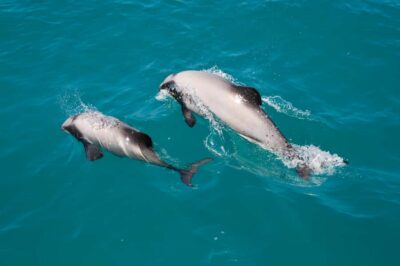
Auckland: Tikapa Moana Whales, Dolphins and Islands Cruise
Read our review →