Review · FARO
Faro: Dolphin and Wildlife Watching in the Atlantic Ocean
The real prize here is not a staged dolphin show. It is the chance to search the Atlantic with marine biologists and watch animals that decide for themselves if they want to approach. Dolphins live in these waters all year, while whales are more likely from February through May. Orcas are possible, but never promised.
I like the serious respect for wildlife and the way guides such as Miguel, Pedro, Ines, Alfredo, and Susannah turn sightings into a lesson in animal behavior and research. I also like the scenic start through Ria Formosa, with views toward Deserta and Culatra islands. The catch is simple: this is a fast, open-water ride, and sightings can take time or fail altogether.
Key points
- Wild animals, not a guaranteed performance: Dolphins are seen on roughly 9 out of 10 tours, but nature makes the schedule.
- Two marine biologists help search: Guides scan for fins, explain species, and discuss how dolphin data is collected.
- Thirty minutes with a pod: Once dolphins are found, the group can watch them for about half an hour.
- A scenic route from Faro: The boat crosses Ria Formosa before reaching the open Atlantic.
- Expect spray and a bumpy ride: Wind can make the ocean cold, and the seats may feel firm by the end.
- Whale season is February through May: Dolphins are present year-round, with other sightings including seabirds, sunfish, sharks, turtles, and occasional orcas.
From Faro Marina to the Atlantic
You meet at the Ocean Vibes Algarve office in Faro harbor. Look for the shared store with the Ocean Emotions banner. Hotel pickup is not included, so allow time to reach the marina on your own.
The trip begins in the calmer waters of Ria Formosa Natural Park. This is a pleasant start, not just a transfer. You can look across marshes and barrier islands, especially Deserta and Culatra, while the guides explain the area and prepare you for the open-water search.
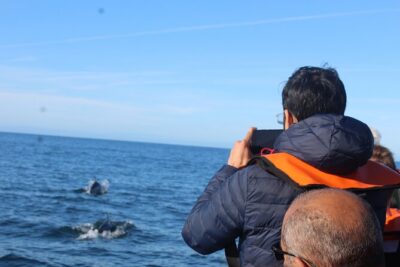
Once the boat clears the protected channels, the character of the trip changes. The Atlantic can be lively, and the boat moves quickly as the crew searches a wide area. I like this part because you are not simply motoring to a fixed viewing spot. The guides are actively looking for signs of life, often scanning the surface for fins, splashes, or groups of seabirds.
That also means you should not treat the advertised two and a half hours as a quiet sightseeing cruise. You may get spray, wind, and repeated bursts of speed. Bring a jacket even on a warm Algarve day. The wind can feel cold once the boat is moving.
More Dolphin and Wildlife Eco Tours in Portugal
- Small Group Dolphin and Wildlife Watching Tour in Faro
★ 5.0 · 578 reviews - Algarve Dolphin Watching & Marine Life Eco Tour
★ 5.0 · 16 reviews - Dolphin watching and wildlife from Faro
★ 5.0 · 6 reviews
Why the marine biologists matter
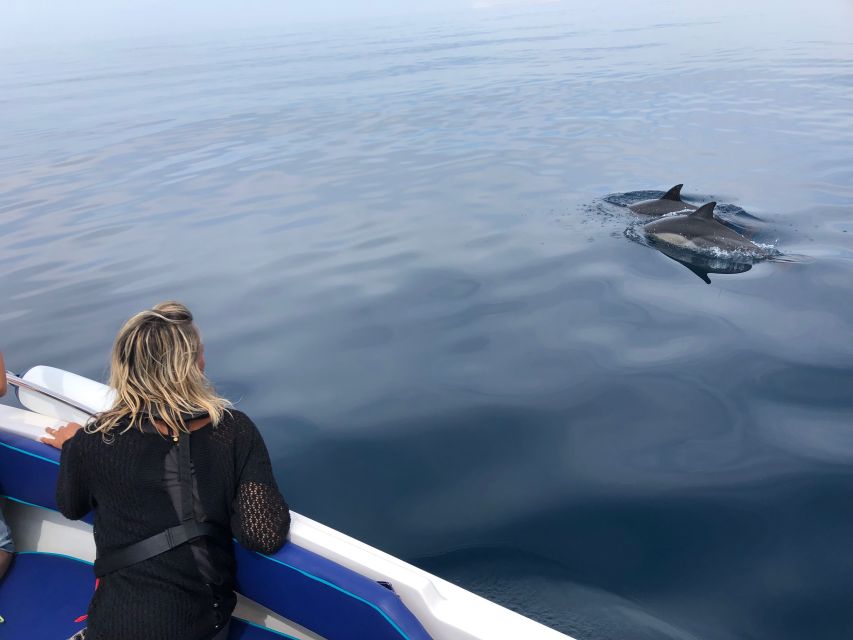
The guides are the heart of this experience. Their job is not only to find dolphins. They explain how different animals behave, how researchers identify species, and how scientists collect information about dolphin populations.
That background changes the way you watch. A dolphin jumping beside the boat is exciting on its own, but you get more from the moment when you understand the difference between common and bottlenose dolphins, notice a calf traveling with its mother, or see how a pod chooses to move around the boat.
The guides also give clear instructions about safety and animal welfare. Boats keep a respectful distance, and touching or feeding marine life is not allowed. After a group is found, the observation period is limited to about 30 minutes. That limit can feel short when the animals are active, but it helps keep the encounter from becoming a long chase.
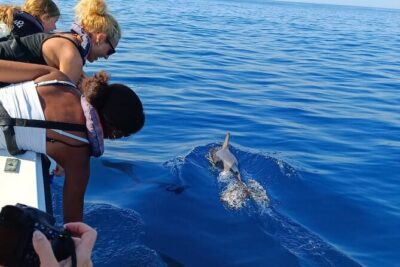
I especially value the company’s apparent care with the animals. The aim is to observe, not force contact. Dolphins may come close by choice, sometimes swimming under or beside the boat, but the crew does not treat that as permission to crowd them.
The guide team varies. Names connected with the trips include Miguel, Pedro, Ines, Alfredo, Susannah, Pablo, and others. The languages offered are English, French, Portuguese, and Spanish.
Searching for dolphins, whales, and orcas
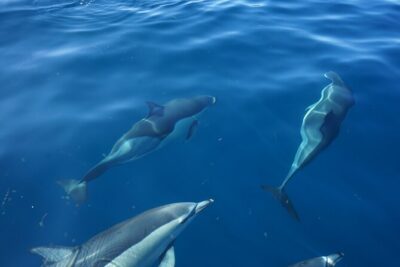
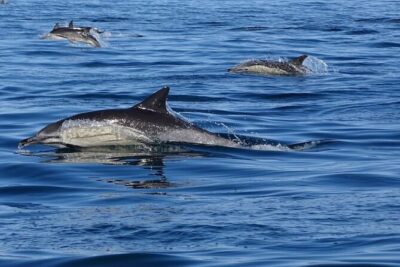
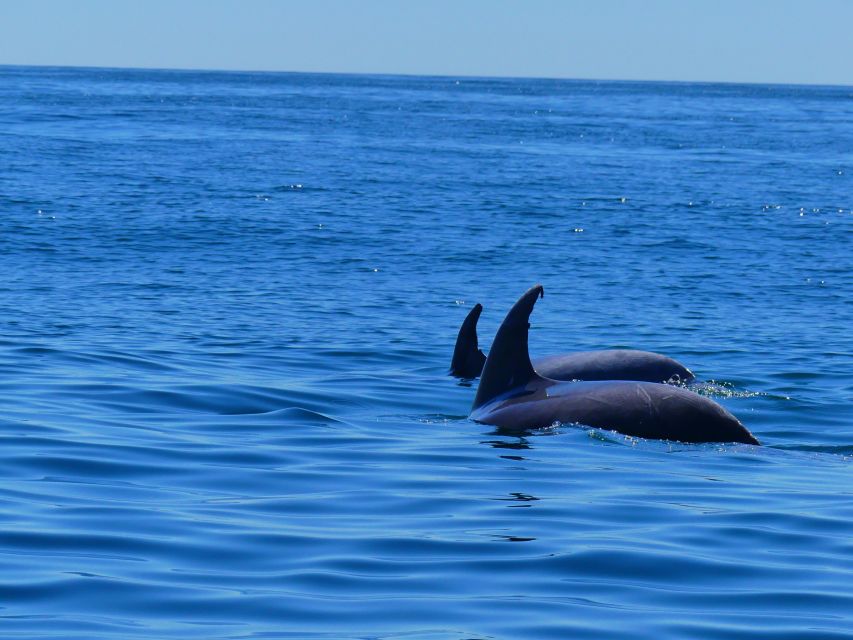
The main search takes place in the Atlantic beyond Faro. You might see common dolphins, bottlenose dolphins, or other species. Dolphins are resident in the area all year, so they are the most realistic target.
Sightings can happen quickly, but you should be ready for a period of searching. One group spent about 45 minutes on the water before finding anything, while another had to spend much of the tour scanning different spots. This is normal for a wild-animal trip. The boat cannot summon a pod on demand.
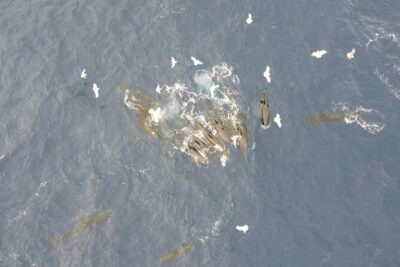
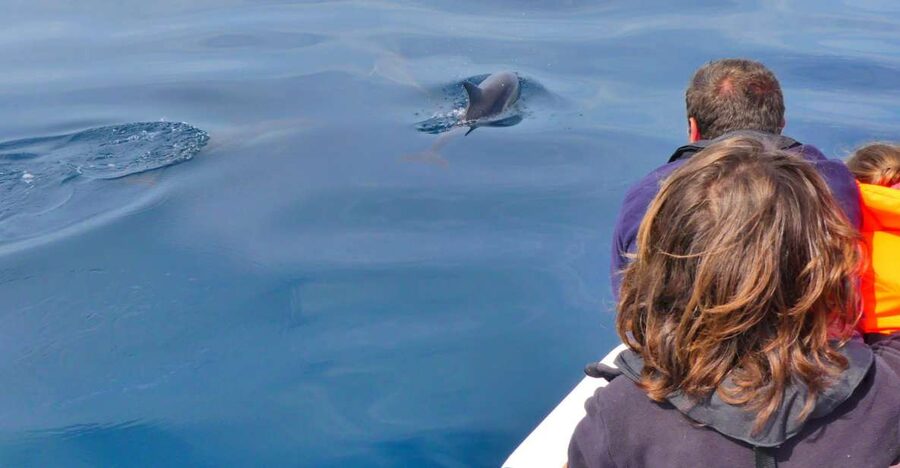
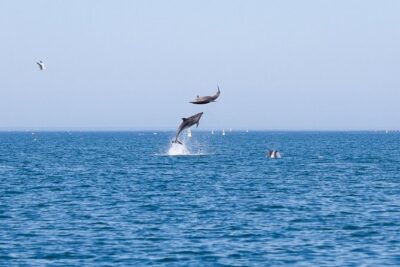
Once the guides locate dolphins, they work to position the boat without rushing the animals. You may see a few individuals surfacing, a large pod moving in formation, or dolphins leaping beside the hull. Some outings have produced dozens or even hundreds of dolphins, while other outings have seen no wildlife at all.
That range is important when deciding if this trip suits you. If you need a guaranteed attraction on a strict timetable, choose a land-based activity instead. If you can enjoy the search itself, the changing sea, and the possibility of a rare sighting, the uncertainty becomes part of the experience.
After the first dolphin sighting, the guides usually allow around 30 minutes to watch the group. Use that time to ask questions. You may learn about social behavior, feeding, communication, calves, and the methods used to study local populations.
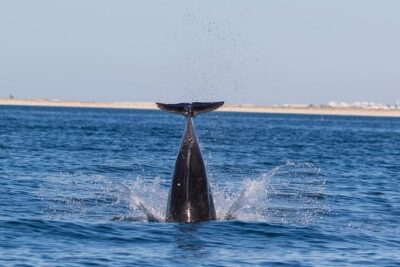
Whales are more seasonal. February through May is the stated whale season, and sightings have included fin whales, Bryde’s whales, and mothers with calves. Orcas and false killer whales have also been seen, along with porpoises. These are exceptional possibilities, not expected features of every departure.
The best approach is to treat a whale or orca sighting as a bonus. A trip that finds common dolphins and seabirds can still be a fine wildlife outing, while a trip that finds an orca pod may become one of those rare holiday memories.
The rest of the wildlife
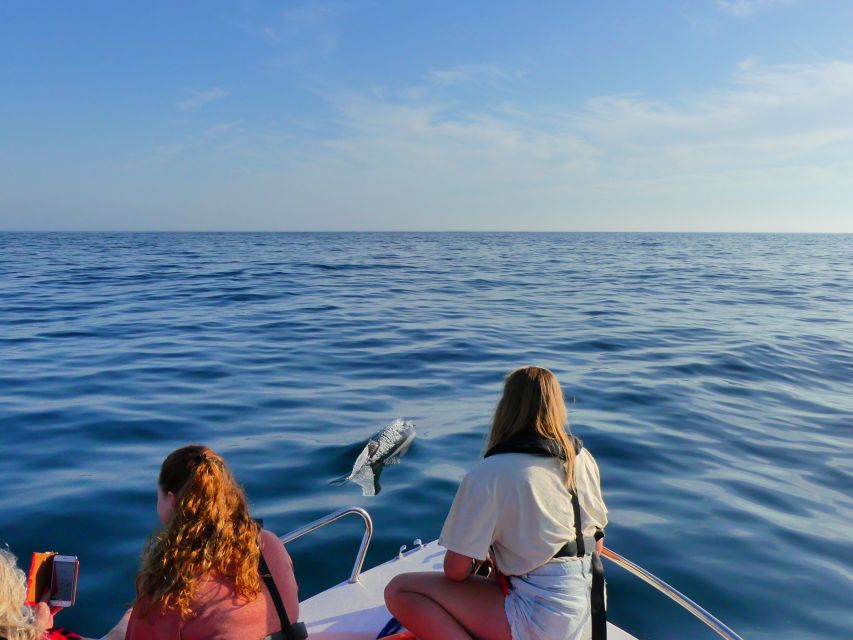
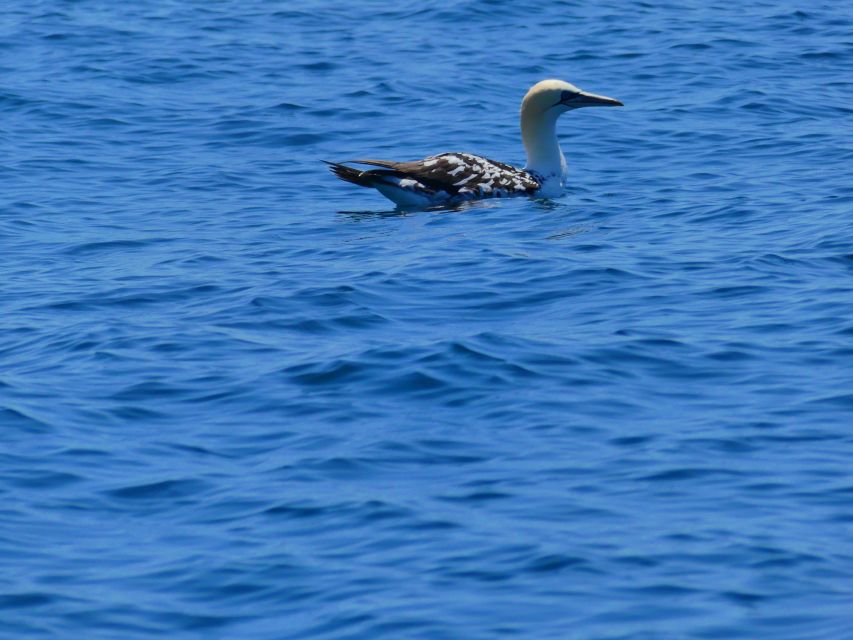
Dolphins get the headline, but keep looking beyond the waterline. Gannets and shearwaters may pass overhead, and the guides can point out seabirds as you move through the area.
The list of possible marine life is broad. You might see ocean sunfish, blue sharks, hammerhead sharks, marine turtles, and tuna. A few sightings have included large fish alongside dolphins and whales.
Do not expect every species on the list. The ocean is not a display tank, and many animals spend most of their time below the surface. Still, the wider search gives the tour more depth. Even if the dolphins remain distant, a seabird flock or a glimpse of a sunfish can make the ride worthwhile.
I would bring water and suncream. There is limited shade on an open boat, and the combination of sun, salt air, and wind can leave you more tired than expected.
More Dolphin and Wildlife Eco Tours in Faro:
- Akaroa Dolphins ~ Harbour Nature Cruise
★ 5.0 · 2,143 reviews - Auckland: Whale and Dolphin Watching Half-Day Eco Cruise
★ 4.5 · 1,072 reviews - Cocoa Beach Dolphin and Wildlife Tour
★ 5.0 · 1,052 reviews - Dolphin and Wildlife Adventure of St. Augustine
★ 5.0 · 864 reviews
What the ride feels like
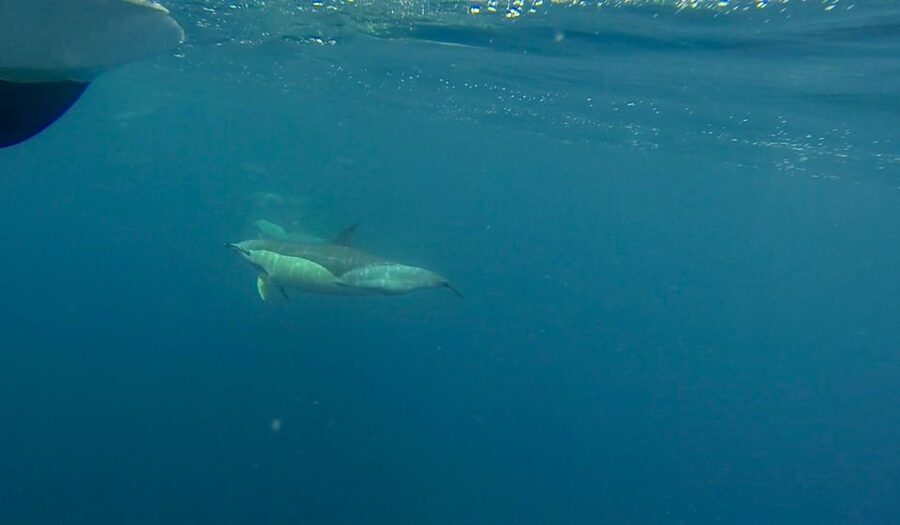
This is a small, fast boat rather than a large, slow sightseeing vessel. That gives you a closer connection to the sea and lets the skipper cover more ground, but it also means more motion.
Several details matter here:
- You may get wet on windy days.
- The Atlantic swell can make the ride quite bumpy.
- The seats may become uncomfortable toward the end.
- The wind can feel cold even in warm weather.
- People with back problems, limited mobility, or pregnancy should not book.
- Children under two are not accepted.
I would wear comfortable clothes that can handle spray and bring a light jacket. Life jackets are provided. Smoking, pets, feeding animals, and touching marine life are not allowed. Assistance dogs are permitted.
The boat ride itself can be fun, but it is not a gentle cruise. I would avoid scheduling an important activity immediately afterward. The crew has sometimes stayed out longer when conditions and wildlife made it worthwhile, so the return time may have some flexibility.
The value of $76
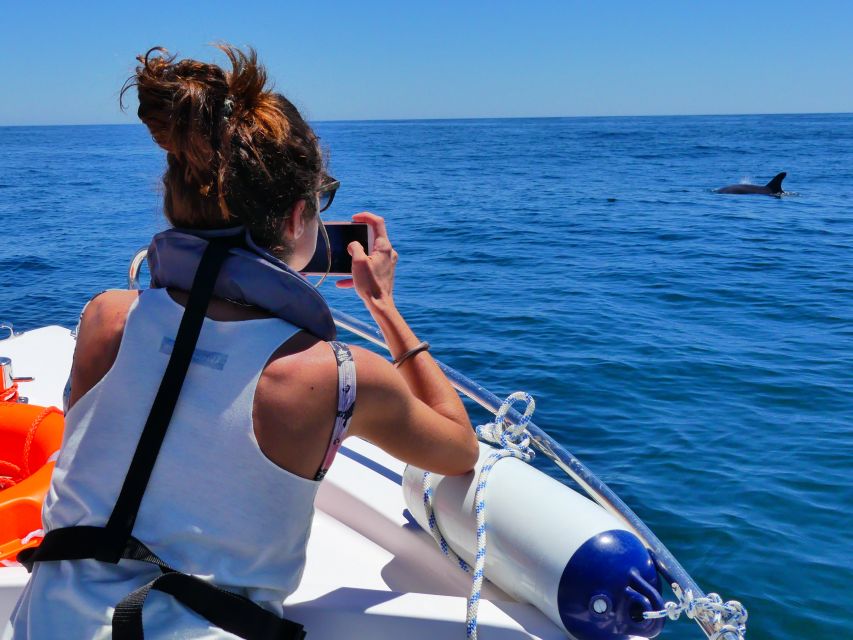
At $76 per person, this is not the cheapest way to spend two and a half hours in Faro. The value depends on what you want from a boat trip.
You are paying for a guided search with a marine biologist, not just transportation to the ocean. The guides bring scientific context, watch animal behavior, help identify species, and make an effort to find wildlife rather than ending the search at the first quiet patch of water.
The price also includes the boat tour and life jacket, but not transportation to the marina. Since there is no hotel pickup or drop-off, you need to add the time and cost of reaching Faro harbor yourself.
For me, the strongest value comes from the education and the small-boat setting. A sighting of a dolphin pod, whale, or orca gives the tour obvious appeal, but the guides’ explanations help ensure the experience still has substance when wildlife is scarce.
The company offers free cancellation up to 24 hours before departure and a reserve-now, pay-later option. That is useful when your Algarve plans depend on weather or when you want to keep your schedule flexible.
The best time to go
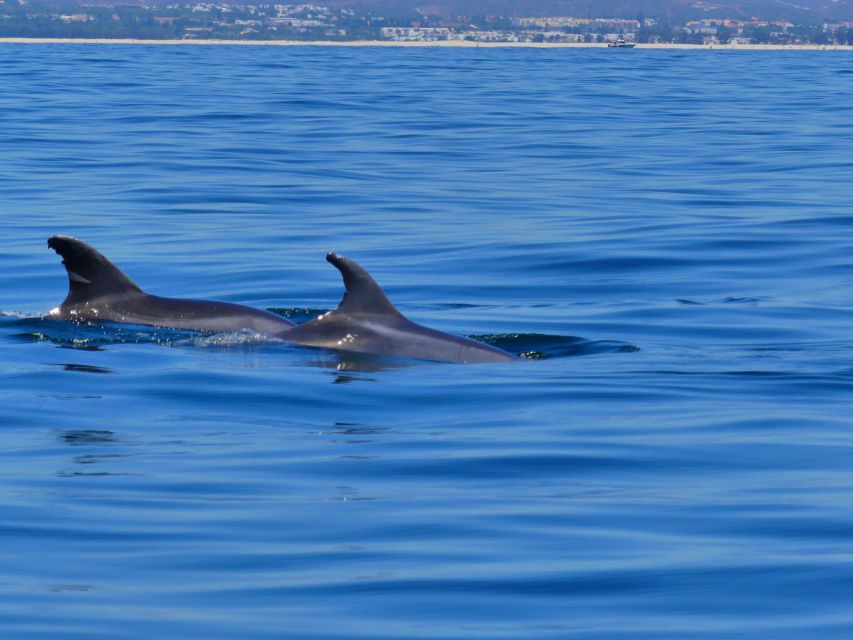
If whales are high on your list, aim for February through May. This is the stated whale season, and sightings during spring have included fin whales, Bryde’s whales, and calves.
For dolphins, the season is broader because they are present throughout the year. Summer departures can bring large pods, and late spring has produced mixed sightings of dolphins, whales, seabirds, and sunfish.
No month removes the basic uncertainty. Weather, sea conditions, animal movement, and visibility all affect the outing. I would choose a day when you can tolerate some flexibility rather than squeezing the tour between two fixed appointments.
The exact start times vary. Check availability when booking, and keep enough space after the two and a half hour duration for a possible late return.
Who will enjoy this most
This is a strong choice for anyone who wants wildlife in the wild, especially if you care about how animals are approached. Families with older children may enjoy it, but the ride requires patience and comfort with open water. Children under two cannot join.
I would recommend it to:
- People interested in marine biology and conservation
- Visitors who want more than a standard sightseeing cruise
- Photographers who accept that wildlife will not pose on command
- Couples and families comfortable with speed, spray, and waves
- Anyone hoping for dolphins, with whales and orcas treated as lucky extras
I would think twice if you have back trouble, limited mobility, or strong motion sensitivity. Pregnant women and people with mobility impairments are specifically advised not to take part.
If you are prone to seasickness, the supplied information does not promise medication or special seating. You may want to prepare in advance, but only use products that are suitable for you. The Atlantic swell can be noticeable, especially when the boat stops to watch wildlife.
A respectful way to watch wild animals
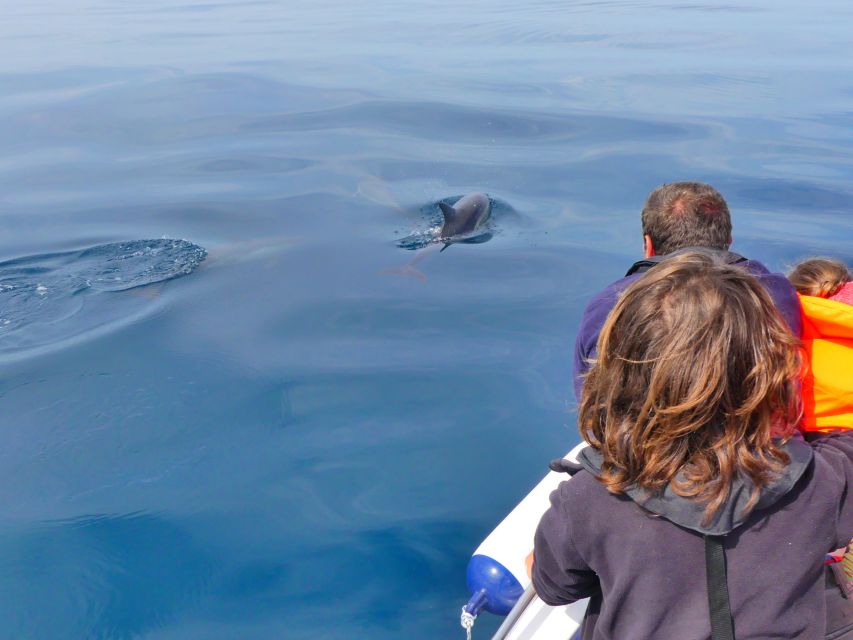
The best feature of this trip is its attitude. The guides explain the rules before the search, keep space between the boat and the animals, and limit time with a pod. You are there to watch behavior, not to touch, feed, or direct it.
That matters with dolphins because close contact can be exciting for people but stressful for animals. If dolphins choose to swim alongside the boat, you can enjoy the moment without trying to make it happen.
The guides also help you understand the bigger picture. You may hear how observations support research into dolphin populations and how marine biologists record what they find. That makes the trip feel less like a simple photo hunt and more like an introduction to the ecosystem outside Faro.
Should you book the Faro dolphin tour?
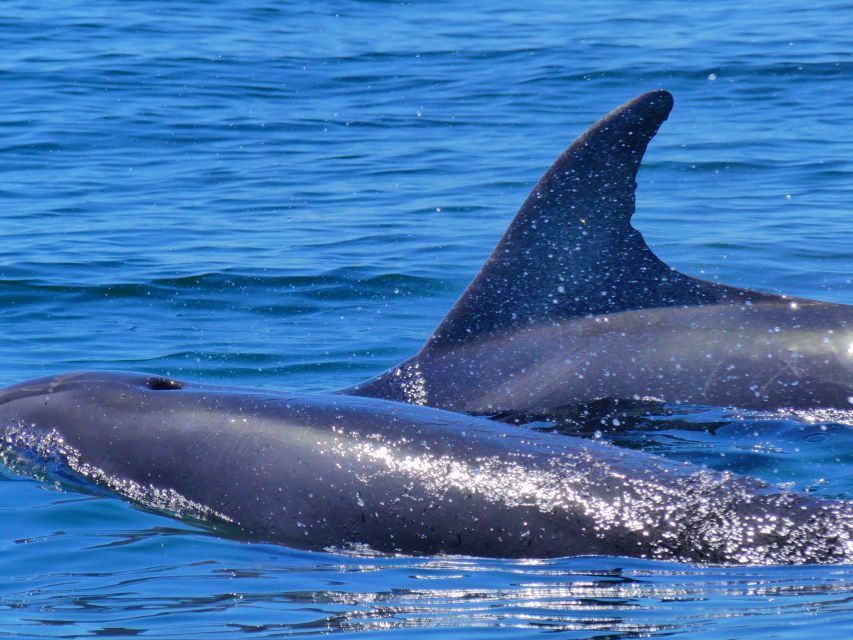
Book it if you can accept uncertainty and want a thoughtful, active search for Atlantic wildlife. The combination of Ria Formosa scenery, a fast open-water ride, marine biology guides, and the chance of dolphins, whales, seabirds, sharks, turtles, or orcas gives the trip real range.
I would book in whale season if whales are your main hope, and I would leave extra time after the tour in case the crew extends the search. Bring water, suncream, comfortable clothes, and a jacket. Expect spray and a firm ride.
Do not book it for a guaranteed dolphin encounter or a smooth cruise. Do book it if seeing animals in their own habitat matters more to you than checking off a promised sighting. At $76, that is where the value lies.
FAQ
Where does the tour meet in Faro?
Meet at the Ocean Vibes Algarve office in Faro harbor or marina. Look for the shared store with a banner saying Ocean Emotions.
How long does the activity last?
The stated duration is two and a half hours. Starting times vary, so check availability when booking.
Are dolphins guaranteed?
No. Dolphins are wild animals, and a 100 percent sighting rate cannot be guaranteed. The stated usual success rate is about 9 out of 10 tours.
When is the best season for whales?
Whale season is between February and May. Dolphins are resident in the area throughout the year.
What languages are available?
The live guides speak English, French, Portuguese, and Spanish.
What should I bring?
Bring comfortable clothes, water, suncream, and a jacket. You may get wet on windy days, and the wind can feel cold even when the weather is warm.
Newly spotted around Faro
- Sunset Dolphin Watching with Marine Biologists★ 5.0 · 25 reviews
- FARO Fantastic Dolphin Observation Tour and Marine Life★ 5.0 · 8 reviews
- Observing Dolphins in Faro★ 5.0 · 21 reviews
- Dolphin watching and wildlife from Faro★ 5.0 · 6 reviews
- Dolphin Watching from Fuzeta★ 4.5 · 31 reviews
- Dolphin Watching from Faro★ 4.5 · 22 reviews
- Algarve Dolphin Watching & Marine Life Eco Tour★ 5.0 · 16 reviews
- From Faro: Dolphin Watching & 2 Islands Tour★ 4.4 · 73 reviews
Faro Dolphin Watching Tours, side by side.
Small Group Dolphin and Wildlife Watching Tour in Faro
Read our review →